The Jakarta Post
Please Update your browser
Your browser is out of date, and may not be compatible with our website. A list of the most popular web browsers can be found below.
Just click on the icons to get to the download page.


Popular Reads
Top Results
No results found. Please check your search term and try again
Can't find what you're looking for?
View all search results
Popular Reads
Top Results
No results found. Please check your search term and try again
Can't find what you're looking for?
View all search resultsurbanization

Books 9 years ago
Book Review: Optimistic point-of-view on concrete jungles
If you follow the news, you might have a skewed perspective of modern cities. They are painted as places under constant threat of all manner of social ills, polluted to the core and filled with malevolent psychopaths hell-bent on causing chaos.

Opinion 10 years ago
Urban governance: Making the Jakarta Declaration work
The Jakarta Declaration was the main document coming out of the Asia-Pacific Regional meeting regarding the “New Urban Agenda.” Captioned “sustainable urbanization to accelerate development,” the document insinuates the growing recognition that urban areas, especially cities, are not “parasitic,” and if guided by appropriate policies can hasten sustainable development in the region.

Opinion 10 years ago
The elusive demographic bonus – boon or bust?
Could it be that young people who see their prosperity at the lower rank of the ladder have no choice but to be optimistic? OK, whatever the reason may be, being optimistic is definitely a valuable asset to count on. On the other hand, this optimism is begging for an avenue to channel it to get a pay off. And here Jakarta failed miserably.The second area questioned whether there were sufficient opportunities for education and training. Opportunity means availability and accessibility. Jakarta ranked 28th among the 35 cities, just above Bogota and below Buenos Aires. That will be the first barrier to break if the optimism is to turn into positive energy for growth.
Opinion 10 years ago
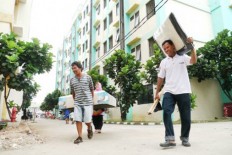
Housing key to addressing growing urbanization in RI
As our global population grows, the supply of available land and space is dwindling. By 2030, UN-HABITAT estimates that 3 billion people — about 40 percent of the world’s population — will need access to housing. This means demand for housing in the region increases by an average of 20,000 dwellings a day. This appeal for housing is most acutely felt in urban areas, and not just in Indonesia. Rapid urbanization is taking place in Asia and the Pacific, with an additional 120,000 people moving into the region’s cities every day.
Opinion 10 years ago
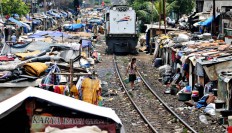
Redefining Indonesia's urban agenda: Get real
Potentially the world’s fifth-largest economy in the next two decades, Indonesia’s role in the agenda will reflect its own preparation in embracing urbanization and sustainability issues within its own domestic context.Sadly, it is not clear how Indonesia is going to seize this opportunity to make a valuable contribution to the agenda. The introduction of what may only be described as a rather rudimentary National Report issued by Indonesia earlier this year was a disappointment.
Opinion 10 years ago
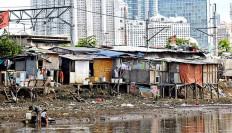
Urbanization in Asia: Double edged sword?
Evidence from the Asian pacific region suggests that ‘most of the cities are now hubs of economic growth and wealth creation’. It is also claimed that the ‘booming’ urban economy has lifted millions out of poverty in the region. For instance, industrial centers in Jakarta, Manila and Bangkok provide employment and economic access to several thousand and most Asian cities rank well in the ‘cities of opportunity’ global index.

Editor's Picks
Popular
- PISA gains belie Indonesia’s persistent education crisis
- Not the Ministry of Magic
- Suahasil seen to prioritize fiscal discipline, continuity
- The benefit of the doubt has expired
- Ed Sheeran struggles against Gaza tide
- Another company flees Batam, abandons 1,025 workers
- Is Indonesia returning to fiscal orthodoxy?
- How obscure yttrium became a global flashpoint
- Osama the gamer: A list of Bin Laden’s video games from his hard drive
- Indonesian Navy welcomes former Italian warship as its first aircraft carrier


