The Jakarta Post
Please Update your browser
Your browser is out of date, and may not be compatible with our website. A list of the most popular web browsers can be found below.
Just click on the icons to get to the download page.


Popular Reads
Top Results
No results found. Please check your search term and try again
Can't find what you're looking for?
View all search results
Popular Reads
Top Results
No results found. Please check your search term and try again
Can't find what you're looking for?
View all search resultsIran state media says talks failed over 'unreasonable' US demands
"The Iranian delegation negotiated continuously and intensively for 21 hours in order to protect the national interests of the Iranian people; despite various initiatives from the Iranian delegation, the unreasonable demands of the American side prevented the progress of the negotiations. Thus the negotiations ended," IRIB said on Telegram.
Change text size
Gift Premium Articles
to Anyone
Share the best of The Jakarta Post with friends, family, or colleagues. As a subscriber, you can gift 3 to 5 articles each month that anyone can read—no subscription needed!
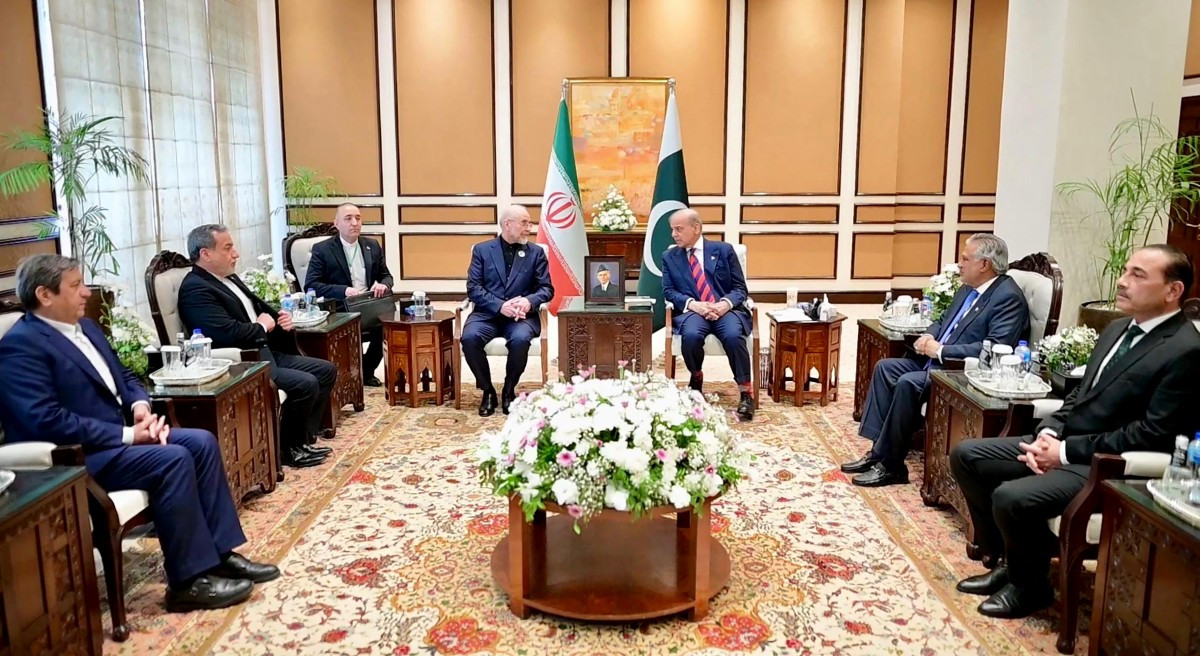 This handout photograph taken on April 11, 2026 and released by Pakistan's Prime Minister Office shows Pakistan's Army Chief and Field Marshal Syed Asim Munir (right), Foreign Minister Ishaq Dar (2nd right), Prime Minister Shehbaz Sharif (third right) during their meeting with Iran's parliamentary speaker Mohammad Bagher Ghalibaf (fourth left) and Foreign Minister Abbas Araghchi (second left) prior to the US-Iran peace talks in Islamabad. (AFP/Handout)
"Unreasonable demands" by the United States scuppered talks in Islamabad to end the war in the Middle East, Iranian state broadcaster IRIB said on Sunday.
"The Iranian delegation negotiated continuously and intensively for 21 hours in order to protect the national interests of the Iranian people; despite various initiatives from the Iranian delegation, the unreasonable demands of the American side prevented the progress of the negotiations. Thus the negotiations ended," IRIB said on Telegram.
US Vice President JD Vance said on Sunday that his negotiating team was leaving Pakistan after not reaching a deal with Iran following 21 hours of negotiations, jeopardizing a fragile two-week ceasefire.
"The bad news is that we have not reached an agreement, and I think that's bad news for Iran much more than it's bad news for the United States of America," Vance told reporters after the talks ended. "So we go back to the United States having not come to an agreement. We've made very clear what our red lines are."
Vance cited shortcomings in the talks and said Iran had chosen not to accept American terms, including to not build nuclear weapons. A short time later, Vance waved goodbye from the top of the stairs as he boarded Air Force Two in Islamabad.
Before Vance spoke, Iran's government in a post on X had said negotiations would continue and technical experts from both sides would exchange documents.
The talks in Islamabad were the first direct US-Iranian meeting in more than a decade and the highest-level discussions since the 1979 Islamic Revolution.
In his brief press conference, Vance did not mention reopening the Strait of Hormuz, a choke point for about 20 percent of global energy supplies that Iran has blocked since the war began. The conflict has sent global oil prices soaring and killed thousands of people.
The Strait of Hormuz is central to the ceasefire talks. The US military said two of its warships had passed through the strait and conditions were being set to clear mines, while Iran's state media denied any US ships had transited the waterway.
Before the talks began, a senior Iranian source told Reuters the US had agreed to release frozen assets in Qatar and other foreign banks. A US official denied agreeing to release the money.
As well as the release of assets abroad, Tehran is demanding control of the Strait of Hormuz, payment of war reparations and a ceasefire across the region including in Lebanon, according to Iranian state TV and officials.
Tehran also wants to collect transit fees in the Strait of Hormuz.