The Jakarta Post
Please Update your browser
Your browser is out of date, and may not be compatible with our website. A list of the most popular web browsers can be found below.
Just click on the icons to get to the download page.


Popular Reads
Top Results
No results found. Please check your search term and try again
Can't find what you're looking for?
View all search results
Popular Reads
Top Results
No results found. Please check your search term and try again
Can't find what you're looking for?
View all search resultsIntense surveillance needed to detect new virus variant: Minister
Change text size
Gift Premium Articles
to Anyone
Share the best of The Jakarta Post with friends, family, or colleagues. As a subscriber, you can gift 3 to 5 articles each month that anyone can read—no subscription needed!
U
nlike neighboring Singapore, Indonesia has not detected the new SARS-CoV-2 variant first discovered in the United Kingdom, but that may be due to the country’s lack of genomic and molecular monitoring, a minister has said.
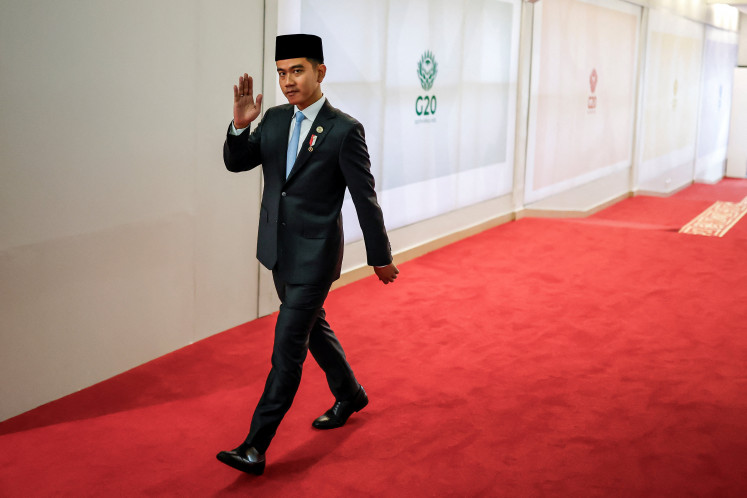
To detect the new variant, labs must carry out whole genome sequencing, but not all labs in the country could do so, Research and Technology Minister Bambang Brodjonegoro said. Even those that already did so might still need to "routinely intensify whole genome sequencing SARS-CoV-2" among cases in the country, he said.
Studies are still underway on the new variant, referred to as the B.1.1.7 lineage, but it is believed to be 40 to 70 percent more transmissible, Reuters reported. There has yet to be evidence concerning the new variant's impact on disease severity and morbidity.
It remained a concern nonetheless given the need to protect risk groups, including the elderly and people with comorbidity factors, from exposure to the virus, Bambang said.
The elderly and people with underlying health conditions make up the largest share of Indonesia’s COVID-19 fatalities and were more likely to develop severe illnesses from the infection.
The UK was one of the countries with the best genomic and molecular surveillance and monitoring in the world, which allowed them to detect virus mutation, he went on.