TheJakartaPost
Please Update your browser
Your browser is out of date, and may not be compatible with our website. A list of the most popular web browsers can be found below.
Just click on the icons to get to the download page.


Popular Reads
Top Results
No results found. Please check your search term and try again
Can't find what you're looking for?
View all search results
Popular Reads
Top Results
No results found. Please check your search term and try again
Can't find what you're looking for?
View all search resultsWhy a nonmilitaristic approach needed to solve Papua conflict
The string of shooting incidents only adds to a series of violence besetting the provinces of Papua and West Papua.
Change text size
Gift Premium Articles
to Anyone
Share the best of The Jakarta Post with friends, family, or colleagues. As a subscriber, you can gift 3 to 5 articles each month that anyone can read—no subscription needed!

S
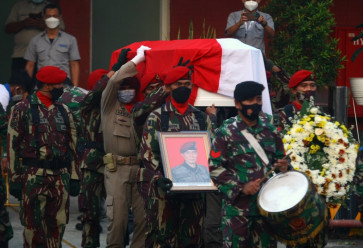
hooting incidents were rife again in Papua during the past month. In the afternoon of April 25, the head of the Papua office of the State Intelligence Agency (BIN) was shot from a close distance in Beoga district in the highland regency of Puncak, indicating that the shooter had weaponry skills and a territorial understanding of the site.
Only days later, a crossfire in Ilaga regency cost the lives of a Mobile Brigade (Brimob) police officer and a suspected member of the Free Papua Organization (OPM).
Prior to the two incidents, civilians and ordinary, nonpartisan citizens, including teachers, fell victim to conflicts between security forces and armed groups.
The string of shooting incidents only adds to a series of violence besetting the provinces of Papua and West Papua. Academics have consistently dubbed the warlike situation on Papuan land the most protracted self-determination movement in Indonesia's history when compared to the Aceh conflict (1976-2005) and East Timor (1975-1999) (Heidbuchel, 2007: 157; Bhakti, Yanuarti & Nurhasim, 2009: 17-18; Wassel, 2014: 2-5).
As usual, security troops have been deployed to hunt down perpetrators of the shooting incidents. The fight against the Papuan armed rebels has taken a new twist as the government declared them terrorist groups.
The persistent use of a militaristic approach has left a question about the fate of nonarmed civilians who have always been caught in the middle of the conflict. These civilians include Papuan people and migrants who arrived in Papua to make a living. Do they have the right to express their desire for a peaceful life and freedom from fear?
More importantly, how do we interpret the existence of the continuous armed conflict in a territory known for its richness in natural resources?