The Jakarta Post
Please Update your browser
Your browser is out of date, and may not be compatible with our website. A list of the most popular web browsers can be found below.
Just click on the icons to get to the download page.


Popular Reads
Top Results
No results found. Please check your search term and try again
Can't find what you're looking for?
View all search results
Popular Reads
Top Results
No results found. Please check your search term and try again
Can't find what you're looking for?
View all search resultsMyanmar: Overcoming dissensus over five-point consensus
ASEAN should not allow any attempt to link the consensus’ implementation with the Tatmadaw’s five-step roadmap.
Change text size
Gift Premium Articles
to Anyone
Share the best of The Jakarta Post with friends, family, or colleagues. As a subscriber, you can gift 3 to 5 articles each month that anyone can read—no subscription needed!
 Set as preferred source
T
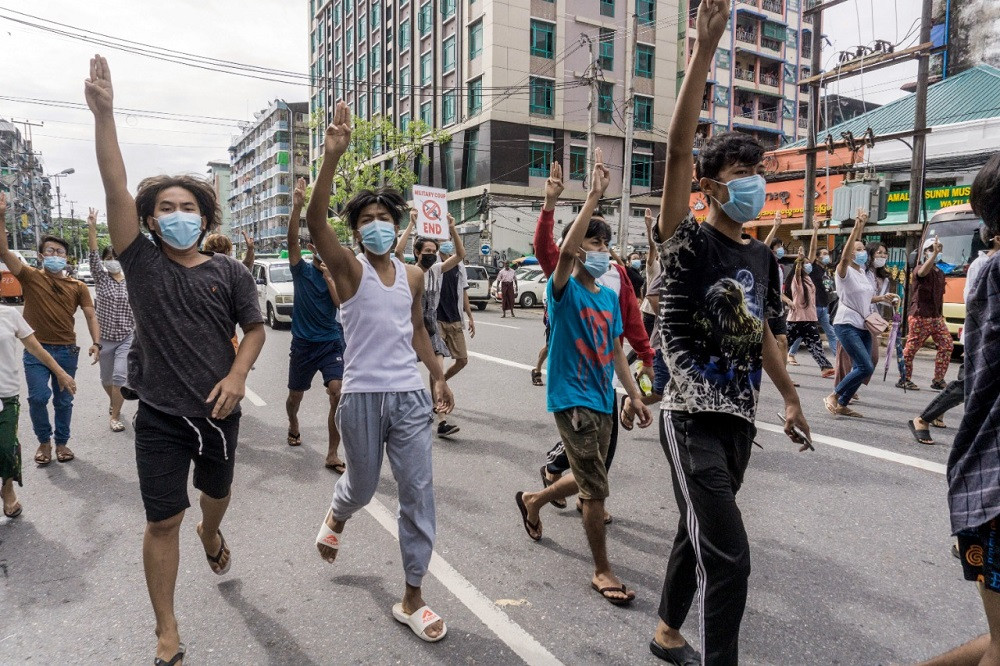
he five-point consensus, an important peace initiative on Myanmar mandated by the ASEAN Leaders’ Meeting in Jakarta on April 24, is yet to be transformed into concrete actions. Until today, there is no clear ASEAN scenario on how to ensure the cessation of violence, facilitate constructive dialogue among all parties concerned, deploy an ASEAN special envoy, provide humanitarian assistance and visit Myanmar to meet with all parties.
Many have voiced their call for effective and timely implementation of the consensus, including Indonesia. Foreign Minister Retno L.P. Marsudi has expressed her concern over the lack of major progress in this. She also underlined the need for transparency in the course of implementing the consensus.
Moreover, there appears to be dissensus on how to operationalize the consensus in practical steps, namely a perception gap among ASEAN members on the particular details involved in implementing the consensus.
This adds more complexities in addition to the unfavorable attitude of the Tatmadaw (Myanmar military) toward the consensus. The Tatmadaw set a precondition before giving effect to ASEAN’s good offices. In a departure from the original intention of ASEAN leaders, the Tatmadaw is of the view that the consensus’ implementation must complement the five-step roadmap it introduced immediately after the Feb. 1 coup, and that implementing the consensus will be considered only after stability has been restored in Myanmar in accordance with the roadmap.
Such divergent standpoints will certainly hamper ASEAN’s constructive role in facilitating a peaceful solution in the interest of the Myanmar people. ASEAN must instead show that it remains the driving force in addressing the Myanmar crisis. Failing to do so will risk diminishing the strategical relevance of ASEAN centrality. Therefore, ASEAN has no option but to meet these challenges by leaping out of its comfort zone and taking some immediate steps.
ASEAN needs to consider the following steps with a view to sustaining its regional and global relevance.
First, the regional grouping must reconsolidate its commitment to urge the Tatmadaw to implement the ASEAN Consensus on Myanmar. In this regard, ASEAN must act collectively with a strong sense of unity in order to ensure the success of its endeavor.