TheJakartaPost
Please Update your browser
Your browser is out of date, and may not be compatible with our website. A list of the most popular web browsers can be found below.
Just click on the icons to get to the download page.


Popular Reads
Top Results
No results found. Please check your search term and try again
Can't find what you're looking for?
View all search results
Popular Reads
Top Results
No results found. Please check your search term and try again
Can't find what you're looking for?
View all search resultsA game changer to the ‘pandemic’ of sexual violence in universities
A careful look into the data of Komnas Perempuan and the police will show that sexual violence is a critical matter that demands an immediate and real solution.
Change text size
Gift Premium Articles
to Anyone
Share the best of The Jakarta Post with friends, family, or colleagues. As a subscriber, you can gift 3 to 5 articles each month that anyone can read—no subscription needed!
I
ndonesia is not foreign to cases of sexual violence in the form of rape committed by male adults against women, including girls, or sometimes young boys.
Perpetrators of the violence vary, ranging from biological fathers as what happened in Aceh and Luwu, Southeast Sulawesi, to security forces as in the South Sulawesi case. Another case that is advocated by the National Commission for Protection of Women and Children (Komnas Perempuan) is the gang rape of a 16-year-old girl in Central Halmahera, North Maluku.
Apart from our grief, we do not know what else we can convey to express our feelings of sadness, anger and disappointment because such cases have repeated without proper, fast and fair treatment that gives the victims justice.
Amid the anguish, Education, Culture, Research, and Technology Minister Nadiem Makarim recently sprang a surprise by issuing Education, Culture, Research and Technology Ministerial Regulation No. 30/2021 (Permendikbud 30) on the prevention and handling of sexual violence in higher education.
Nadiem said the country had no legislation or regulation yet to tackle sexual violence on university campuses. Permendikbud 30, therefore, was signed to fill the void.
The existing regulations only cover sexual violence protection from certain conditions, such as the Child Protection Law that only protects children under 18 years old, the Eradication of Violence Against Women, which concerns household affairs, and the anti-human-trafficking law, which helps victims of human trafficking syndicates.
Critics, especially conservatives, have accused Permendikbud 30 of legalizing adultery or casual sex on campus by deliberately highlighting the phrase "consent" in one of its articles. The loudest voice against Permendikbud 30 comes from Muhammadiyah, which considers the regulation problematic from both formal and material points of view.
Notwithstanding the heated characteristic debate, the nation should consider sexual violence a top priority issue for several reasons.
First, there is no doubt that victims of sexual violence, including sexual harassment, are victims. State institutions that receive reports of sexual violence must not underestimate them simply because of a lack of evidence to start an investigation. The National Police has already established a particular unit as the first referral institution to handle sexual violence cases, including rape. The unit must spearhead a campaign to raise public awareness of the need to fight sexual violence and educate the public on how to file such reports.
In handling sexual violence cases, empathy toward victims is the primary rule law enforcers have to follow. Sweeping reform in the security sector post-1998 aimed not only to separate the military from police but also to transform the police into a serving institution that left behind its militaristic mentality.
A careful look into the data of Komnas Perempuan and the police will show that sexual violence is a critical matter that demands an immediate and real solution. The state should refrain from "amicable settlements", but instead take bold measures to make sure justice is served for victims and support the judiciary to deliver maximum punishments for perpetrators.
Moreover, respect for citizens' right to their own bodies should be paramount for a country that claims to protect the whole population. Consequently, the state must admit the prevalence of sexual violence as a national issue that must be addressed without any delay.
Second, there are no effective regulatory and institutional instruments in place to fight sexual violence in Indonesia.
Sexual violence is closely related to the persistence of patriarchy and the weak protection of human rights, including the rights of women and children. Even though Indonesia has ratified the Convention on the Elimination of All Forms of Discrimination Against Women (CEDAW) and has regulatory instruments to mainstream gender in ministries and various agencies, sexual harassment and rape do not stop and their handling remains poor. That is why demands for the passage of the elimination of sexual violence bill (RUU PKS) have mounted.
At the same time, reports of sexual violence soared everywhere during the COVID-19 pandemic. It should be noted that in June 2019, the International Labor Organization (ILO) issued Convention No. 190 on the Elimination of Violence and Harassment in the Work Space. It provides a clear framework for ensuring the right to work in a safe place and addresses gender-based violence in the world of work. However, Indonesia has not ratified it.
Worse, Indonesia is one of three Southeast Asia countries that have not enforced specific legislation that deals with sexual harassment.
Third, sexual violence has never been part of a broader discourse on violence against individuals, due to, among other reasons, the persisting patriarchy that sees women as second-class citizens. This is evident in the norms adopted in society and even bureaucracy.
Although the 1945 Constitution treats women and men equally, in reality, it took the nation far too long to agree on women's roles in politics through affirmative action. On the other end of the spectrum, we still observe conservatism displayed and institutionalised under regional bylaws.
Komnas Perempuan has long asked the Home Ministry, for instance, to revoke hundreds of bylaws that harm women.
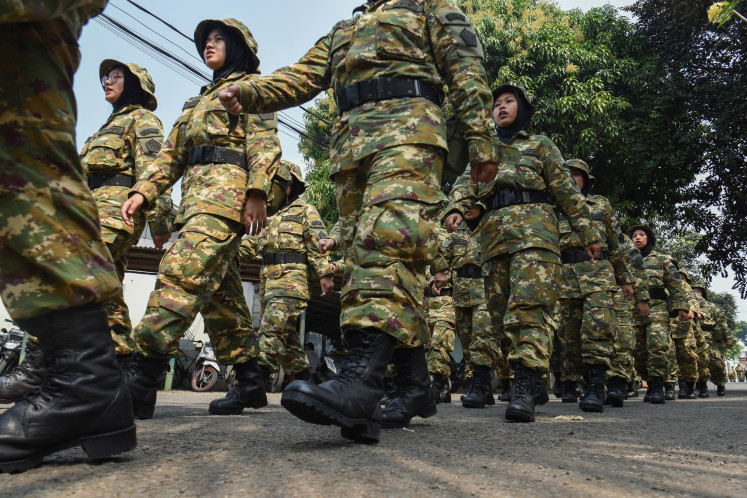
Without collective support from every line of the government, it is impossible for Indonesia to achieve the gender mainstreaming agenda adopted in 2000. Only recently, the Army revoked the so-called “virginity tests” performed on new female recruits, after so many years.
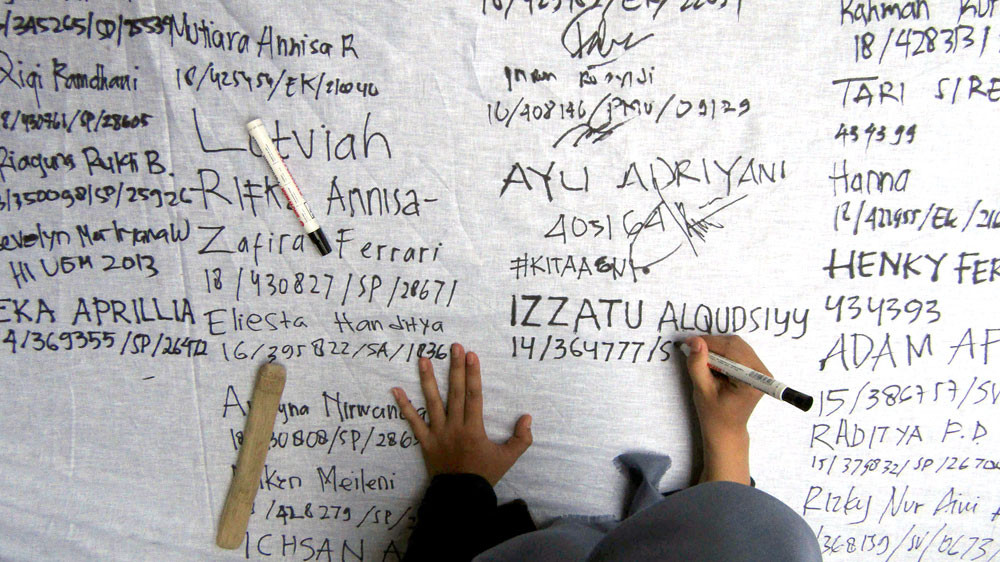
Permendikbud 30 was not born from an empty space. Based on internal and external surveys conducted by the ministry, sexual violence on university campuses is prevalent. Based on 174 testimonies from 79 campuses in 29 cities, nearly 90 percent of victims of sexual violence were female.
The House of Representatives is dragging its feet in its deliberation of the sexual violence bill. The deputy chair of the House’s legislation body, Willy Aditya, said members of the body would only decide whether to table the bill as an initial draft law at the end of this month.
As part of the nation’s decades-long struggle to eliminate sexual violence once and for all, Nadiem’s initiative is the right step in the right direction. His bold move deserves support and encouragement as we need a safe place for our academics from threats of sexual violence.
***
The writer is a PhD student of Gender, Peace and Security Center, School of Social Sciences, Monash University.