TheJakartaPost
Please Update your browser
Your browser is out of date, and may not be compatible with our website. A list of the most popular web browsers can be found below.
Just click on the icons to get to the download page.


Popular Reads
Top Results
No results found. Please check your search term and try again
Can't find what you're looking for?
View all search results
Popular Reads
Top Results
No results found. Please check your search term and try again
Can't find what you're looking for?
View all search results‘Endek catri’ fabric: Protector of Bali’s cultural identity or tourist souvenir?
Change text size
Gift Premium Articles
to Anyone
Share the best of The Jakarta Post with friends, family, or colleagues. As a subscriber, you can gift 3 to 5 articles each month that anyone can read—no subscription needed!
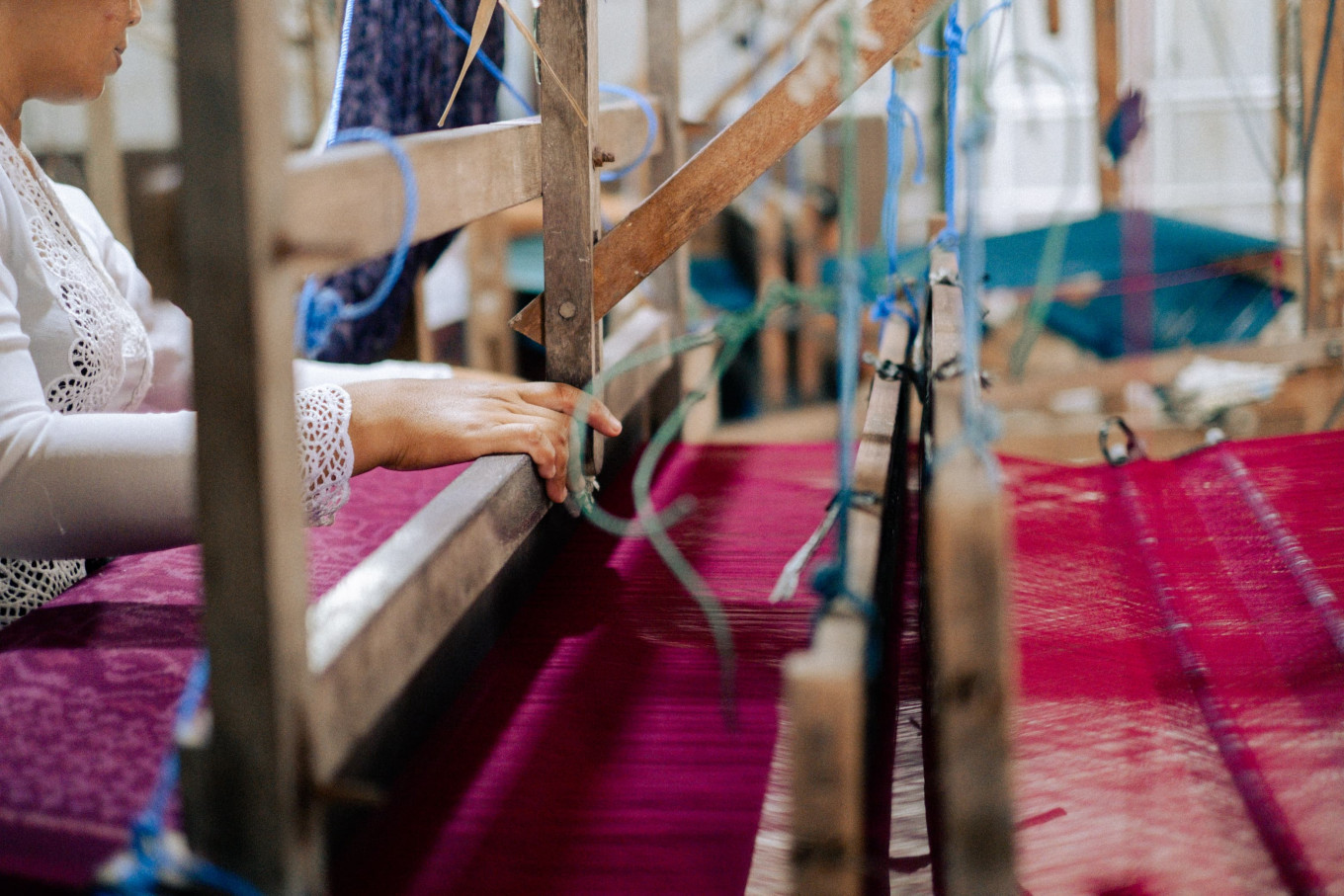 (Courtesy of Warmadewa University)
A
mid Bali’s booming tourist sector, academics from Warmadewa University have called for greater protection of the island’s communal cultural intellectual property, particularly the endek catri fabric from Klungkung.
The handwoven endek fabric, known for its vibrant colors and intricate patterns, reflects the history and values of the Balinese community. The fabric is commonly used as clothing, and is increasingly sold as souvenirs. Unlike ordinary endek fabric, endek catri is known for its distinctive combination of traditional ikat weaving and airbrush techniques. While the ikat method preserves the symbolic patterns and cultural philosophy of Balinese textiles, the airbrush technique creates soft colour gradations that give the fabric a more contemporary visual appeal. This fusion reflects the creativity of Klungkung artisans, who continue to preserve ancestral weaving traditions while responding to changing market tastes.
Putu Ayu Sriasih Wesna, a lecturer from Warmadewa University’s postgraduate program for Notarial Law, points out that profits from these souvenir sales rarely benefit local communities. Instead, she says, many local artisans feel threatened by the quality and pricing of endek fabrics produced on a mass scale to meet increasing demand.
“One effective way to safeguard cultural identity is through the implementation of geographical indications [GI], which can provide legal recognition that the endek catri originates from Klungkung, affirming the uniqueness and inherent quality of the product. This not only protects the rights of local artisans but also assures consumers that they are buying authentic Balinese products and not imitations,” she explained.
Dea Pramitasari, a postgraduate Notarial Law student from Warmadewa University, noted that the development of policies that support local artisans and educate tourists on the cultural values of endek catri is a necessary step, as GI will protect artisans from unfair competition while also strengthening the connections between community, culture and tourism.
“It is vital for the government and the private sector to collaborate in promoting endek fabric not merely as a product but as a symbol of cultural heritage. Through cultural tours that involve hands-on experience in the fabric production process, tourists can appreciate the importance of preserving endek and understand its influence on Bali's identity,” she said.
If the endek catri fabric is to remain part of Bali’s authentic cultural identity as opposed to a mere ornament, the two concluded that the issue poses a challenge for the community, government and tourist sector to collaboratively preserve and develop Bali's cultural wealth by implementing robust protective measures through GI and support for local artisans.