TheJakartaPost
Please Update your browser
Your browser is out of date, and may not be compatible with our website. A list of the most popular web browsers can be found below.
Just click on the icons to get to the download page.


Popular Reads
Top Results
No results found. Please check your search term and try again
Can't find what you're looking for?
View all search results
Popular Reads
Top Results
No results found. Please check your search term and try again
Can't find what you're looking for?
View all search resultsThe edible film revolution: Packaging you can eat, protecting what you eat
Change text size
Gift Premium Articles
to Anyone
Share the best of The Jakarta Post with friends, family, or colleagues. As a subscriber, you can gift 3 to 5 articles each month that anyone can read—no subscription needed!
 (Courtesy of Warmadewa University)
G
rowing concern over global warming and plastic waste is accelerating research into environmentally friendly packaging for food and beverages. As consumers become more aware of sustainability issues, demand is rising for packaging that is biodegradable, renewable, safe and affordable.
Prof. Luh Suriati from the Faculty of Agriculture, Science and Technology at Warmadewa University said edible packaging is emerging as a promising alternative to conventional plastic. While plastic is widely used because it is flexible, transparent and inexpensive, it can contaminate food through the migration of chemical compounds and contributes significantly to environmental pollution because it does not readily decompose.
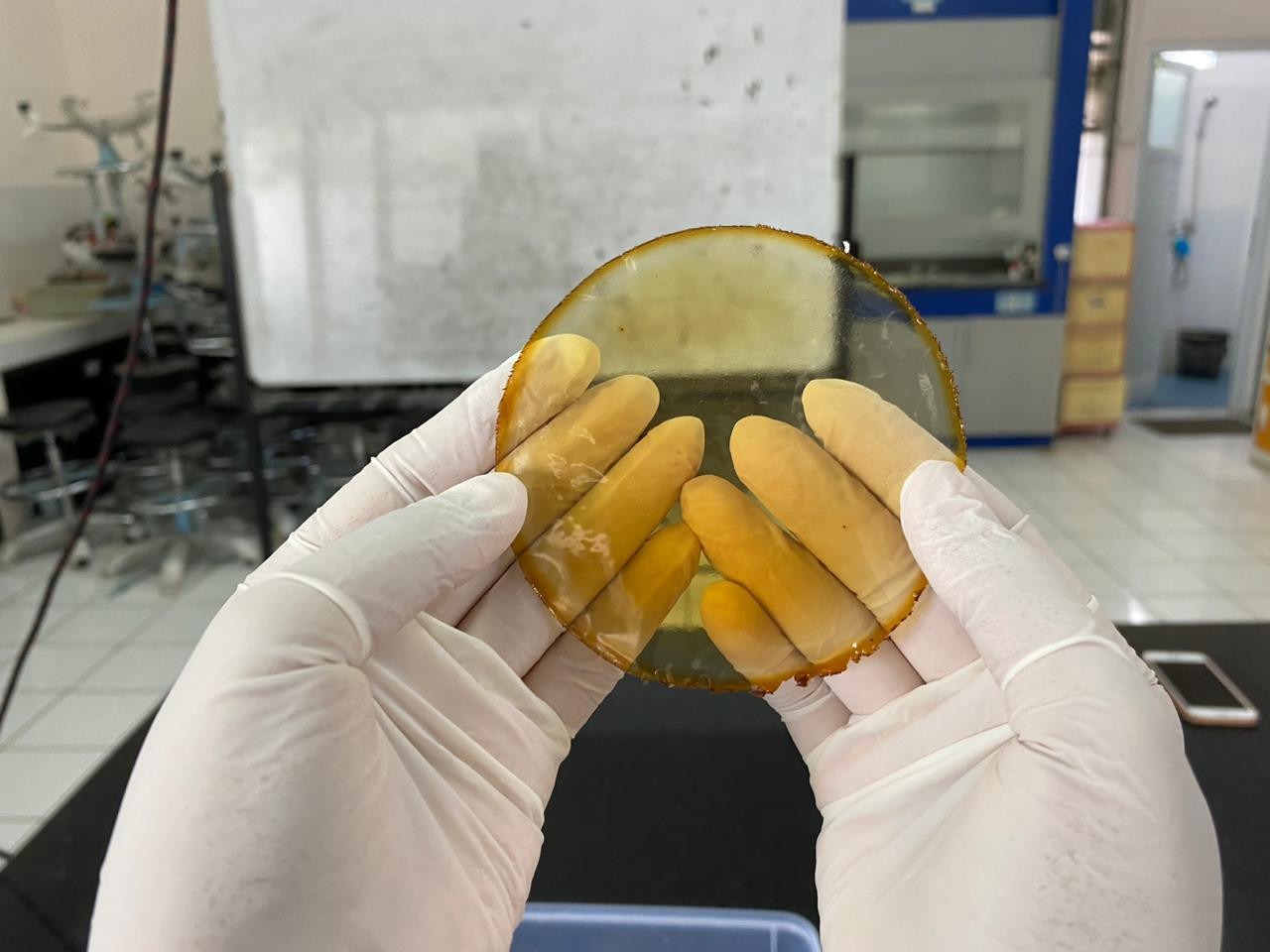
According to Prof. Luh Suriati, edible packaging not only protects food and preserves its appearance, but can also be consumed safely. “Edible film is a thin layer used as primary packaging, with a maximum thickness of 0.3 millimeters,” she explained. This layer acts as a barrier against moisture, oxygen, fats and other substances, while also serving as a carrier for food additives.
She also noted that edible films are particularly useful for products such as sausages, fresh fruits and vegetables. By regulating gas exchange and moisture, they help create internal conditions that slow quality deterioration and extend shelf life.
The materials used in edible films are generally classified into three groups: hydrocolloids, lipids and composites. Hydrocolloids include proteins and polysaccharides derived from renewable agricultural sources such as corn, soybeans, wheat gluten, gelatin, milk proteins, cellulose, starch, pectin, alginate, carrageenan, xanthan and chitosan. Lipids commonly used include beeswax, carnauba wax, fatty acids and emulsifiers.
To improve flexibility and prevent cracking, edible films are often combined with plasticizers such as glycerol and sorbitol. These additives also help regulate permeability to gases, water vapor and dissolved substances.
According to her, edible films have long been used as packaging and coatings for candies, fruits, vegetables, meat, seafood, bakery products and pharmaceutical capsules. Their benefits include enhancing product appearance, reducing moisture loss, delaying browning, limiting microbial growth and encapsulating flavors, pigments and antioxidants. “They can also reduce dependence on synthetic packaging and, in some countries, lower shipping costs,” she said.
Prof. Luh Suriati believes the technology has strong future potential as the world seeks alternatives to plastic packaging.
“Current research focuses on antimicrobial films, anti-browning coatings for fresh-cut fruits, wraps made from fruit and vegetable purees, the use of biofuel by-products, nanotechnology, and multilayer systems that enable controlled release of active ingredients.”
“The edible film innovation is expected to become a more valuable, safe and environmentally friendly food packaging solution,” she concluded.