TheJakartaPost
Please Update your browser
Your browser is out of date, and may not be compatible with our website. A list of the most popular web browsers can be found below.
Just click on the icons to get to the download page.


Popular Reads
Top Results
No results found. Please check your search term and try again
Can't find what you're looking for?
View all search results
Popular Reads
Top Results
No results found. Please check your search term and try again
Can't find what you're looking for?
View all search resultsTextile industry presses govt to seek US tariff relief
The comments followed a statement by Coordinating Economy Minister Airlangga Hartarto on Friday that manufactured products such as garments and textiles would receive no exemption from the United states' 19 percent tariff.
Change text size
Gift Premium Articles
to Anyone
Share the best of The Jakarta Post with friends, family, or colleagues. As a subscriber, you can gift 3 to 5 articles each month that anyone can read—no subscription needed!
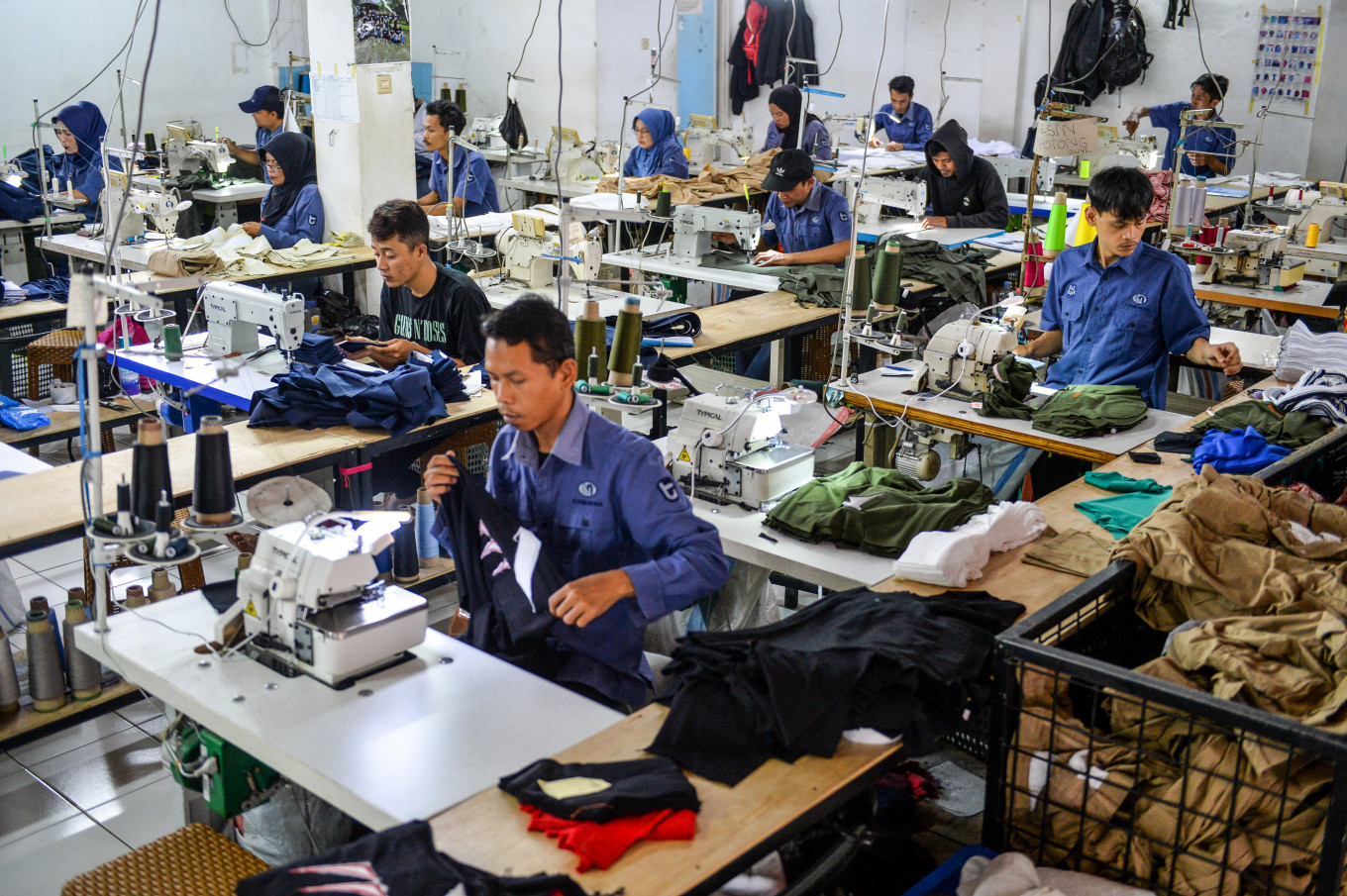 Workers complete production of garment products on Oct. 29, 2025, at the Tectona Textile Factory in Pameungpeuk, Bandung Regency, West Java. The Government Communications Agency noted that exports of creative economy products grew far beyond the target, supported by fashion exports, with total exports of creative economy products reaching US$12.89 billion, or 104 percent of this year's target. (Antara/Raisan Al Farisi)
T
he Indonesian Textile Association (API) has urged the government to renegotiate trade terms with the United States to secure zero tariffs for garment and textile products, warning that the duties threaten the survival of workers in the labor-intensive sector, which is already under pressure.
The comments followed a statement by Coordinating Economy Minister Airlangga Hartarto on Friday that all Indonesian exports to the US would still face a reciprocal tariff of 19 percent, with exemptions limited to “tropical natural resource commodities” such as minerals and palm oil. Manufactured products like garments and textiles, meanwhile, will remain subject to the levy.
Airlangga, who leads Indonesia’s negotiating team, said the decision would be included in an Agreement on Reciprocal Trade (ART) expected to be signed by the end of January next year by President Prabowo Subianto and his US counterpart, Donald Trump.
API chairman Jemmy Kartiwa said on Monday that the decision failed to recognize the economic and social importance of Indonesia’s textile and garment industry, one of the country’s largest employers.
“Tariff exemptions should not be limited to agriculture-based commodities. Manufactured products such as garments and textiles must also be considered for zero tariffs or at least rates lower than the current 19 percent,” Jemmy said in a statement.
“The US is the biggest export market for our garment products, and it deserves far more serious attention. This is about the survival of millions of workers in labor-intensive industries,” he added.

Read also: Indonesian textiles excluded from US tariff relief, Airlangga says