TheJakartaPost
Please Update your browser
Your browser is out of date, and may not be compatible with our website. A list of the most popular web browsers can be found below.
Just click on the icons to get to the download page.


Popular Reads
Top Results
No results found. Please check your search term and try again
Can't find what you're looking for?
View all search results
Popular Reads
Top Results
No results found. Please check your search term and try again
Can't find what you're looking for?
View all search resultsMaintaining labor productivity in the manufacturing sector
During the 2015-2024 period, wages grew by 16.1 percent in compound annual growth rate (CAGR), significantly outpacing productivity per worker, which increased by only 2.4 percent.
Change text size
Gift Premium Articles
to Anyone
Share the best of The Jakarta Post with friends, family, or colleagues. As a subscriber, you can gift 3 to 5 articles each month that anyone can read—no subscription needed!
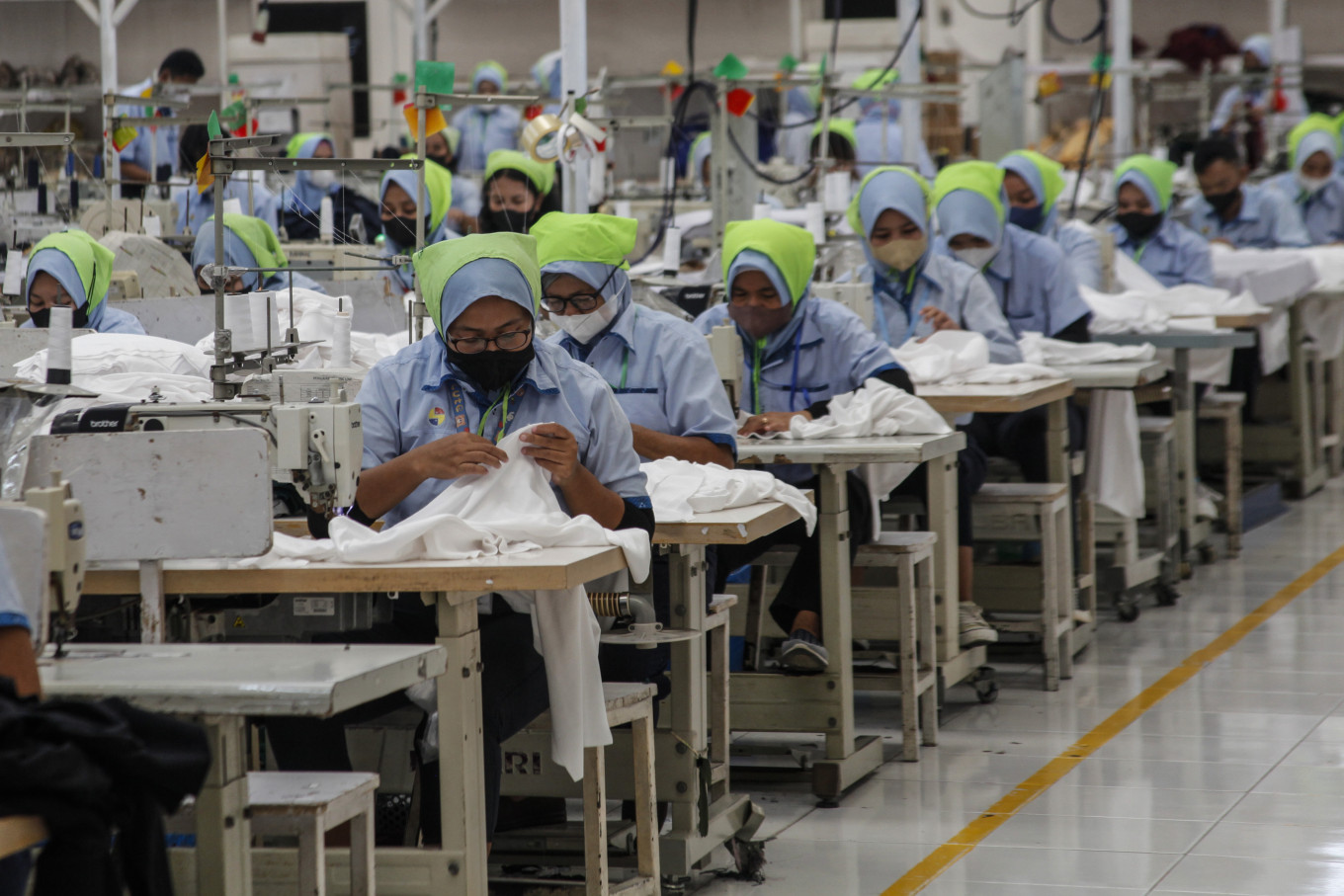 Workers are pictured at a factory of fabric and garment producer PT Sari Warna Asli in Surakarta, Central Java, on July 17, 2025. (Antara/Maulana Surya)
L
abor productivity has become one of the most critical issues in enhancing the competitiveness of Indonesia’s industrial sector. If productivity growth is higher than wage growth, companies will achieve greater labor cost efficiency because the value of output produced by workers increases faster than the wages paid. This condition can enhance a country’s competitiveness and create opportunities for business expansion and investment.
Conversely, if productivity growth is lower than wage growth, competitiveness will decline, and companies’ ability to expand and invest will be limited.
Entering the year 2026, The provincial minimum wage (UMP) comes into effect nationally on Jan. 1, and serves as the primary reference for the wage system for workers. On average, the increase in this year’s UMP ranges between 5 percent and 7 percent compared to 2025.
However, minimum wage increases have not been aligned with national labor productivity growth. Data from the International Labour Organization (ILO) show that the annual growth of minimum wages in Indonesia during the 2015-2024 period far exceeded the growth of productivity per worker over the same period.
Wages grew by 16.1 percent in compound annual growth rate (CAGR), significantly outpacing productivity per worker, which increased by only 2.4 percent. This suggests that wage increases in Indonesia have not been fully accompanied by improvements in labor productivity.
When compared with other Asian countries using the same data, China’s productivity per worker grew by 5.8 percent annually during the same period, exceeding wage growth of 1 percent. Annual productivity per worker in Vietnam, meanwhile, grew by 5.5 percent, but the figure is below wage growth of 6.2 percent.

The manufacturing sector, which employs the largest number of workers, plays a vital role in employment absorption. This sector not only employs a large workforce but also contributes to productivity improvements, value creation and national economic growth. Therefore, labor policies, including minimum wage determination, must consider the condition and sustainability of the manufacturing sector to ensure its strategic role in job creation is preserved.