The Jakarta Post
Please Update your browser
Your browser is out of date, and may not be compatible with our website. A list of the most popular web browsers can be found below.
Just click on the icons to get to the download page.


Popular Reads
Top Results
No results found. Please check your search term and try again
Can't find what you're looking for?
View all search results
Popular Reads
Top Results
No results found. Please check your search term and try again
Can't find what you're looking for?
View all search resultsAwaiting Indonesia’s electricity market reform
The increasing costs of electricity purchased from IPPs, along with grid operation expenses, may lead to inflated state subsidies and compensation in the long run.
Change text size
Gift Premium Articles
to Anyone
Share the best of The Jakarta Post with friends, family, or colleagues. As a subscriber, you can gift 3 to 5 articles each month that anyone can read—no subscription needed!
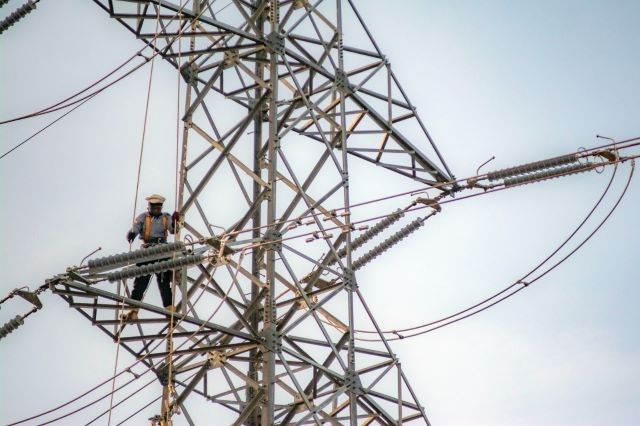 A technician from state electricity company PLN stands atop a transmission tower during regular maintenance work on Dec. 27, 2023, in Palu, Central Sulawesi.
(Antara/Basri Marzuki)
A technician from state electricity company PLN stands atop a transmission tower during regular maintenance work on Dec. 27, 2023, in Palu, Central Sulawesi.
(Antara/Basri Marzuki)
Electricity market in Indonesia is considered inefficient, as indicated by lower utilization and electricity oversupply.
In 2024, Java reportedly had about 50.1 gigawatts (GW) of installed capacity, yet it was utilized at only around 54.3 percent. This implies that on an average hour, 22.9 GW of generation capacity in Java remained idle, assuming all variables are the same.
A similar pattern also appears across the archipelago. In the same period, utilization in Sumatra was below 50 percent, while the installed capacity was 14.1 GW. Further from Java and Sumatra, the utilization also remains below 50 percent with much smaller installed bases: Sulawesi by 4.2 GW (47 percent), Kalimantan by 4.6 GW (43.1 percent), Bali and Nusa Tenggara by 1.4 GW (41 percent), Papua by 0.7 GW (40.4 percent) and Maluku by 0.8 GW (25.7 percent).
The issue on oversupply started where Indonesia had a shortage of electricity, and the state-owned electricity company PLN executed an electrification acceleration or Fast Track Program (FTP) in 2006 and 2010, followed by the 35,000-megawatt (MW) program in 2015.
In early 2015, PLN, through long-term electricity procurement plan (RUPTL), forecasted that the electricity demand growth of about 8.7 percent per year and planned very large capacity additions through 2024. The forecast was arranged based on the future economic growth by 7 percent. However, Indonesia’s gross domestic product (GDP) growth remains stagnant approximately by 5 percent over the last 10 years.
One of the strategies implemented to accelerate national electrification was to involve the private sector by allowing them to become independent power producers (IPPs).

Since then, the role of IPPs has significantly increased. In 2018, IPPs accounted for approximately 33 percent of power plants installed nationwide, while PLN-owned power plants represented the remaining 67 percent. However, by 2024, the share of IPPs surpassed that of PLN, reaching around 53 percent of total national power plants.