The Jakarta Post
Please Update your browser
Your browser is out of date, and may not be compatible with our website. A list of the most popular web browsers can be found below.
Just click on the icons to get to the download page.


Popular Reads
Top Results
No results found. Please check your search term and try again
Can't find what you're looking for?
View all search results
Popular Reads
Top Results
No results found. Please check your search term and try again
Can't find what you're looking for?
View all search resultsJapan should respond 'decisively' to bond sell-off, opposition head says
Change text size
Gift Premium Articles
to Anyone
Share the best of The Jakarta Post with friends, family, or colleagues. As a subscriber, you can gift 3 to 5 articles each month that anyone can read—no subscription needed!
 Set as preferred source
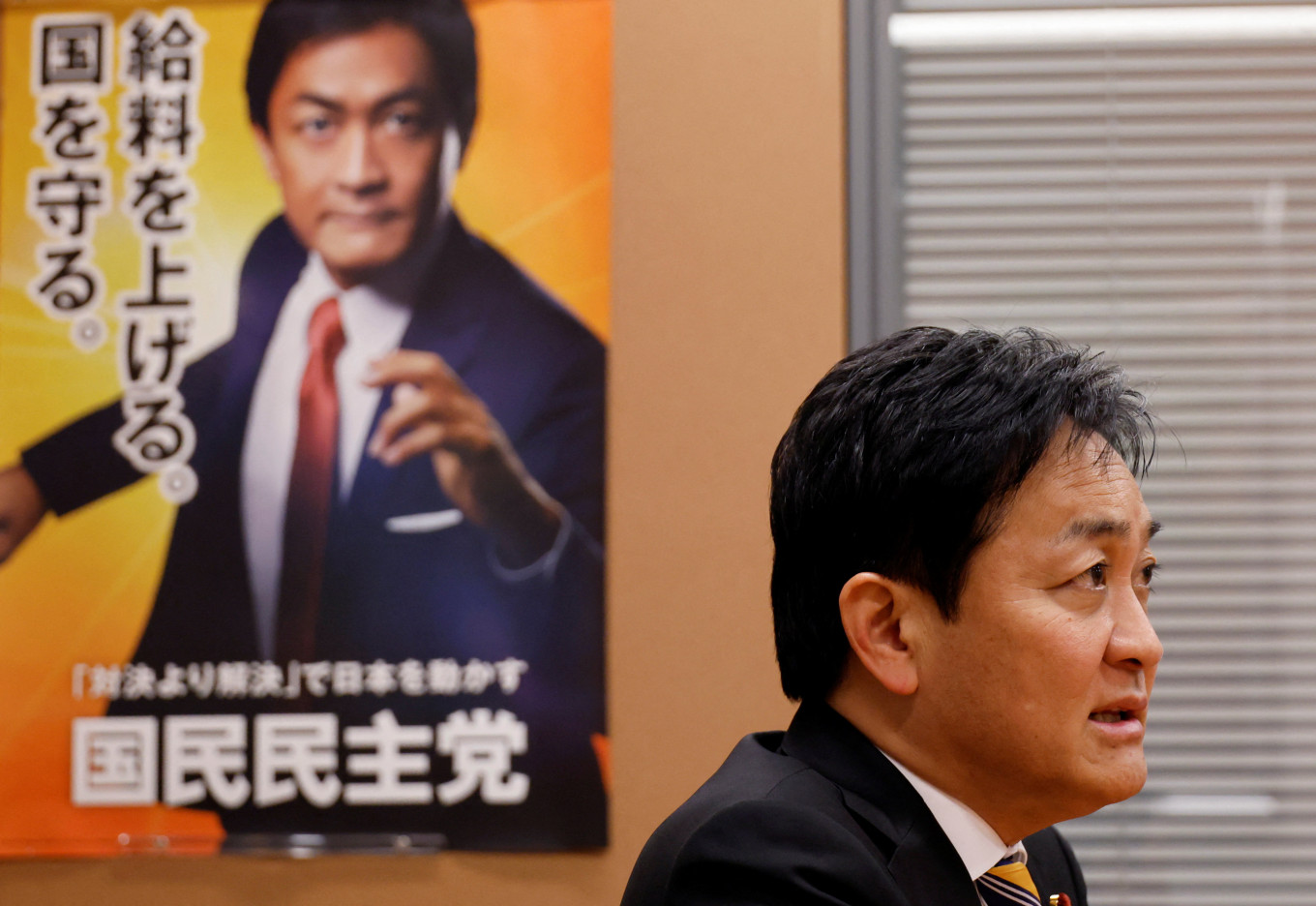 Yuichiro Tamaki, head of the Democratic Party for the People (DPP), speaks during an interview with Reuters in Tokyo on Jan. 21, 2026. (Reuters/Kim Kyung-Hoon)
J
apan should act decisively against excessive market moves, Yuichiro Tamaki, head of an influential opposition party, told Reuters on Wednesday, after a brutal sell-off of Japanese government bonds sent a chill through global financial markets.
Tamaki, head of the Democratic Party for the People (DPP), said policymakers could correct the "abnormal" moves in assets through actions including buying back government bonds or reducing issuance of super-long notes.
The DPP is a smaller party than a newly formed opposition coalition, but it still commands a significant presence in parliament and holds a casting vote in key legislation and the ruling coalition's economic policies.
"Market volatility is heightening significantly with somewhat abnormal moves seen," Tamaki said, when asked about the sharp sell-off in Japanese government bonds (JGB).
"The government and the Bank of Japan should respond decisively to excessive market moves," said Tamaki.
Investors were desperately trying to come to grips with a meltdown in JGBs, with the yield on the benchmark 10-year paper having spiked 8.5 basis points in just two days, the sharpest rise since Japan loosened a cap on the benchmark bond yield in 2022.

The rout was sparked by comments from Prime Minister Sanae Takaichi, who on Monday announced a plan to call a snap general election for Feb. 8 with a pledge to suspend by two years an 8 percent levy on food sales and reverse what she described as "excessively tight fiscal policy."
Investors fear Japan could ramp up debt issuance to meet Takaichi's expansionary fiscal agenda and worsen its already tattered finances.
Forex market intervention should be part of playbook
Tamaki said the government can consider buying back bonds or reducing issuance of 40-year JGBs, on top of sending a strong message to markets.
The Bank of Japan, for its part, can taper its bond-buying at a slower pace than currently scheduled, he added.
Japan should not rule out intervening in the currency market to prop up the yen, if such efforts to lower bond yields lead to an unwelcome decline in the currency, Tamaki said.
The market concern over Japan's finances has also rippled through to the yen, while investors fret the BOJ's slow pace of interest rate hikes may be fueling the risk of too-high inflation.
Since Takaichi became prime minister in October, her dovish fiscal and monetary credentials have tanked the yen by about 8 percent against the dollar to briefly hit an 18-month low of 159.45 last week – its lowest level since Japan last intervened in July 2024.
"I think the BOJ is moving in the right direction by normalizing monetary policy," Tamaki said.
The BOJ should continue raising interest rates if small and mid-sized firms can sustain wage gains of around 5 percent, he added.
When asked about dominant market views the BOJ will hike rates at a pace of roughly twice a year, he said: "It feels natural to me, though the BOJ should pay close attention to any sharp worsening of economic and job market conditions that could lead to rapid declines in wage growth."
The BOJ ended a decade-long, massive stimulus and began tapering its huge bond buying in 2024, followed by several sequences of hikes in its short-term policy rate including one to 0.75 percent from 0.5 percent last month.
Analysts polled by Reuters expect the BOJ to wait until July before raising rates again, with more than 75 percent of them expecting it to climb to 1 percent or higher by September.