TheJakartaPost
Please Update your browser
Your browser is out of date, and may not be compatible with our website. A list of the most popular web browsers can be found below.
Just click on the icons to get to the download page.


Popular Reads
Top Results
No results found. Please check your search term and try again
Can't find what you're looking for?
View all search results
Popular Reads
Top Results
No results found. Please check your search term and try again
Can't find what you're looking for?
View all search resultsHow coal production cuts affect Indonesia’s economy
The coal sector to come under further pressure this year, as the correction in coal prices is likely to continue in line with a deeper decline in Indonesia’s coal production.
Change text size
Gift Premium Articles
to Anyone
Share the best of The Jakarta Post with friends, family, or colleagues. As a subscriber, you can gift 3 to 5 articles each month that anyone can read—no subscription needed!
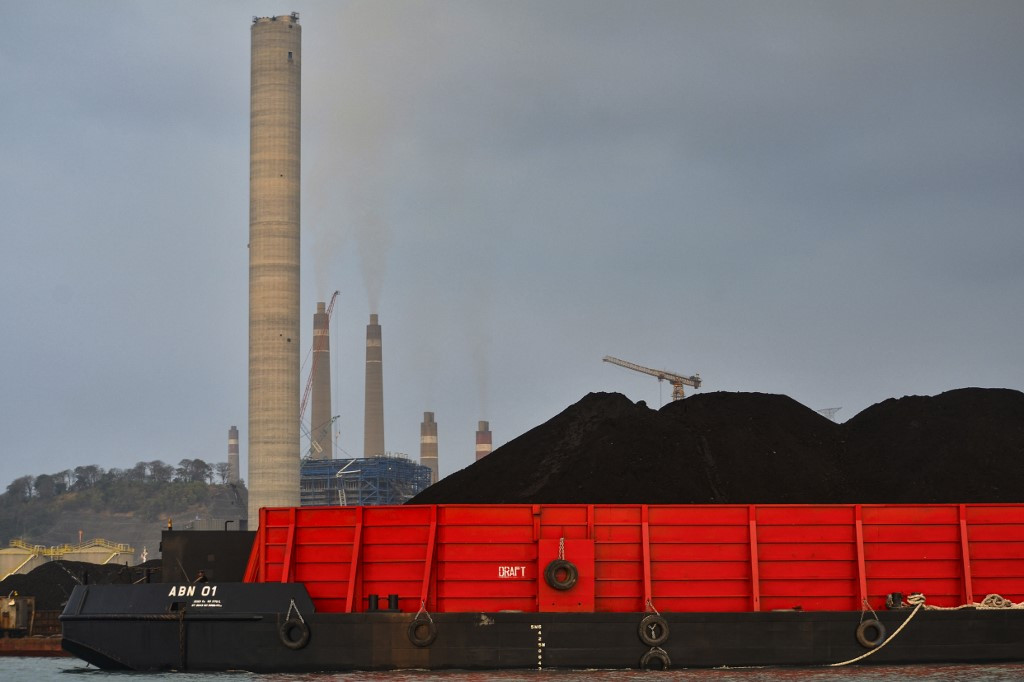 A barge carrying coal on Oct. 31, 2023 at the dock next to the Suralaya coal-fired power plant in Cilegon, Banten. (AFP/Ronald Siagian)
E
nergy and Mineral Resources Minister Bahlil Lahadalia announced on Jan. 8 that Indonesia would cut its coal production by 190 million tonnes to 600 million tonnes in a bid to stabilize global coal prices. The question is what the actual impact of these cuts will be on global prices and Indonesia’s economy?
The impact of Indonesia’s coal production cut on global price movements has been relatively limited, as the country is largely a price taker due to its relatively small share of global production.
Indonesia’s share of global coal production is only around 9 percent, while China, the largest producer, accounts for about 52 percent. Indonesia’s planned 24 percent coal production cut is estimated to reduce global coal supply by only 2.2 percent. As of Jan. 23, coal prices had risen slightly by 2 percent to US$109.1 per tonne, compared with the level one day before the production cut announcement.
Meanwhile, Indonesia is a price maker for nickel, as the country is the world’s largest producer, accounting for around 60 percent of global output. Following the announcement of nickel production cuts on Dec. 22, 2025, nickel prices rose significantly. The planned 31 percent reduction in nickel production, from the 2025 production plan (RKAB) of 379 million tonnes to 260 million tonnes this year, is estimated to reduce global supply by 18 percent. As of Jan. 23, nickel prices had increased by 26.7 percent to $18,613 per tonne, compared with the level one day before the production cut announcement.
Indonesia’s coal production declined to 790 million tonnes in 2025 after peaking at 836 million tonnes in 2024, driven by a surge in global demand following pent-up demand after the COVID-19 pandemic. In 2025, 65 percent of domestic coal production was allocated for export, 32 percent for the domestic market obligation and the remaining 3 percent for inventory. Most coal under the domestic market obligation was used for electricity generation.
Due to the decline in coal exports, total coal export revenue reached $29.8 billion as of November 2025, only accounting for 10.6 percent of the country’s total exports. This figure was lower than the peak in 2022, when coal export revenue stood at $54.6 billion, or 18.7 percent of total exports.

In the third quarter of 2025, coal’s contribution to GDP fell to 3.1 percent, down from a peak of 7.4 percent in the third quarter of 2022. This earlier peak was driven by record coal prices amid the global energy crisis triggered by Russia’s invasion of Ukraine and heightened energy security concerns. The subsequent decline in coal prices also resulted in a decrease in nontax state revenue (PNBP) from minerals and coal.