The Jakarta Post
Please Update your browser
Your browser is out of date, and may not be compatible with our website. A list of the most popular web browsers can be found below.
Just click on the icons to get to the download page.


Popular Reads
Top Results
No results found. Please check your search term and try again
Can't find what you're looking for?
View all search results
Popular Reads
Top Results
No results found. Please check your search term and try again
Can't find what you're looking for?
View all search resultsWeather woes, demand strain may keep inflation above target
Statistics Indonesia (BPS) reported that annual inflation reached 3.55 percent year-on-year (yoy) in January, citing a low base effect after the figure fell below its normal trend in January last year because of electricity tariff discounts.
Change text size
Gift Premium Articles
to Anyone
Share the best of The Jakarta Post with friends, family, or colleagues. As a subscriber, you can gift 3 to 5 articles each month that anyone can read—no subscription needed!
 Set as preferred source
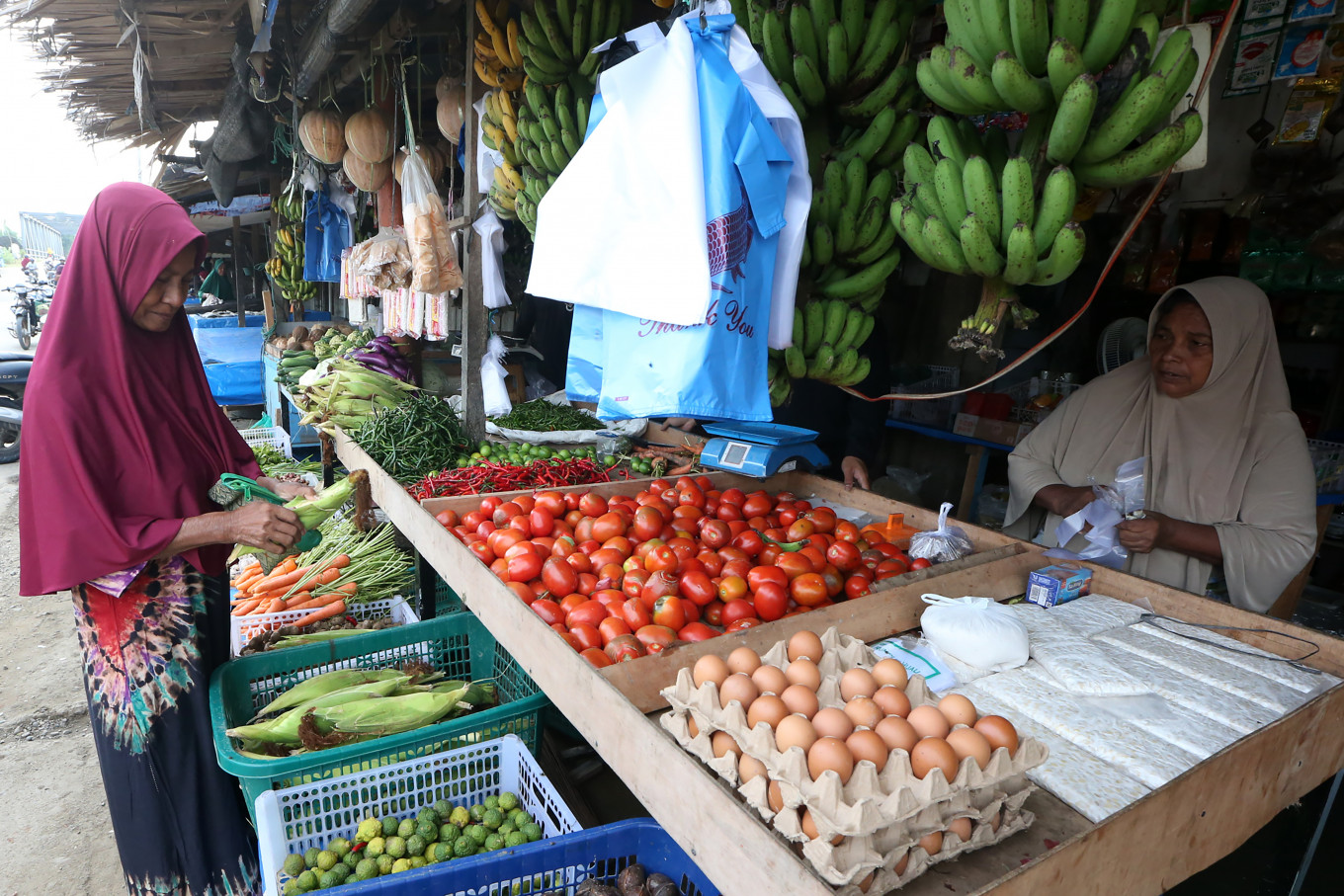 Disrupted market: A woman selects vegetables sold by vendors on Dec. 9, 2025, at the Pangwa traditional market in Pidie Jaya, Aceh. The government has reported rising prices of key staple foods across various regions as widespread flooding in northern Sumatra and torrential rains continue to disrupt harvests and supply chains. (Antara/Irwansyah Putra)
T
he government has brushed off the recent spike in headline inflation as a seasonal blip and price pressures to ease back in the coming months. Analysts, however, warn that a combination of bad weather, natural disasters and supply strains linked to the free nutritious meal program may keep inflation elevated well beyond the Idul Fitri holiday.
Statistics Indonesia (BPS) reported that annual inflation reached 3.55 percent year-on-year (yoy) in January, exceeding Bank Indonesia’s (BI) target range of 1.5 percent to 3.5 percent. The agency stated that the accelerated growth of the consumer price index (CPI) was largely caused by a low base effect after the figure fell below its normal trend in January last year because of electricity tariff discounts.
BPS projected that inflationary pressures linked to the low base effect could persist through February, as the country saw deflation in the same month last year. It noted that the volatile food component was one of the most significant contributors, adding 0.19 percentage points to overall inflation.
“The dominant contributors to volatile food inflation were rice, beef, broiler chicken and shallots,” BPS official Ateng Hartono said on Monday.
State-owned lender Bank Rakyat Indonesia (BRI) warned in a report published on Tuesday that while volatile food inflation remains relatively controlled, risks of higher price pressures persist ahead of Ramadan and Idul Fitri in March, which historically lift demand for food and certain services.
The bank’s team of economists suggested that recent price pressures were largely seasonal and temporary, echoing BPS’s assessment.

Read also: Layoffs rise for fourth straight year, ministry data show