TheJakartaPost
Please Update your browser
Your browser is out of date, and may not be compatible with our website. A list of the most popular web browsers can be found below.
Just click on the icons to get to the download page.


Popular Reads
Top Results
No results found. Please check your search term and try again
Can't find what you're looking for?
View all search results
Popular Reads
Top Results
No results found. Please check your search term and try again
Can't find what you're looking for?
View all search resultsUnlocking regional potential to boost economic growth
As an archipelagic country, Indonesia is endowed with diverse economic potential across regions, reflected in regional economic structures and export profiles.
Change text size
Gift Premium Articles
to Anyone
Share the best of The Jakarta Post with friends, family, or colleagues. As a subscriber, you can gift 3 to 5 articles each month that anyone can read—no subscription needed!
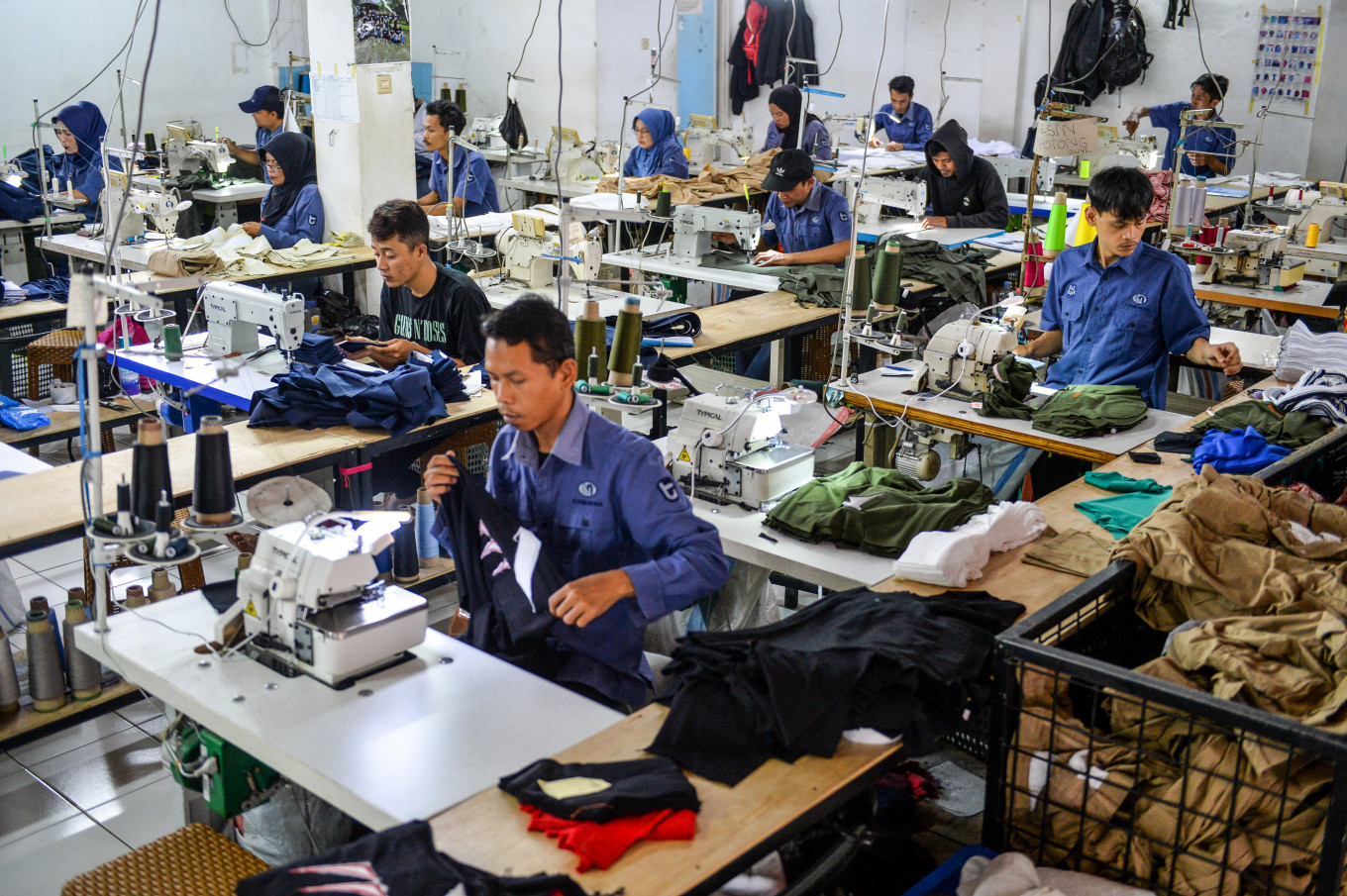 Workers complete production of fashion products on October. 29, 2025, at the Tectona Textile Factory in Pameungpeuk, Bandung regency, West Java. (Antara/Raisan Al Farisi)
I
ndonesia’s economic growth remained solid at 5.1 percent in 2025, yet performance across regions was uneven. Java continues to contribute the largest share to the national economy, with its contribution rising over the past two decades from 56.4 percent in 2004 to 58.7 percent in 2025. The highest regional growth in 2025 was recorded in Java and Sulawesi, driven mainly by expansion of the manufacturing sector.
Meanwhile, other regions have yet to fully optimize their economic potential. In fact, each region possesses distinct characteristics and comparative advantages that could serve as engines of growth if managed effectively.
As an archipelagic country, Indonesia is endowed with diverse economic potential across regions. These differences are reflected in regional economic structures and export profiles.
Java, the largest contributor to the national economy, enjoys strong advantages in manufacturing and a large domestic market. The manufacturing sector accounted for 27.4 percent of Java’s economy in 2025, and Java remained the backbone of national manufacturing, contributing around 66 percent of Indonesia’s total manufacturing output. Key industries in Java include food and beverages, transport equipment, chemicals, electronics and textiles. By province, West Java, Central Java and East Java account for the largest share of manufacturing activity.
Meanwhile, regions outside Java are largely resource-based. In Sumatra, agriculture accounted for 23.7 percent of the regional economy in 2025, supported mainly by plantation crops such as palm oil, rubber and coffee. Similarly, Kalimantan’s economy is heavily based on natural resources, particularly mining. The mining and quarrying sector contributed 24.7 percent to Kalimantan’s economy in 2025, indicating the significant influence of mining commodities, especially coal, on regional economic performance. Moreover, the economies of Sumatra and Kalimantan are highly sensitive to developments in commodity exports such as coal and crude palm oil (CPO).
Bali and both East and West Nusa Tenggara recorded the largest share of economic activity in agriculture, accounting for 19.1 percent of regional GDP in 2025. A closer look shows that agriculture plays a dominant role in Nusa Tenggara, while Bali’s economic structure is dominated by accommodation and food services, reflecting the province’s strong comparative advantage in tourism.

The Sulawesi-Maluku region shows the largest shares in agriculture and manufacturing, accounting for 21.8 percent and 20.1 percent of the regional economy in 2025, respectively. The manufacturing share in Sulawesi has nearly matched that of agriculture, reflecting the impact of the nickel downstreaming program. Meanwhile, Papua’s economic structure is dominated by mining, which accounted for 33.2 percent of regional GDP in 2025, highlighting the region’s heavy dependence on PT Freeport Indonesia’s mining operations located in Central Papua.