The Jakarta Post
Please Update your browser
Your browser is out of date, and may not be compatible with our website. A list of the most popular web browsers can be found below.
Just click on the icons to get to the download page.


Popular Reads
Top Results
No results found. Please check your search term and try again
Can't find what you're looking for?
View all search results
Popular Reads
Top Results
No results found. Please check your search term and try again
Can't find what you're looking for?
View all search resultsIndustrial salt, sugar self-sufficiency push faces reality check
Indonesia targets sugar self sufficiency for household consumption for 2028, followed by industrial refined sugar by 2030, while industrial salt sufficiency is set for 2027.
Change text size
Gift Premium Articles
to Anyone
Share the best of The Jakarta Post with friends, family, or colleagues. As a subscriber, you can gift 3 to 5 articles each month that anyone can read—no subscription needed!
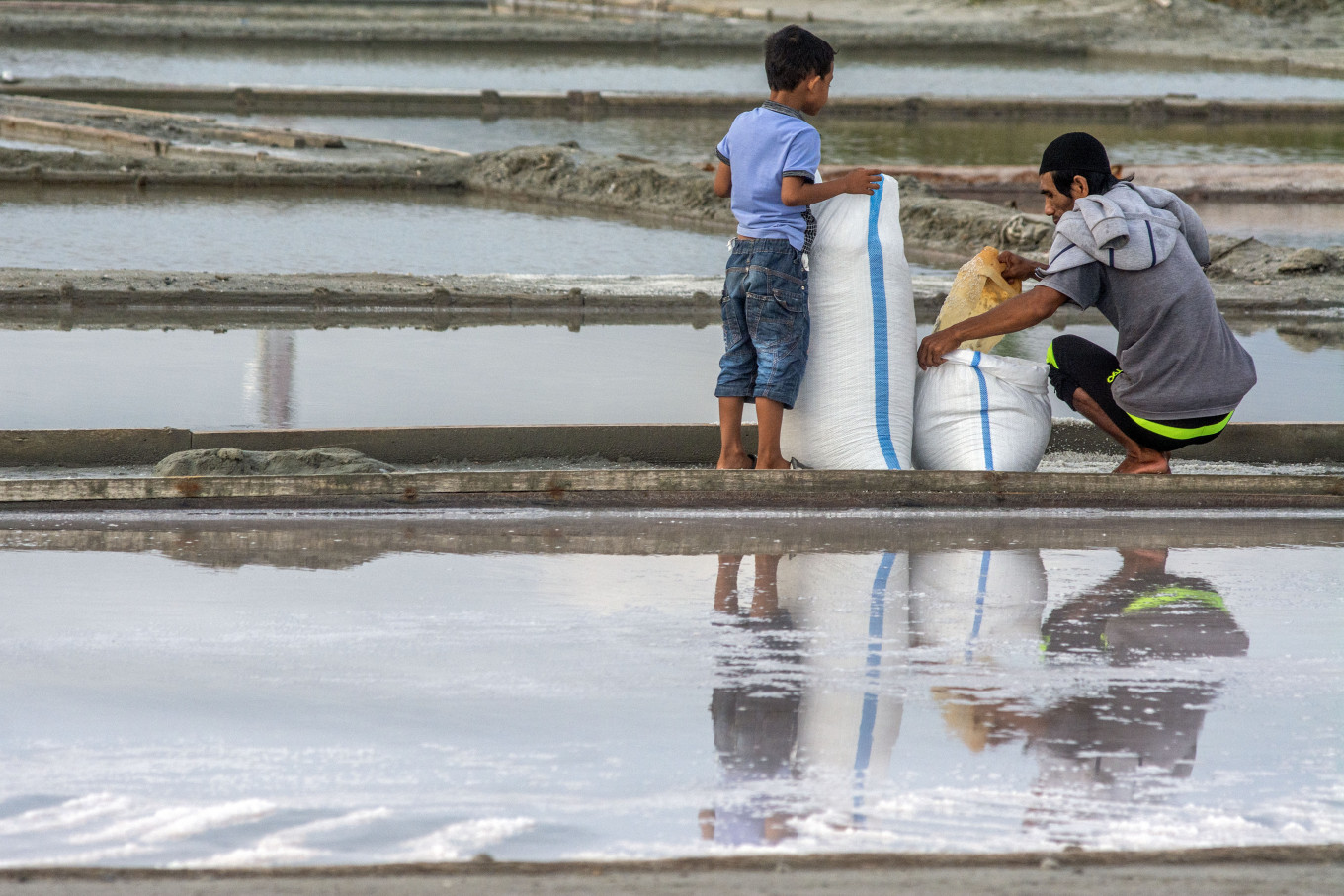 Farmers harvest salt in the Talise area, Palu, Central Sulawesi, on March 17, 2024.
(Antara/Basri Marzuki)
Farmers harvest salt in the Talise area, Palu, Central Sulawesi, on March 17, 2024.
(Antara/Basri Marzuki)
T
he government’s plan to end imports of industrial sugar and salt in the next several years risks proving more aspirational than achievable, as experts and industry players warn that the timelines are unrealistic under current economic and production conditions.
Indonesia targets sugar self sufficiency for household consumption for 2028, followed by industrial refined sugar by 2030. The sufficiency of industrial salt, which is used as chlor-alkali plant feedstock, meanwhile, is set for 2027.
The push forms part of President Prabowo Subianto’s broader food sovereignty agenda, following what the administration has described as progress from rice self-sufficiency achieved last year.
Authorities have pledged to open up to 2 million tonnes worth of new sugarcane plantations in Papua with investment estimated at US$8 billion, while also expanding salt ponds and has tasked state asset fund Danantara with constructing a salt processing plant with annual capacity of 380,000 tonnes.
Khudori, an agriculture expert from the Indonesian Political Economy Association (AEPI), stated that the government’s push to expand domestic output remains largely “project-based” rather than addressing structural bottlenecks, such as low agricultural productivity, weak regulatory coordination and inefficiencies among state-owned enterprises (SOEs).
"The targets are overly ambitious given our current production capacity and structural constraints. Technically perhaps possible, but economically and institutionally, we are not ready,” he told The Jakarta Post on Tuesday.

Consumption-grade targets appear attainable, he said, but industrial self-sufficiency, which requires higher purity standards and reliable volumes for food, petrochemical and pharmacy manufacturers, would demand far deeper supply-chain reform “longer than timelines the government has set.”