The Jakarta Post
Please Update your browser
Your browser is out of date, and may not be compatible with our website. A list of the most popular web browsers can be found below.
Just click on the icons to get to the download page.


Popular Reads
Top Results
No results found. Please check your search term and try again
Can't find what you're looking for?
View all search results
Popular Reads
Top Results
No results found. Please check your search term and try again
Can't find what you're looking for?
View all search resultsUndereducated farmers, overqualified bankers signal RI’s talent gap
An analysis by Mandiri Institute showed that 72.3 million people experienced a talent mismatch last year, meaning their education levels did not align with their job requirements.
Change text size
Gift Premium Articles
to Anyone
Share the best of The Jakarta Post with friends, family, or colleagues. As a subscriber, you can gift 3 to 5 articles each month that anyone can read—no subscription needed!
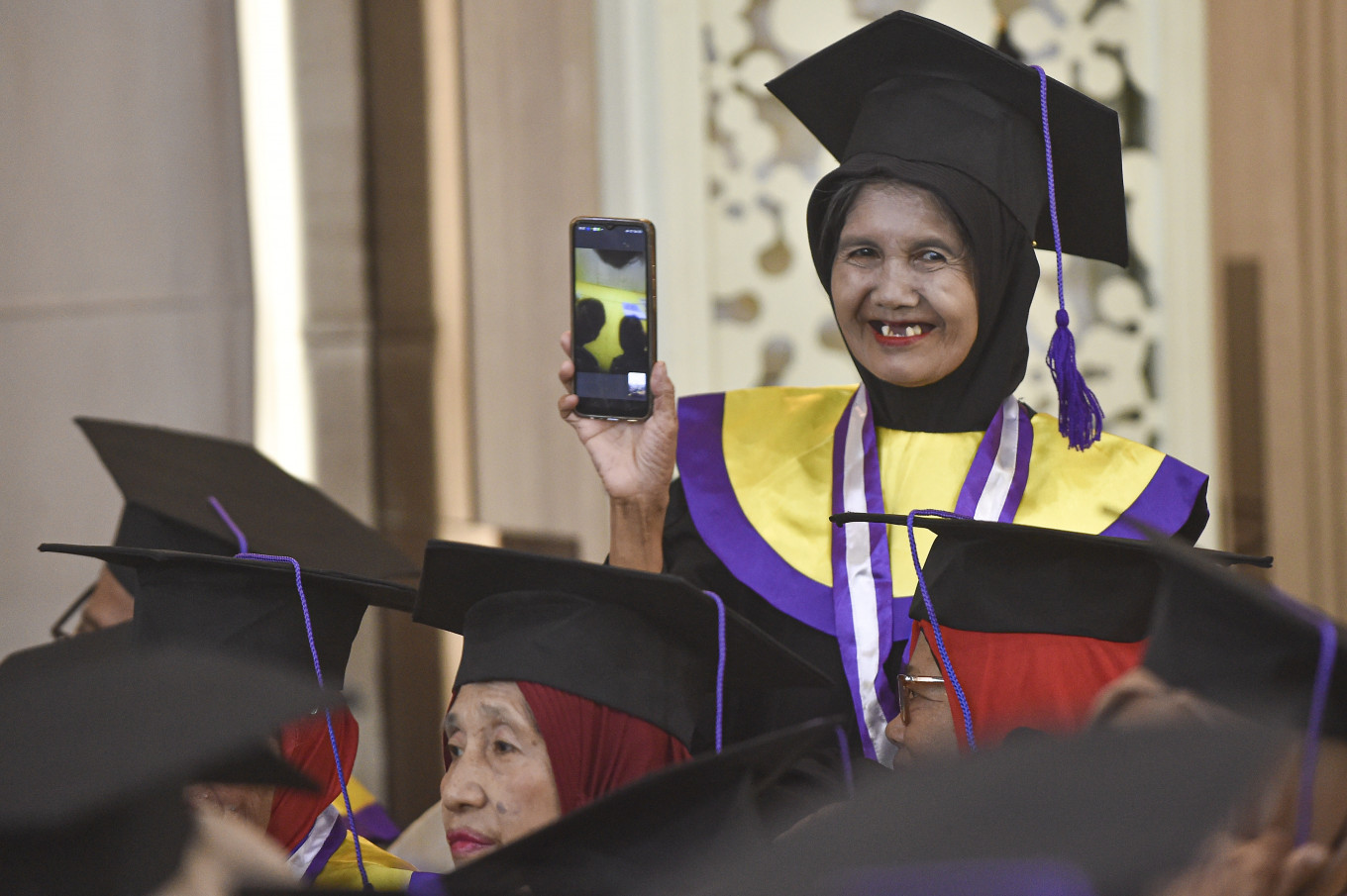 An elderly student at Jambi city’s Senior School makes a phone call on Feb. 10, 2026, during a graduation ceremony at the Griya Mayang Hall, the official residence of the Jambi mayor, in Jambi. The Jambi city administration inaugurated 158 elderly participants from the Paal Merah, Kota Baru and Danau Sipin districts after they completed their education. (Antara/Wahdi Septiawan)
I
ndonesia continues to grapple with a labor mismatch, as low-skilled and undereducated workers still dominate key sectors such as agriculture, while many university graduates flock to jobs unrelated to their fields of study.
An analysis released by Mandiri Institute on Feb. 11 shows that 50 percent of Indonesian workers, equivalent to 72.3 million people, experienced talent mismatch in 2025, meaning their education levels did not align with their job requirements. Of that figure, 32 percent were undereducated, while 18 percent were overeducated.
“This mismatch is actually a long-standing structural problem,” said Andre Simangunsong, head of Mandiri Institute, to The Jakarta Post on Feb. 19.
“Looking ahead, with our ambitious growth targets, our aspiration to become a developed country and the narrowing window of the demographic dividend, this needs to be resolved quickly. Otherwise, it will become a major bottleneck.”
According to Andre, the root of Indonesia’s mismatch crisis lies in a chronic shortage of middle-skilled workers, creating what economists describe as a “missing middle” problem, with direct consequences for productivity, industrial upgrading and economic resilience.
Sectorally, Mandiri Institute analysis shows agriculture stands out as the most severe mismatch hot spot, with the highest proportion of undereducated workers at 50 percent, whereas other sectors such as mining, health and construction stood at around 25 percent.

“Many people working in the agricultural sector are undereducated, some have at most completed junior high school, or did not even finish elementary school. On the contrary, the sector requires education, at the very least basic numeracy skills, the ability to project profits and to calculate production costs,” he said.