The Jakarta Post
Please Update your browser
Your browser is out of date, and may not be compatible with our website. A list of the most popular web browsers can be found below.
Just click on the icons to get to the download page.


Popular Reads
Top Results
No results found. Please check your search term and try again
Can't find what you're looking for?
View all search results
Popular Reads
Top Results
No results found. Please check your search term and try again
Can't find what you're looking for?
View all search resultsAsia pivots to coal as Middle East conflict chokes LNG supply
Asia spot LNG prices have doubled to three-year highs in the second major supply shock in four years, as shipping through the Strait of Hormuz has all but stopped and No.2 global exporter Qatar has halted shipments.
Change text size
Gift Premium Articles
to Anyone
Share the best of The Jakarta Post with friends, family, or colleagues. As a subscriber, you can gift 3 to 5 articles each month that anyone can read—no subscription needed!
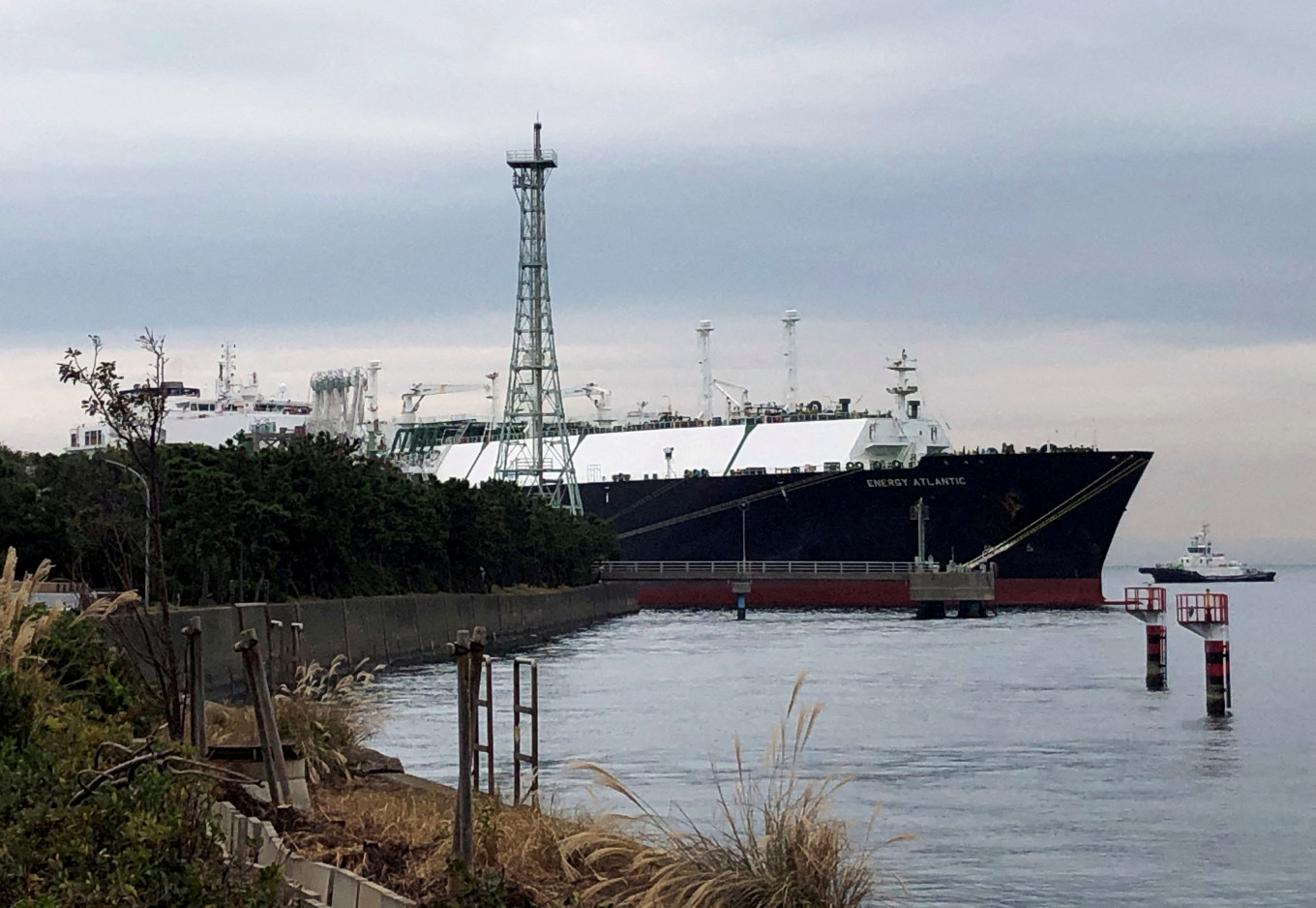 An LNG tanker is seen at the Negishi LNG Terminal, which is jointly operated by Tokyo Gas and JERA, in Yokohama, Japan October 17, 2019. Picture taken October 17, 2019. (Reuters/Yuka Obayashi)
A
sian utilities are boosting coal-fired power generation to cut costs and safeguard energy supply, industry officials say, as the US-Israeli war on Iran chokes liquefied natural gas (LNG) shipments and soaring prices threaten to suppress LNG demand.
Asia spot LNG prices have doubled to three-year highs in the second major supply shock in four years, as shipping through the Strait of Hormuz has all but stopped and No.2 global exporter Qatar has halted shipments.
In South Asia, Bangladesh is increasing coal power generation and coal-fired power imports in March, daily government data shows.
Pakistan, meanwhile, aims to further boost power generated from domestic sources after solar additions helped it avoid a repeat of the LNG supply volatility behind widespread outages following Russia's 2022 Ukraine invasion, Power Minister Awais Leghari said.
"With reduction in LNG generation, plants running on locally mined coal will be able to produce more during off-peak hours," Leghari told Reuters.
In Southeast Asia, the Philippines is ramping up coal-fired power and slashing LNG-fired output, while Vietnam's EVN told Reuters last week it is negotiating coal supply and Thailand is boosting generation from its largest coal plant to preserve LNG.

South Korea plans to remove ceilings on coal-fired output and increase nuclear generation, while Japan's top utility JERA told Reuters last week it will keep coal-fired power generation at high utilization rates.
Natural gas has accounted for a declining share of Asia's power generation for nearly a decade due to surging renewables usage, Ember data shows, despite global energy majors betting billions of dollars on regional LNG demand growth.
War-driven supply disruptions are expected to trigger LNG demand destruction across Asia, analysts and industry officials say, with prices likely to remain elevated and volatile even after the crisis.
High LNG costs after Moscow's Ukraine invasion and shortages of city gas pipeline networks have led to widespread cancellations or delays of proposed LNG import capacity in South Asia, where $107 billion in infrastructure investments could be at risk, Global Energy Monitor said in a report last week.
Aziz Khan, chairman of Bangladesh's Summit Group, which owns an LNG regasification unit, told Reuters that it is difficult to pass along higher power costs.
"You're breaking the backbone of the economies of poorer countries," he said.
Since most LNG contracts are linked to oil prices on a three-month lag, Asian buyers will pay more from June, consultancy Wood Mackenzie said.
"The conflict will significantly reduce Asian LNG demand growth in 2026," said Lucas Schmitt, an analyst at Wood Mackenzie, which cut its annual forecast for Asian LNG imports to about 5 million metric tons from 12.4 million tons, assuming a two-month disruption to Middle East supply.
The key Asian benchmark for thermal coal has risen 13.2 percent this month. By comparison, European coal futures are 14.2 percent higher, with Kpler analysts expecting EU thermal coal imports to rise 36 percent to 30 million tons this year on low gas inventories.
Still, the rally is dwarfed by the acceleration in global LNG prices and will be limited by imports remaining muted for now, as utilities in major Asian buyers China, India, Japan and South Korea draw on ample coal stockpiles and assured supply through long-term contracts, according to analysts.
Rising fuel import costs bolster the argument for renewables, they say.
"Recent shocks once again refute the case for relying on imported fossil fuels in energy sector development plans, potentially creating more opportunities for renewables," said Sam Reynolds, LNG research lead at energy think tank IEEFA.