The Jakarta Post
Please Update your browser
Your browser is out of date, and may not be compatible with our website. A list of the most popular web browsers can be found below.
Just click on the icons to get to the download page.


Popular Reads
Top Results
No results found. Please check your search term and try again
Can't find what you're looking for?
View all search results
Popular Reads
Top Results
No results found. Please check your search term and try again
Can't find what you're looking for?
View all search resultsIEA discussing further oil stock releases, chief Birol says
Change text size
Gift Premium Articles
to Anyone
Share the best of The Jakarta Post with friends, family, or colleagues. As a subscriber, you can gift 3 to 5 articles each month that anyone can read—no subscription needed!
 Set as preferred source
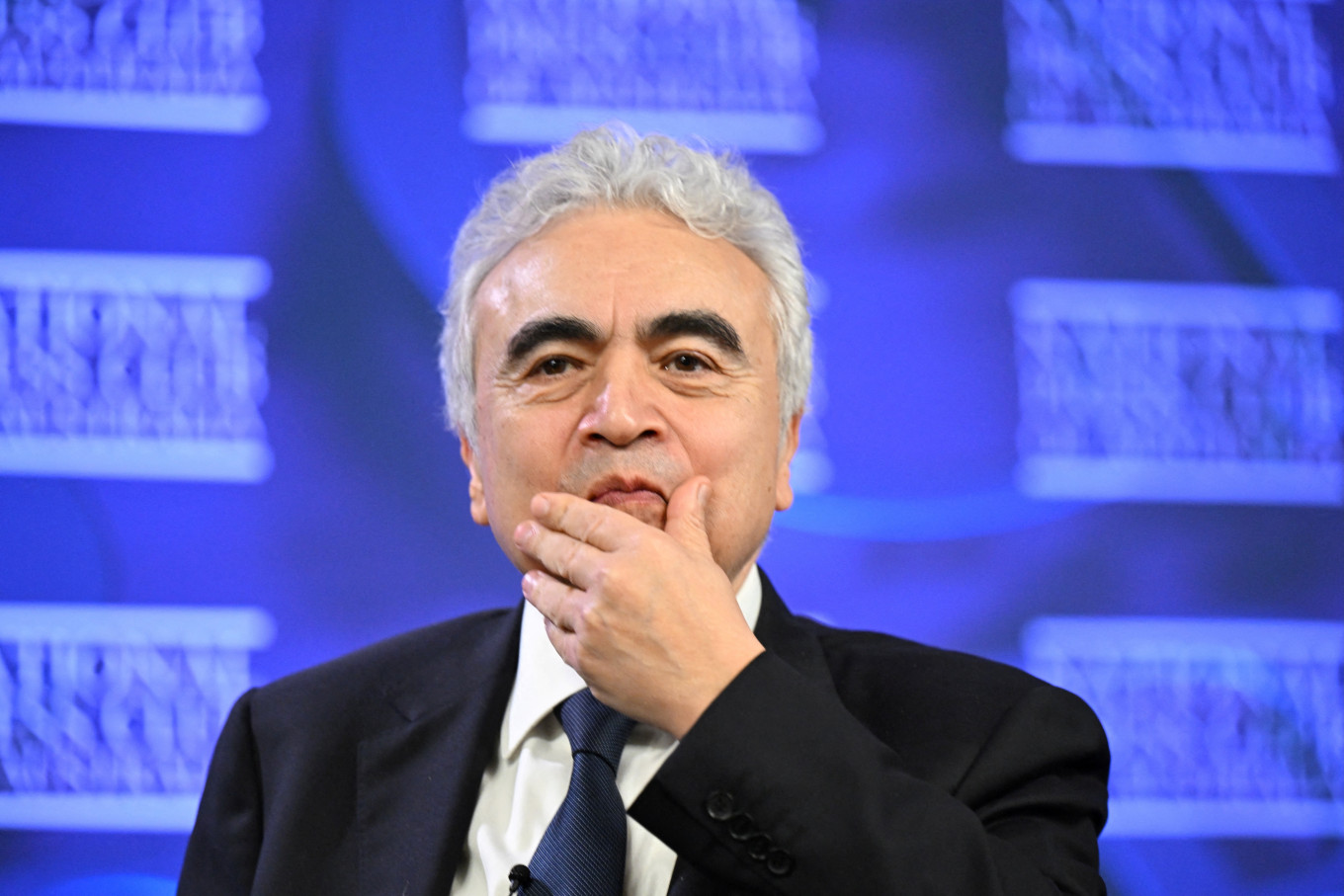 International Energy Agency executive director Fatih Birol looks on during his speech at the National Press Club in Canberra, Australia, on March 23, 2026. (AAP/Reuters/Lukas Coch)
T
he International Energy Agency is consulting with governments in Asia and Europe on the release of more stockpiled oil "if necessary" due to the Iran war, Executive Director Fatih Birol said on Monday.
"If it is necessary, of course, we will do it. We look at the conditions, we will analyze, assess the markets and discuss with our member countries," Birol told the National Press Club in Canberra, at the start of a world tour.
IEA member nations agreed on March 11 to release a record 400 million barrels of oil from strategic stockpiles to combat the spike in global crude prices. The drawdown represented 20 percent of overall stocks.
There would not be a specific crude price level to trigger another release, Birol said.
“A stock release will help to comfort the markets, but this is not the solution. It will only help to reduce the pain in the economy.”
The IEA chief began his world tour in Canberra as the Asia Pacific is at the forefront of the oil crisis, he said, given its reliance on oil and other crucial products like fertilizer and helium transiting the Strait of Hormuz.

After meeting Australian Prime Minister Anthony Albanese, Birol will travel to Japan later this week before a Group of Seven meeting.
He described the crisis in the Middle East as "very severe" and worse than the two oil shocks of the 1970s, as well as the impact of the Russia-Ukraine war on gas, put together.
The war on Iran had taken 11 million barrels of oil per day from global supply, more than the two prior oil shocks combined.
"The single most important solution to this problem is opening the Hormuz Strait," he said.
“The depth of the problem was not well appreciated by the decision makers around the world,” he said of his decision to begin speaking publicly three weeks into the war.
Stockpile drawdowns are only a portion of what the IEA could do, he said.
Measures outlined by the IEA, such as lowering speed limits or implementing work-from-home measures, had reduced energy use when implemented in Europe in 2022, but each nation would need to decide how best to enact fuel savings, Birol said.
He said that while Australia’s liquid fuel holdings were lower than IEA regulations, the current government had done much to improve them and that 30 days of diesel was a “solid number”.