The Jakarta Post
Please Update your browser
Your browser is out of date, and may not be compatible with our website. A list of the most popular web browsers can be found below.
Just click on the icons to get to the download page.


Popular Reads
Top Results
No results found. Please check your search term and try again
Can't find what you're looking for?
View all search results
Popular Reads
Top Results
No results found. Please check your search term and try again
Can't find what you're looking for?
View all search resultsIndonesia rations fuel as prices soar over Mideast war
The government estimates the measures, which enter into force Wednesday and are to be reviewed every two months, would save between Rp 121 trillion and Rp 130 trillion ($7.1-7.6 billion).
Change text size
Gift Premium Articles
to Anyone
Share the best of The Jakarta Post with friends, family, or colleagues. As a subscriber, you can gift 3 to 5 articles each month that anyone can read—no subscription needed!
 Set as preferred source
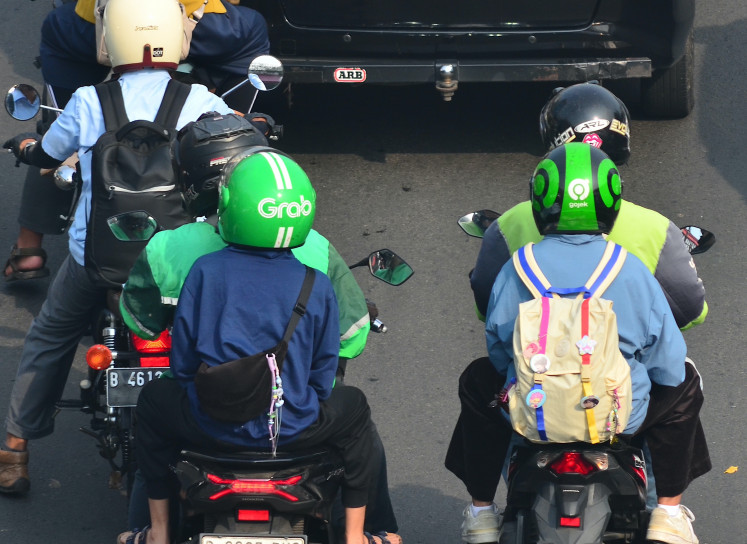
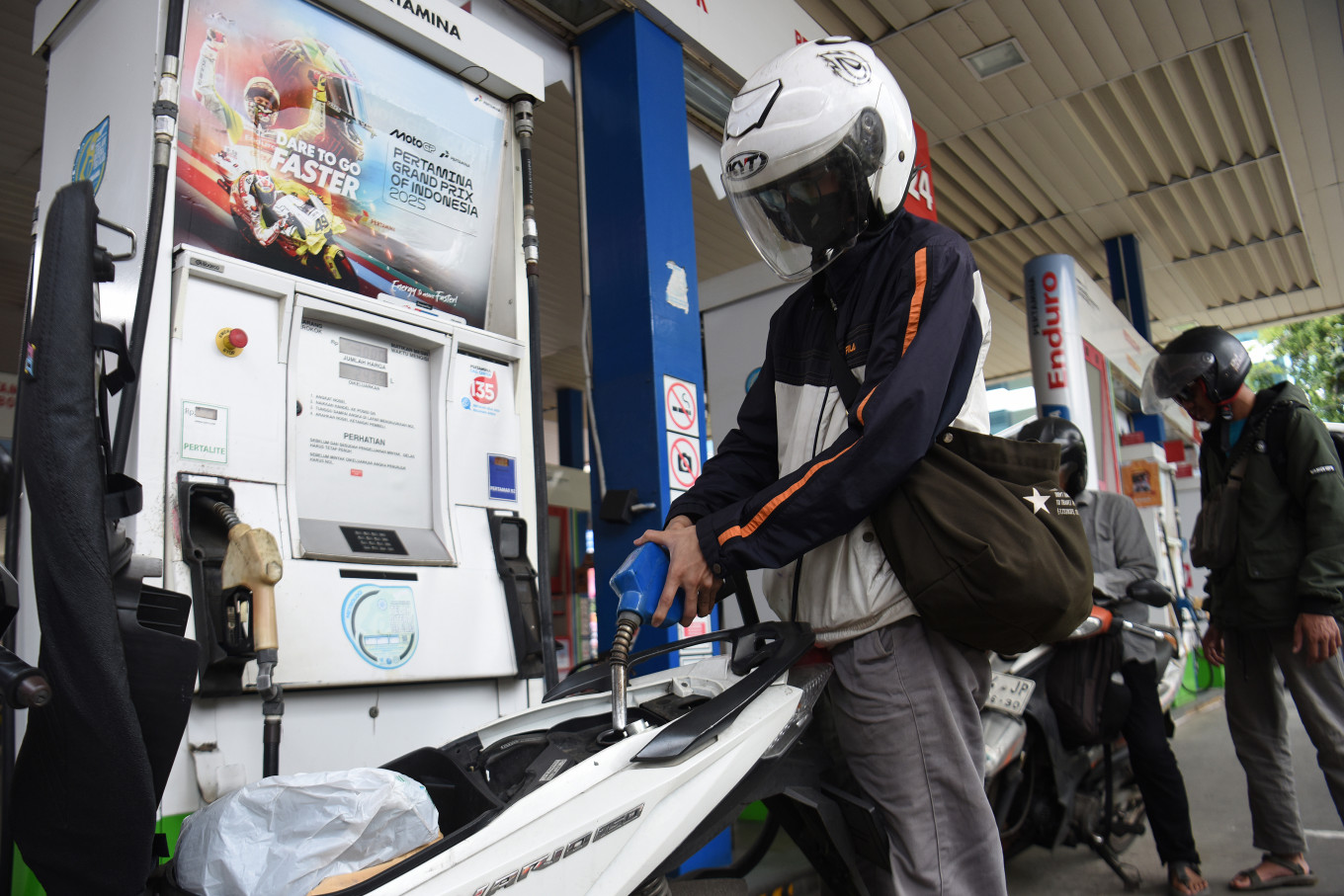 Stock up: Motorcyclists line up to refuel with non-subsidized fuel Pertamax on Sunday, March 1, 2026, at a gas station in Kuningan, Jakarta. (Antara/Indrianto Eko Suwarso)
T
he government on Tuesday announced fuel rationing and mandated work from home for civil servants as it seeks to conserve energy stocks amid global price hikes due to the Middle East war.
"To ensure fuel distribution, the government will regulate purchases... with a reasonable limit of 50 litres per vehicle" per day for private consumers, said Airlangga Hartarto, the coordinating minister of economic affairs.
Speaking at a virtual news conference from Seoul, he said civil servants will work from home every Friday, official vehicle use will be cut in half and work trips for government officials reduced by as much as 70 percent.
The measures do not apply to government workers in sectors deemed essential, including health care, security, energy, and water and food supply.
The government estimates the measures, which enter into force Wednesday and are to be reviewed every two months, would save between Rp 121 trillion and Rp 130 trillion ($7.1-7.6 billion), Airlangga said.
Since the Middle East war began on February 28, some of Indonesia's neighbors have already announced fuel-saving steps including work-from-home measures, official travel cuts and online schooling.

Some have also raised fuel prices, but Jakarta said on Tuesday it would not do so in the near future.
Southeast Asia's largest economy, where fuel is heavily subsidized, is an oil producer but nevertheless a net importer.
The government has doggedly defended its subsidy, which at $12.3 billion represents about five percent of the total annual budget for 2026.
Observers say Jakarta's hand may eventually be forced given that the government is required by law to keep fiscal deficit under three percent of gross domestic product.
The 2026 fuel subsidy calculation was premised on a global oil price of $70 per barrel, but prices have since topped $100.
Airlangga however said that "the national economic condition remains stable with strong fundamentals. National fuel stocks are safe and fiscal stability is maintained."
Bahlil Lahadalia, the energy minister, encouraged Indonesians to use public transport or electric vehicles instead of gasoline-powered cars.
"We need the support and cooperation of the public. We need to purchase fuel reasonably and wisely."
On Sunday, the government announced a one-day-per-week reduction in its free school meals program, though not for areas with high malnutrition rates.
The government said that in-person schooling will be maintained, and work-from-home measures for the private sector may be considered at a later stage.
Unlike some of its neighbors, Indonesia has not seen long fuel queues as global oil prices have soared due to Iran's de facto closure of the strategic Strait of Hormuz.
A fifth of the world's crude supplies and a substantial amount of gas normally run through the waterway, but traffic has effectively halted during the war, which began with US-Israeli strikes on Iran.
A statement from the Indonesian government sent to AFP said there would be no increase "for subsidized or non-subsidized" fuel from April 1.
It warned against "misinformation" about a pending price hike, quoting presidential spokesman Prasetyo Hadi as saying "we guarantee the availability of fuel... and there is no price adjustment."
Previous fuel price hikes in Indonesia have resulted in mass protests.
President Prabowo Subianto seeks to raise the economic growth rate from 5.1 percent last year to eight percent by 2029, powered by high public spending.