The Jakarta Post
Please Update your browser
Your browser is out of date, and may not be compatible with our website. A list of the most popular web browsers can be found below.
Just click on the icons to get to the download page.


Popular Reads
Top Results
No results found. Please check your search term and try again
Can't find what you're looking for?
View all search results
Popular Reads
Top Results
No results found. Please check your search term and try again
Can't find what you're looking for?
View all search resultsFrom oil shock to global financial market shift
Due to the reemergence of oil prices as a key determinant amid the Iran war, monetary authorities facing renewed inflation risks are becoming less likely to cut interest rates, keeping global borrowing costs elevated and tightening financial conditions across both advanced and emerging economies.
Change text size
Gift Premium Articles
to Anyone
Share the best of The Jakarta Post with friends, family, or colleagues. As a subscriber, you can gift 3 to 5 articles each month that anyone can read—no subscription needed!
 Set as preferred source
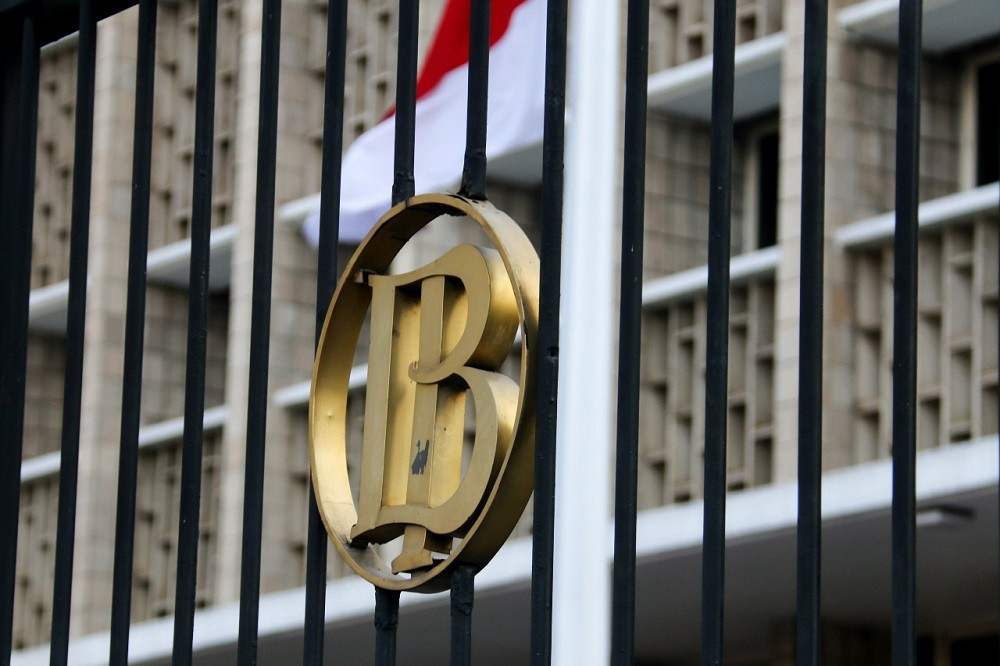 The national flag flies behind a gate bearing the Bank Indonesia logo at the central bank on Jl. Thamrin in Central Jakarta, in this file photo taken on Aug. 7, 2019. (The Jakarta Post/Rafaela Chandra)
T
he first quarter of 2026 did not deliver the easing cycle many had expected. Instead, global markets were forced to reprice risk in an environment where inflation proved more persistent and geopolitical tensions resurfaced as a dominant macro driver.
The renewed conflict in the Middle East marked a critical inflection point, disrupting energy flows and reintroducing supply-side inflation pressures just as central banks were attempting to consolidate disinflation gains.
Oil prices have reemerged as a key determinant for inflation expectations, effectively narrowing the policy space for central banks. Monetary authorities facing renewed risk on inflation are becoming less likely to cut interest rates. As a result, the “high for longer” stance has regained traction, keeping global interest rates elevated and tightening financial conditions across both advanced and emerging economies.
The policy stance of the United States Federal Reserve reflects this constraint. Despite relatively resilient growth, inflation, particularly from energy, remains sticky enough to delay easing. The risk of prematurely loosening policy has become more consequential than the cost of staying restrictive.
Because of this, US Treasury yields have stayed high and the US dollar has remained strong as a preferred safe haven asset.
In practice, this translates into tighter and more selective global liquidity, where capital is increasingly concentrated in markets offering stability rather than yield.

Growing divergence across economies has been a key feature of the first quarter (Q1) of 2026. Commodity exporters, particularly those benefiting from higher energy prices, have seen improvements in their external balances and fiscal positions. In contrast, energy-importing economies are facing a more challenging adjustment, with rising imported inflation, currency depreciation pressures and weaker external demand.
In this situation, policy credibility and resilience to external shocks are becoming increasingly important.
Across Asia, these pressures have become more visible. The region’s structural dependence on energy imports has amplified inflation risks while China’s slower recovery continues to dampen trade momentum. Consequently, global capital flows into Asia are no longer broad-based but increasingly selective, favoring economies with strong macroeconomic stability and clear policy direction.
Several countries that experienced equity market outflows during Q1 2026 include Japan, South Korea and India. Meanwhile, net selling in bond markets was observed in China and South Africa.
Indonesia stands amid these dynamics with relatively balanced characteristics.
On the one hand, the country’s macroeconomic fundamentals remain broadly solid.
Government policies have helped push consumption and investment, yet risks are emerging, particularly on inflation and rupiah depreciation. Thus, Bank Indonesia (BI) has continued to maintain its policy rate, focusing on exchange rate stability and inflation.
On the other hand, market responses indicate that risk perception remains a dominant factor.
The rupiah came under pressure throughout the first quarter to the psychological level of 17,000 per US dollar, driven by a strong greenback and shifting capital flows. In the bond market, yields increased moderately, reflecting adjustments to global conditions while maintaining investor attractiveness.
However, the most pronounced pressure was observed in the equity market, where significant foreign outflows and sharp valuation corrections took place. During the first quarter, foreign investors recorded net outflows of Rp 32.8 trillion (US$1.9 billion) from equities and Rp 25.1 trillion from the bond market.
Interestingly, capital flow patterns suggest that investors have not entirely exited Indonesia, but rather have reallocated their portfolios. Instruments offering relatively stable returns and lower risk, such as short-term securities and BI instruments, have continued to attract interest.
This is reflected in foreign ownership of Bank Indonesia Rupiah Securities (SRBI), which recorded inflows of Rp 30 trillion during Q1 2026. In contrast, higher-volatility assets such as equities faced greater pressure.
This phenomenon highlights a shift in investor preference from return-seeking to risk management, a pattern commonly observed during periods of heightened global uncertainty.
Beyond external factors, domestic dynamics have also influenced market sentiment. The revision of Indonesia’s credit rating outlook to negative by global rating agencies has added another layer of caution for investors.
Although the rating remains within investment grade, the outlook downgrade signals concerns regarding policy consistency and the economy’s direction. In an already risk-sensitive global environment, such shifts in perception can accelerate capital outflows, particularly from equity markets.
Looking ahead, the trajectory of global markets in the coming quarter will hinge on three variables: the evolution of geopolitical tensions, the persistence of energy prices and the policy response of major central banks.
A meaningful de-escalation in geopolitical risks combined with stabilization in energy markets could ease inflation pressures and reopen the path toward policy normalization. Under such a scenario, the US dollar would likely soften, allowing capital to gradually rotate back into emerging markets, including Indonesia.
Conversely, if geopolitical conflicts persist and energy prices remain elevated, global inflationary pressures are likely to stay entrenched. This will reinforce the cautious stance of major central banks and keep interest rates higher for longer. Under such conditions, financial market volatility is expected to remain elevated, with continued downside risks to emerging market currencies and assets.
For Indonesia, the outlook ahead will be shaped not only by external conditions but also by its ability to maintain investor confidence. Strong fundamentals provide a sufficient buffer against external shocks, but they do not automatically guarantee the return of capital inflows. Policy consistency, transparency and effective coordination among authorities will be critical in lowering risk premiums and enhancing the attractiveness of domestic markets.
In conclusion, Q1 2026 delivers a clear message that in an environment of heightened global uncertainty, market dynamics are no longer shaped solely by growth prospects but increasingly by the demand for policy clarity, credibility and stability. The ongoing shift toward a more selective global capital allocation highlights that investors are becoming more discerning, placing greater emphasis on resilience, consistency and the ability of policymakers to respond effectively to external shocks.
Indonesia continues to hold meaningful potential to remain competitive within this evolving landscape, supported by its relatively strong macroeconomic fundamentals, manageable inflation outlook and a still-attractive domestic market. The ability to reinforce policy credibility, enhance transparency and maintain coordinated and forward-looking policy actions will be increasingly critical in anchoring investor confidence, particularly amid persistent global volatility and shifting risk sentiment.
As global markets become more sensitive to policy signals and risk management capabilities, the differentiation across countries is likely to widen further. This implies that beyond maintaining solid fundamentals, consistent and credible policy execution will be a key determinant of market performance and capital flow dynamics.
In an increasingly selective global landscape, countries that can effectively manage risks will attract capital, while those that fail to maintain investor confidence risk being left behind.
*****
The writer is senior economist at Bank Mandiri.