The Jakarta Post
Please Update your browser
Your browser is out of date, and may not be compatible with our website. A list of the most popular web browsers can be found below.
Just click on the icons to get to the download page.


Popular Reads
Top Results
No results found. Please check your search term and try again
Can't find what you're looking for?
View all search results
Popular Reads
Top Results
No results found. Please check your search term and try again
Can't find what you're looking for?
View all search resultsFrom nursing to nurturing: A daughter carries a legacy and takes charge
Change text size
Gift Premium Articles
to Anyone
Share the best of The Jakarta Post with friends, family, or colleagues. As a subscriber, you can gift 3 to 5 articles each month that anyone can read—no subscription needed!
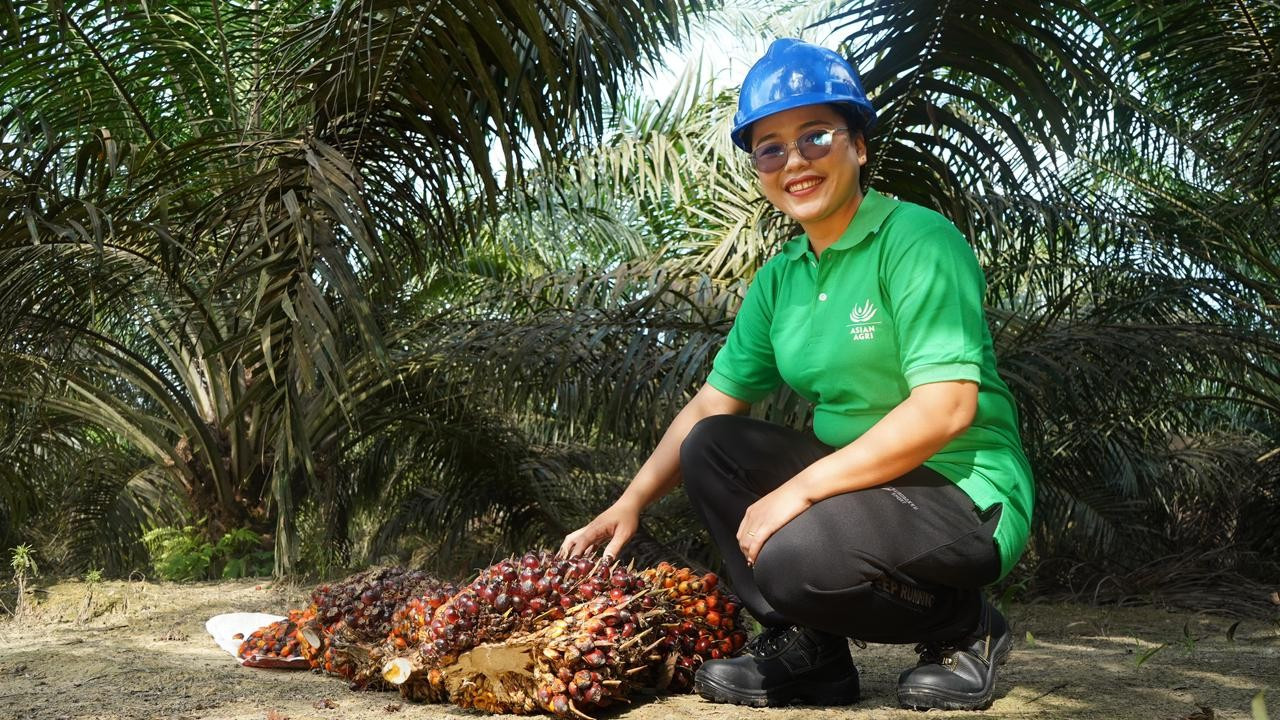 (Courtesy of Asian Agri)
S
econd-generation oil palm smallholders, especially women, are playing an increasingly important role in shaping a more sustainable and inclusive future for the palm oil industry. This progress is closely linked to improved access to knowledge, structured support systems and growing recognition of women’s contributions within the sector.
One example is Mey Christine, a 30-year-old plasma smallholder from Riau. Having grown up in a farming family, Mey understands that managing an oil palm plantation is not merely about routine work, but also about perseverance, responsibility and continuity.
She initially pursued a career in nursing, supported by her parents’ efforts as plasma smallholders. However, as her parents grew older and could no longer actively manage the plantation, Mey felt a strong sense of responsibility to step in.
“Farming is not just about work, it is also about honoring what my parents have built,” she said. “I want to ensure the plantation continues to thrive.”
Today, Mey divides her time across multiple roles. She works as a nurse at a community health center (Puskesmas), helps manage her family’s plantation, runs a small pharmacy business and actively participates in the Sumber Bahagia Cooperative. Her journey reflects how the palm oil ecosystem can support both economic stability and broader opportunities for rural communities.
As a second-generation farmer, Mey brings a different approach compared with her parents. While the previous generation relied largely on hands-on experience, Mey combines that knowledge with a more structured and informed management style.

“I carry forward the way my parents built and managed the plantation,” she explained, “but I also build on that foundation, by asking questions, learning new approaches and finding ways to improve how we do things.”
She applies a more systematic approach to plantation management, including monitoring harvesting schedules, fertilization and replanting processes. This combination of inherited knowledge and new perspectives allows her to enhance efficiency and long-term productivity.
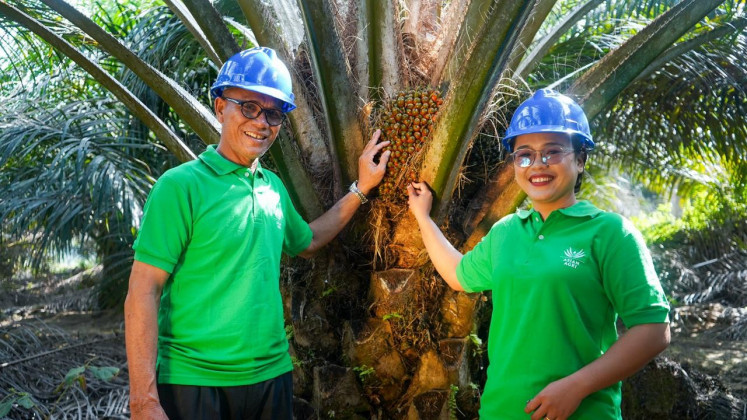
Sustainability is also a key aspect of her approach. Through her partnership with Asian Agri, Mey receives guidance in strengthening her plantation practices, including proper fertilization techniques, good field management and replanting with superior seedlings.
“For me, good results cannot be achieved by simply going through the motions. Plantation management must be done properly,” she said.
“What we do today will affect future outcomes, so we must keep learning.”
Her plantation has undergone replanting since 2020 using Topaz seedlings, an experience she describes as challenging but ultimately rewarding.
“At first, it was not easy. Replanting requires time, effort and patience. But with good seedlings and clear guidance, I became more confident,” she noted.
According to Mey, the support she received, particularly during replanting and in learning plantation management, has been invaluable. It has not only improved plantation performance but also strengthened farmers’ confidence.
“I see that there are more opportunities opening up for women now, although not all are easily accessible. From my experience, support and guidance have helped me become more confident in getting involved, not just assisting, but truly understanding how the plantation is managed.”
“Personally, this has had a meaningful impact. It has shown me that women can also take on roles in this field, even though it is still often seen as a male-dominated industry. Of course, it still requires a process and courage to step into it.”
Tangible results
Meanwhile, Rudy Rismanto, head of partnership at Asian Agri, highlighted the company’s role in empowering second-generation oil palm smallholders.
“In the field, we see many plantations transitioning to the next generation. The challenge is that not all second-generation farmers are ready to take over, some lack experience, while others are not yet convinced that oil palm remains a promising long-term option,” explained Rudy.
“At the same time, interest among younger generations still exists, but it is shaped by what they observe. When plantations are poorly managed and underperforming, hesitation is understandable. Conversely, well-managed plantations with clear results tend to attract stronger interest.”
“Our role is to support this transition and make it more compelling. We not only provide technical assistance, such as good agricultural practices, but also demonstrate that plantations can be managed as sustainable, growing businesses, not merely inherited assets.”
“Rather than creating separate programs for the second generation, we focus on strengthening existing partnership systems, training programs and cooperatives, so they can support young farmers as they enter, learn and gradually take on greater responsibilities,” he added.
According to Rudy, tangible results are key to attracting youth participation.
“We prioritize improving productivity and plantation management. As outcomes become more stable, young people are more likely to get involved, participate in training and engage in group activities.”
“For women, their contributions already exist but often go unrecognized, as much of their work happens behind the scenes. In addition, plantation work remains male-dominated and physically demanding, which can limit direct field involvement,” he said.
“That is why, we encourage broader roles beyond fieldwork, including financial management, record-keeping and labor coordination, areas that are equally critical to effective plantation operations.”
He added that Asian Agri promotes inclusivity by ensuring equal access to training and discussion forums.
“From there, we see growing confidence and participation, including in cooperative-level discussions and decision-making. The process is gradual, but the direction is clear.”
Rudy also emphasized that Asian Agri aligns its smallholder empowerment programs with broader sustainability commitments.
“For us, sustainability starts with strong fundamentals, knowledge and practices in the field. Our focus is on training and assistance, covering proper fertilization, crop maintenance, structured record-keeping and plantation management. Once these are in place, farmers are better prepared to move to the next stage, including certifications such as ISPO or RSPO.”
“In this sense, certification is not the starting point, but the outcome of a well-executed process.”
He further noted that initiatives such as the use of superior seedlings, including Topaz, and replanting programs are critical to long-term productivity and farmer income.
“Many smallholder plantations have reached the end of their productive cycle, around 25 years, yet farmers often hesitate to replant because it means three to four years without income.”
“This is where we step in, not only to encourage replanting, but to support its implementation. We facilitate access to financing, act as guarantors to banks and provide superior seedlings. Seed quality is crucial, as suboptimal seedlings will not deliver optimal yields. With better seedlings, future productivity can increase significantly.”
“We also support alternative income sources during the waiting period, ensuring farmers are not left without livelihoods while their plantations are not yet productive.”
“We believe the future of smallholders must be stronger and more resilient. As market demands continue to rise, both in productivity and sustainability, smallholders cannot operate in isolation. They need the right support systems to grow and remain competitive.”
As a second-generation farmer, Mey represents the future of responsible palm oil. Her adoption of replanting and improved practices demonstrates how women are actively contributing to long-term sustainability and productivity.
As Indonesia commemorates Kartini Day on April 21, figures like Mey remind us that today’s “Kartinis” are not only found in urban spaces, but also in rural communities, quietly balancing responsibilities, driving change and shaping a more sustainable future for the next generation.