The Jakarta Post
Please Update your browser
Your browser is out of date, and may not be compatible with our website. A list of the most popular web browsers can be found below.
Just click on the icons to get to the download page.


Popular Reads
Top Results
No results found. Please check your search term and try again
Can't find what you're looking for?
View all search results
Popular Reads
Top Results
No results found. Please check your search term and try again
Can't find what you're looking for?
View all search results'Interventionist' policies may deter Indonesia's growth
Every dollar increase in the global oil price adds a burden of about Rp 6.8 billion (around $400 million) to the state budget.
Change text size
Gift Premium Articles
to Anyone
Share the best of The Jakarta Post with friends, family, or colleagues. As a subscriber, you can gift 3 to 5 articles each month that anyone can read—no subscription needed!
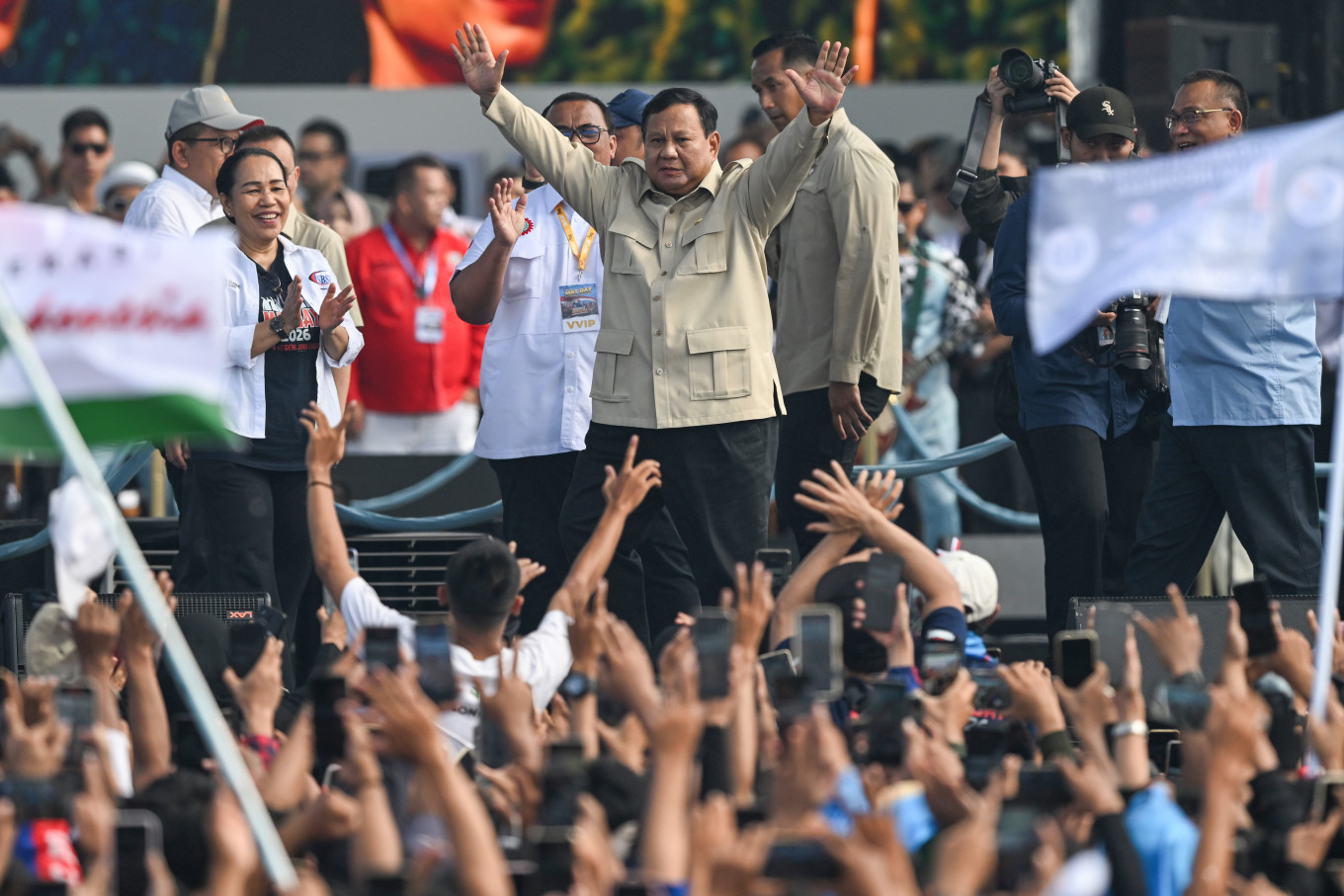 President Prabowo Subianto (center) greets workers during International Workers’ Day, or May Day 2026, celebrations at the National Monument (Monas) in Jakarta, on May 1, 2026. (Antara/Bayu Pratama S)
I
ndonesia's economy grew 5.6 percent year-on-year in the first quarter of 2026, the national statistics agency said Tuesday, topping the government's own forecast despite pressures of the Middle East war.
The reading exceeded the 5.4 percent recorded in the final three months of 2025, Statistics Indonesia (BPS) head Amalia Adininggar Widyasanti told reporters in Jakarta.
Household expenditure was the biggest contributor to the growth, Amalia added.
The government of President Prabowo Subianto is aiming to raise the Southeast Asian economy's growth rate from 5.1 percent last year to eight percent by 2029, powered by high public spending.
Amalia said government expenditure grew more than 21 percent in the first quarter compared to a year earlier.
Read also: GDP surprises with 5.61% growth in Q1

Capital Economics senior Asia economist Gareth Leather cautioned in a statement against reading the latest figure at face value due to the government's "shift towards more populist and interventionist policymaking" and its willingness under Prabowo to "undermine the guardrails of macro orthodoxy".
Last month, Coordinating Minister for Economic Affairs Airlangga Hartarto said Indonesia could outlast the impacts of Middle East war-fueled oil price hikes for up to 10 months without cutting fuel subsidies.
Indonesia is an oil producer but nevertheless a net importer, and heavily subsidizes fuel consumed domestically.
Between a fifth and a quarter of its oil came from the Middle East, but Jakarta has since made an oil deal with Russia and is looking at other alternatives in Africa, the United States and Venezuela.
Every dollar increase in the global oil price adds a burden of about Rp 6.8 billion (around $400 million) to the state budget.
Jakarta's 2026 fuel subsidy calculation had been premised on a global oil price of $70 per barrel -- which was pushed past $100 a barrel by the US-Israeli war on Iran and Tehran's response.
The subsidy was also based on an exchange rate of Rp 16,500 to the dollar, but the currency has since slipped beyond the Rp 17,400 mark.
Read also: Iran war, domestic strains push rupiah to new historic low
Jakarta's insistence on maintaining the fuel subsidy was feeding fears the government may decide to exceed its 3.0-percent fiscal deficit ceiling, said Leather, further undermining confidence in the rupiah.
The central bank said Tuesday it would "continue to be present in the market... to maintain the stability of the rupiah's exchange rate in line with its fundamental value".
On Monday, BPS said year-on-year inflation for April came in at 2.42 percent, the lowest so far this year.
The World Bank last month lowered Indonesia's 2026 growth projection to 4.7 percent from the 4.8 percent it had forecast last October.