The Jakarta Post
Please Update your browser
Your browser is out of date, and may not be compatible with our website. A list of the most popular web browsers can be found below.
Just click on the icons to get to the download page.


Popular Reads
Top Results
No results found. Please check your search term and try again
Can't find what you're looking for?
View all search results
Popular Reads
Top Results
No results found. Please check your search term and try again
Can't find what you're looking for?
View all search resultsEM FX steady, stocks reel as bond selloff spreads on inflation fears
Bonds from Tokyo to New York extended losses on Monday as inflation fears stoked investor wagers on rate hikes from global central banks. G7 finance ministers in a meeting in Paris looked to find common ground to tackle imbalances from the selloff.
Change text size
Gift Premium Articles
to Anyone
Share the best of The Jakarta Post with friends, family, or colleagues. As a subscriber, you can gift 3 to 5 articles each month that anyone can read—no subscription needed!
 Set as preferred source
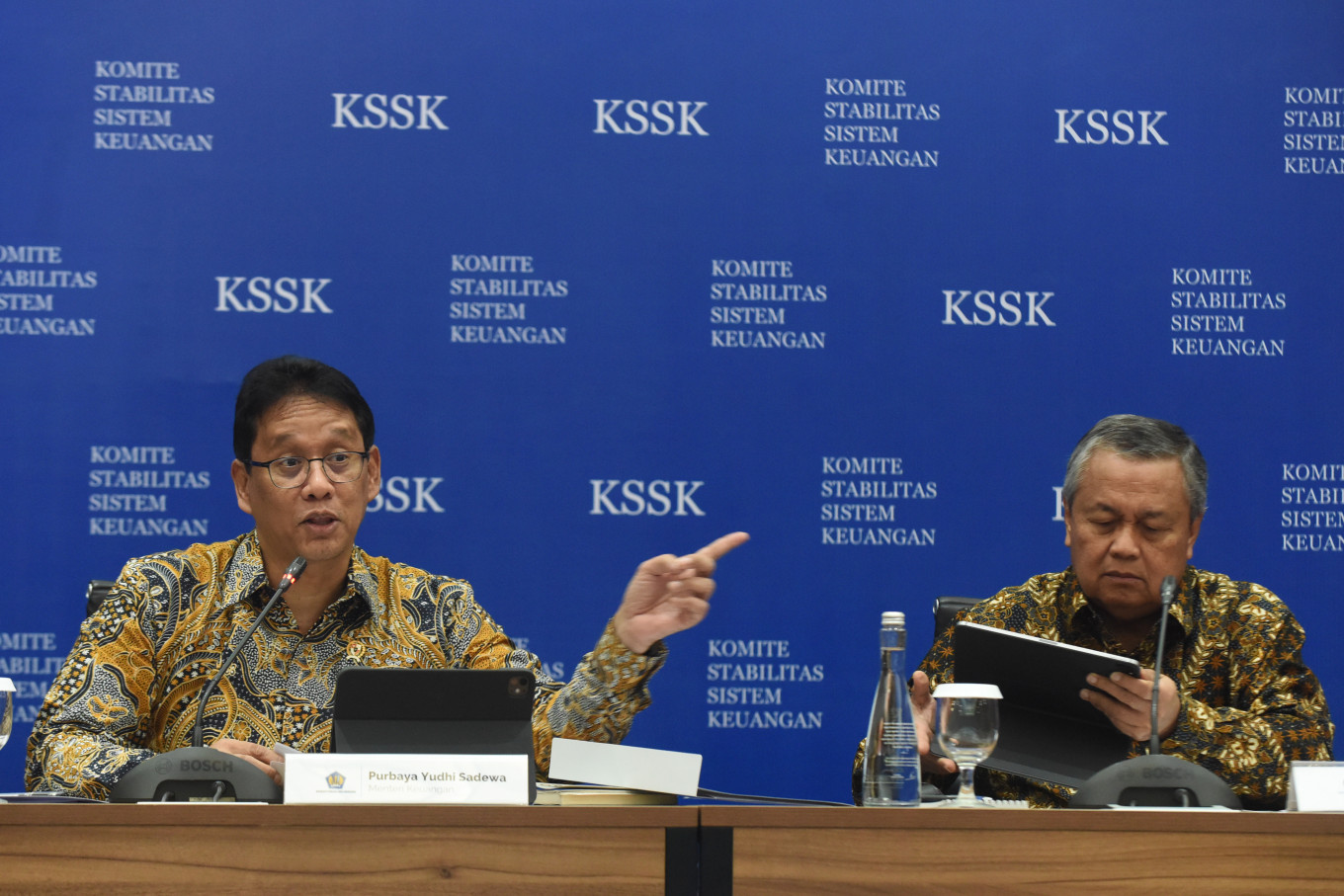 Finance Minister Purbaya Yudhi Sadewa (left) and Bank Indonesia Governor Perry Warjiyo talk during a press conference on the results of a meeting of the Financial System Stability Committee (KSSK) in Jakarta, November 3, 2025. Purbaya urged banks to channel funds into credit market, instead of keep buying Bank Indonesia Rupiah Securities (SRBI) or government bonds (SUN), to accelerate economic growth. (Antara/Indrianto Eko Suwarso)
M
ost emerging market stocks were down on Monday while currencies were muted, after both assets logged declines last week, as inflation worries stemming from the deadlocked Iran war led to a rout in global bonds, dampening investor appetite.
MSCI's index tracking global EM currencies was little changed, while the stocks gauge was down 0.3%. Both indexes had marked their biggest weekly losses last week since March 2 - just after the Iran conflict began.
Bonds from Tokyo to New York extended losses on Monday as inflation fears stoked investor wagers on rate hikes from global central banks. G7 finance ministers in a meeting in Paris looked to find common ground to tackle imbalances from the selloff.
"The concern is that higher yields do not stay confined to bond markets, but can weigh on equity valuations, particularly in growth and technology sectors, while also increasing pressure on governments carrying large debt burdens," said Lale Akoner, global market analyst at eToro.
"Bond markets appear to be signaling that investors should prepare for a more volatile environment," she said.
The yield on the benchmark 10-year US Treasury eased slightly to 4.59% - still its highest in about a year, while bonds in energy importing EMs were also pressured.

Sri Lanka's 2033 maturity bond fell 1.2 cents on the dollar, while those in markets such as Kenya fell over 0.7 cents on average, TradeWeb data showed.
Most Asian equity bourses reeled under the weight of the bond selloff. South Korea's KOSPI was an outlier, up 0.3% on a boost from Samsung Electronics, as investors found relief in efforts to avert a workers' strike at the chip giant.
Indonesian stocks tumbled 2.5% to below their lowest in a year in their fifth session of losses, while its rupiah weakened 1% to another record low of 17,688 versus the US dollar.
On the conflict front, the United Arab Emirates and Saudi Arabia reported drone incidents, a day after US President Donald Trump warned that Iran must act "fast" after efforts to end the war stalled.
Stocks in emerging Europe were mixed, with those in Romania down 0.4%. Hungarian and Polish stocks gained 0.2% and 0.7% respectively.
Romania's leu depreciated 1.5% against the euro, at another record low. The country has the biggest budget deficit among EU members.
The currency has been languishing at record lows after the government was toppled in a no-confidence vote earlier this month. That could bring political deadlock and put EU funds and Romania's credit ratings at risk.
Turkey's lira was muted and its stocks 100 fell 1.5%. South Africa's rand gained 0.4% as gold prices inched higher, but stocks lost 0.4%.