TheJakartaPost
Please Update your browser
Your browser is out of date, and may not be compatible with our website. A list of the most popular web browsers can be found below.
Just click on the icons to get to the download page.


Popular Reads
Top Results
No results found. Please check your search term and try again
Can't find what you're looking for?
View all search results
Popular Reads
Top Results
No results found. Please check your search term and try again
Can't find what you're looking for?
View all search resultsDollar rises to six-week high on rate hike bets and war uncertainty
Change text size
Gift Premium Articles
to Anyone
Share the best of The Jakarta Post with friends, family, or colleagues. As a subscriber, you can gift 3 to 5 articles each month that anyone can read—no subscription needed!
 Set as preferred source
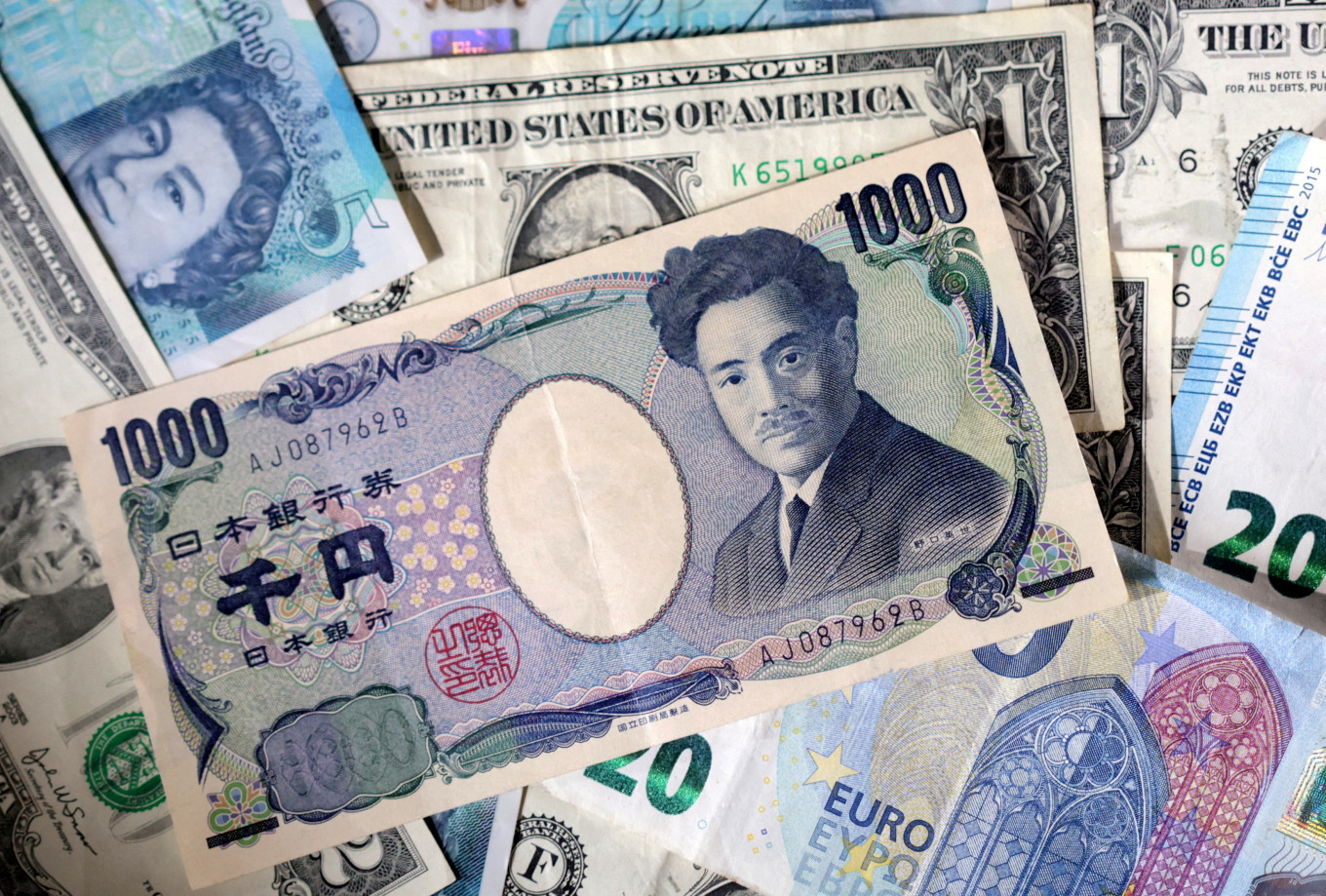 US dollar, Euro, Yen and Pound banknotes are seen in this illustration created on May 4, 2025. (Reuters/Dado Ruvic)
T
he US dollar hit a six-week high on Wednesday as investors came to terms with the possible need for higher interest rates to tackle inflation resulting from the Iran war.
The uncertainty over when the conflict may end has fanned inflation fears and triggered a global bond selloff, with the yield on the US 30-year Treasury bond hitting its highest level since 2007.
President Donald Trump said the United States may need to strike Iran again but suggested Tehran wants a deal to end the war that has all but closed the key Strait of Hormuz, sending energy prices soaring and roiling markets.
The dollar index, which tracks the currency against six peers, rose 0.1 percent to its highest since April 7 at 99.47 but was last flat at 99.32.
The index is up more than 1 percent in May due to safe-haven demand and markets pricing in chances of the Federal Reserve hiking interest rates by the end of the year.
The euro fell to a six-week low of $1.158, before recovering to trade little changed. The British pound was roughly flat at $1.3401.

The Australian dollar, often seen as a barometer for risk sentiment, ticked up 0.3 percent after dropping 0.9 percent on Tuesday.
Traders are now pricing in a more than 50 percent chance of a Fed rate hike by December, CME FedWatch showed, in a sharp reversal from two cuts expected before the war. Investor focus will be on the minutes of the Fed's last meeting due later.
Analysts said the rise in US bond yields had been the key driver of the dollar.
"There is scope for yields to move further higher," said Derek Halpenny, a senior currency analyst at MUFG.
"While we maintain that the Fed will ultimately hike by less than many other G10 central banks, market pricing remains relatively low at this juncture — especially with the risks of a further jump in crude oil prices building."
Brent crude futures were down 1.9 percent to $109.20 per barrel, but remained 50 percent higher than in late February before the war began.
The dollar's rise has pushed the yen back near the 160 level that led to Japanese officials last month launching their first currency market intervention in nearly two years.
Tokyo stepped in to stem the yen's slide in several bouts of intervention at the end of April and early May, sources told Reuters, but the yen's strength did not last long.
It was last flat at 159.02 per dollar as investors digested comments from US Treasury Secretary Scott Bessent.
Bessent told Reuters on Tuesday he was confident BOJ Governor Kazuo Ueda would do "what he needs to do" if granted sufficient independence by Japan's government, signaling Washington's desire for further rate hikes by the central bank.
"Near term, excessive volatility is key while 160/161 remains the line to watch," said Christopher Wong, currency strategist at OCBC.
"Intervention risk should make markets more cautious about chasing dollar/yen higher, but unless US Treasury yields and the broad USD soften, official action may only temporarily slow the move rather than reverse it," he said.