The Jakarta Post
Please Update your browser
Your browser is out of date, and may not be compatible with our website. A list of the most popular web browsers can be found below.
Just click on the icons to get to the download page.


Popular Reads
Top Results
No results found. Please check your search term and try again
Can't find what you're looking for?
View all search results
Popular Reads
Top Results
No results found. Please check your search term and try again
Can't find what you're looking for?
View all search resultsWhat is President Prabowo's new plan to control export of key commodities?
The full force of the new policy will come into effect after a transition period that has been set at three months but can be extended to the end of the year.
Change text size
Gift Premium Articles
to Anyone
Share the best of The Jakarta Post with friends, family, or colleagues. As a subscriber, you can gift 3 to 5 articles each month that anyone can read—no subscription needed!
 Set as preferred source
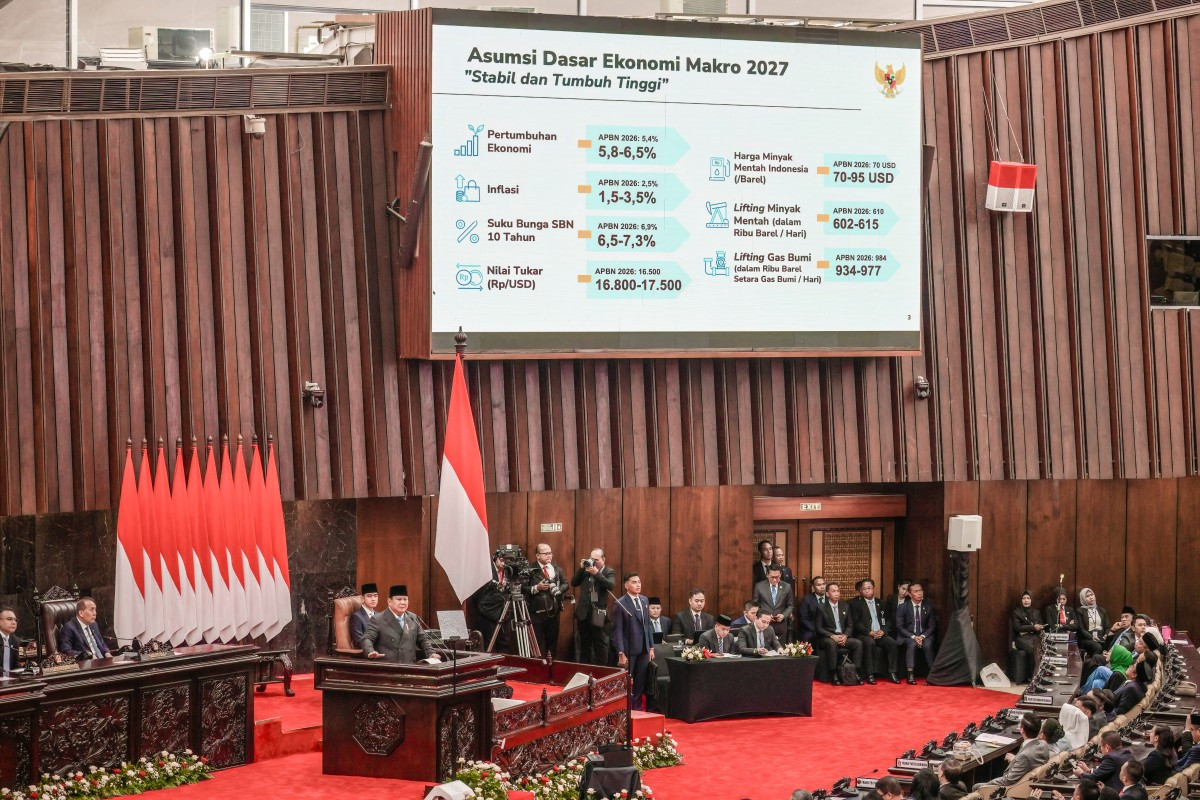 President Prabowo Subianto delivers a speech on the macroeconomic framework to lawmakers at the House building in Jakarta on May 20, 2026. (AFP/Bay Ismoyo)
P
resident Prabowo Subianto said on Wednesday that his government will mandate that exports of palm oil, coal, and ferroalloys be conducted through a state agency, as the country seeks to tighten its control over its natural resources and boost state revenue.
Here are some key facts:
The full force of the new policy will come into effect after a transition period that has been set at three months but can be extended to the end of the year.
During the transition period, business will be carried out as usual between exporters and buyers, but all transactions will be overseen by state firm PT Danantara Sumber Daya, which is a unit of sovereign wealth fund Danantara Indonesia.
The chief executive of Danantara Sumber Daya will be Luke Thomas Mahony, a former director of nickel miner Vale Indonesia, the Jakarta Globe reported.
After the transition period, Danantara Sumber Daya will buy products from domestic sellers and then sell it to foreign buyers at a price benchmarked against prices set by exchanges.

The new regulation will be implemented in stages where in the first stage it will cover exports of palm oil, coal, and ferroalloys. Every three months, there will be a review to add more commodities.
Previously, Indonesian companies exported coal and palm oil directly to foreign buyers. But the government controlled how much quantity could be produced and the benchmark price to use.
The policy's stated aim is to improve transparency, put a stop to under-invoicing practices, optimise the government's earnings, and help stabilise the rupiah and enlarge foreign currency reserves.
Indonesia is the world's largest exporter of thermal coal and palm oil. The country is by far the top thermal coal supplier to many of the world's largest coal importers including China, India, Vietnam, and the Philippines.
Indonesia also issued a new export earnings regulation that requires exporters of natural resources to store 100 percent of their earnings in state banks. The regulation will take effect on June 1.
President Prabowo said the export regulation will optimize tax revenues for the state as he presented an upbeat report about Indonesia's economic health despite "geopolitical challenges".
"The main objective of this policy is to strengthen supervision and monitoring and to eradicate underpayment practices, under-invoicing, transfer pricing practices, and capital flight of export earnings," he said.
According to Prabowo, the new export regulation was an attempt to better manage "what belongs to us."
"We must believe that all of Indonesia’s natural resources belong to the Indonesian people," the president said.