TheJakartaPost
Please Update your browser
Your browser is out of date, and may not be compatible with our website. A list of the most popular web browsers can be found below.
Just click on the icons to get to the download page.


Popular Reads
Top Results
No results found. Please check your search term and try again
Can't find what you're looking for?
View all search results
Popular Reads
Top Results
No results found. Please check your search term and try again
Can't find what you're looking for?
View all search resultsSteps to counter rupee's depreciation under consideration, India says
"We are monitoring the situation ... and several steps are under consideration. The situation is globally quite challenging," Goyal said.
Change text size
Gift Premium Articles
to Anyone
Share the best of The Jakarta Post with friends, family, or colleagues. As a subscriber, you can gift 3 to 5 articles each month that anyone can read—no subscription needed!
 Set as preferred source
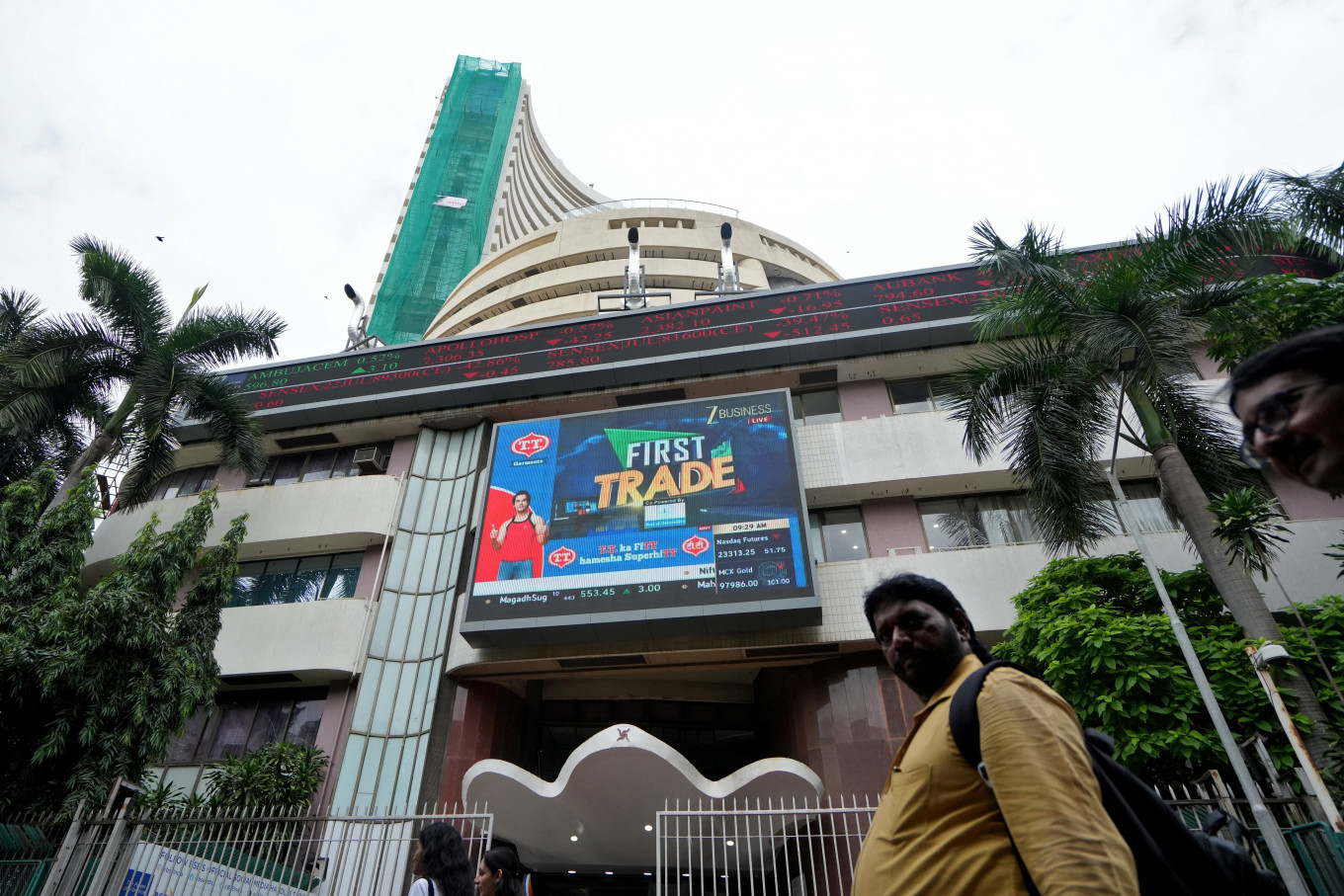 People walk past the Bombay Stock Exchange (BSE) building in Mumbai, India, on Aug. 1, 2025. (Reuters/Hemanshi Kamani)
I
ndia is considering several steps to counter the depreciation of the rupee, trade minister Piyush Goyal said on Thursday, adding that New Delhi is monitoring the situation.
"We are monitoring the situation ... and several steps are under consideration. The situation is globally quite challenging," Goyal said.
Goyal's comments come as the rupee has hit successive record lows and weakened more than 6 percent since the US-Israel war on Iran drove up crude prices.
The currency has dropped more than five percent since the crisis erupted in February, extending losses from 2025 and making it Asia's worst-performing major currency in 2026 so far.
It hit a record low of over 96 to the dollar on Friday, prompting officials to signal that halting further depreciation is a key macroeconomic priority.
India's central bank has already poured billions of dollars to stabilise the currency, curbed speculative trading and offered a special credit line to oil importers to ease dollar demand.

Prime Minister Narendra Modi has also urged voluntary austerity measures to rein in dollar-guzzling imports, including cutting down on gold buying and foreign travel for a year.
But the pressure persists.
"The whole system has been disturbed," said Dilip Parmar of stockbroker HDFC Securities, citing heavy foreign investor outflows, weaker growth prospects and elevated crude prices.
"That is the basic problem which you're seeing replicated in the fall of the rupee," he said, noting that it was ultimately "a function of demand and supply" with dollar demand being higher.
The rupee's slide comes as India faces a widening current account deficit driven by costly energy imports.
The gap is likely to be over two percent of GDP this fiscal year, more than double last year's level and potentially the widest since 2012–13, according to Bank of America Securities estimates.
At the same time, foreign investors have dumped more than $20 billion in Indian stocks since the start of the Mideast conflict, the fastest pace on record, while dollar inflows have slowed, opening the possibility of a balance-of-payments gap as large as $67–88 billion.
The 2027 fiscal year "will be our third year of a balance-of-payment deficit, which is certainly unusual," economist Dhiraj Nim of ANZ Research told AFP.
This strain has weighed on the rupee, prompting the central bank to defend it by burning through foreign exchange reserves -- now at around $697 billion, down from over $720 billion before the Middle East war.
While still covering about 11 months of imports, the decline underscores the strain.
A weaker rupee is rippling through the domestic economy.
Manufacturers and food processors, many dependent on imported raw materials priced in dollars, are seeing costs surge.
Smaller firms often lack the ability to hedge currency risks.
In Kerala's cashew industry, which mostly imports raw nuts from Africa, the impact has been acute.
"Imports have become far more expensive for the local market," said Rajmohan Pillai, who runs a cashew firm, adding buyers can now afford only about 90 percent of last year's volumes.
He estimates more than 80 percent of processing units have shut in recent years, with rupee volatility a contributing factor.