The Jakarta Post
Please Update your browser
Your browser is out of date, and may not be compatible with our website. A list of the most popular web browsers can be found below.
Just click on the icons to get to the download page.


Popular Reads
Top Results
No results found. Please check your search term and try again
Can't find what you're looking for?
View all search results
Popular Reads
Top Results
No results found. Please check your search term and try again
Can't find what you're looking for?
View all search resultsMusicians welcome court ruling on royalty payments
In its ruling, the Constitutional Court asserted the royalties for commercial live performances should be paid by the party organizing the performances, rather than the performers themselves, either through a rights management agency or directly to songwriters or rights holders.
Change text size
Gift Premium Articles
to Anyone
Share the best of The Jakarta Post with friends, family, or colleagues. As a subscriber, you can gift 3 to 5 articles each month that anyone can read—no subscription needed!
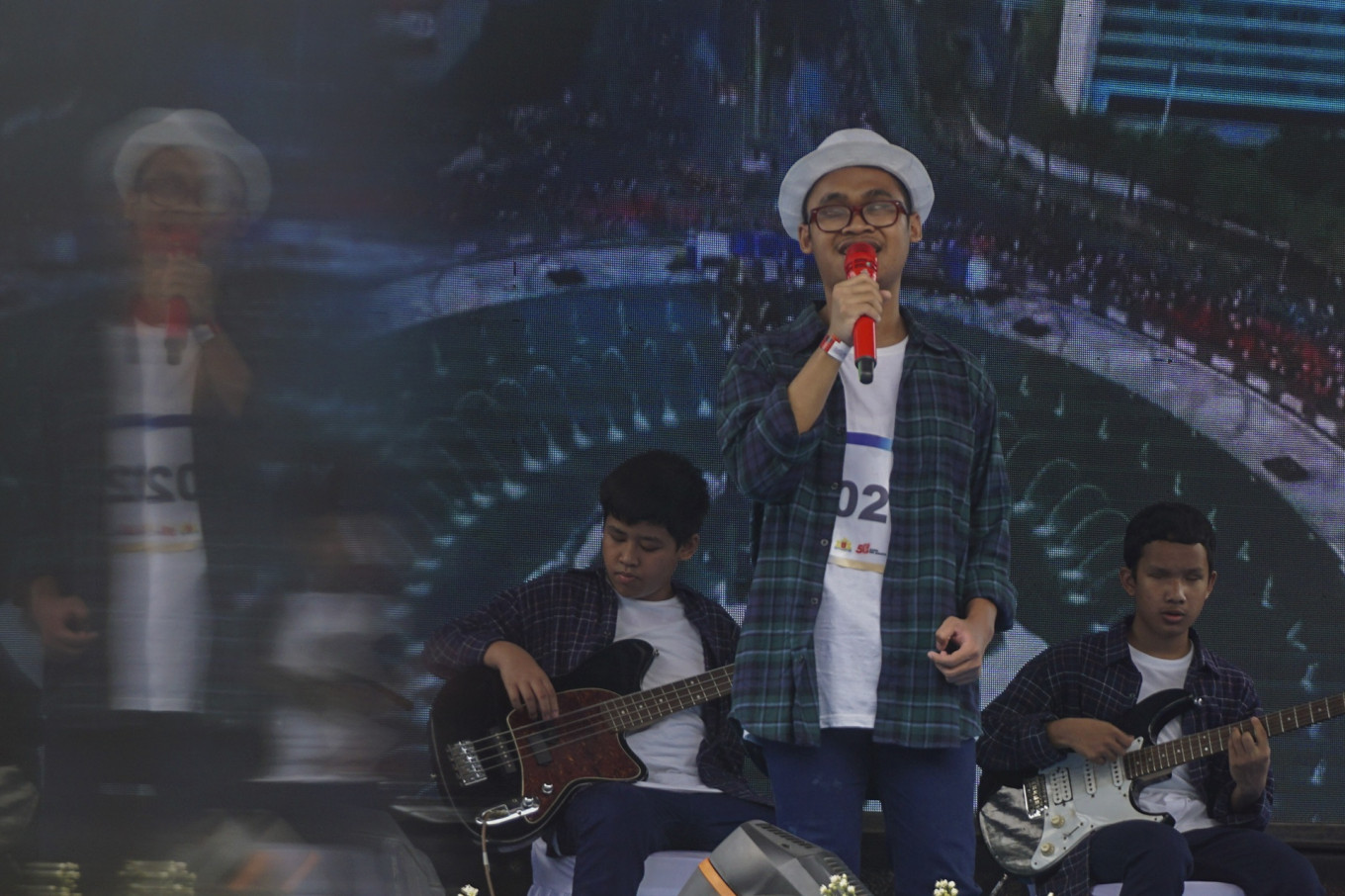 A street musician group performs during an audition for the Street Busker Music Festival at Lapangan Banteng in Jakarta on Nov. 29, 2025. (Antara/Ika Maryani)
I
ndonesian musicians have welcomed a ruling from the Constitutional Court that clarifies the responsibility for royalty payments in commercial live performances, describing it as bringing long-awaited legal certainty after disputes over who should bear the cost when songs are performed on stage.
The court justices granted a judicial review petition filed by a group of prominent singers consisting of local bands’ frontmen, such as Armand Maulana of GIGI and Nazriel “Ariel” Ilham of NOAH, and soloists like Afgansyah “Afgan” Reza and Raisa Andriana, which challenged five articles of the 2014 Copyright Law.
They argued several provisions in the law, including Article 23 (5) that stipulates “every person” can use a piece of work in a commercial setting if they pay the work’s creators, could unfairly expose performers to civil and criminal liability.
During a ruling hearing at the Constitutional Court in Jakarta on Wednesday, the justices granted some of the petitions and declared three challenged articles unconstitutional, including Article 23 (5). They stated the “every person” phrase in the article in question refers primarily to event organizers, rather than performers, leaving no room for multiple interpretations.
Justice Enny Nurbaningsih argued that in any event, the party with the detailed knowledge of the number of ticket sales for a performance was the event organizer, which left them with the responsibility of paying royalties for the commercial use of copyrighted works.
“Thus, according to the court, the party which should pay royalties for the [performed songs] is the performance organizer,” Enny said, reading the ruling on Wednesday.

The justices affirmed the payment could be made through either the National Collective Management Agency (LMKN) or directly to the song’s creator or rights holders. The agency is responsible for managing music licensing and collecting royalties on behalf of music creators and songwriters.