The Jakarta Post
Please Update your browser
Your browser is out of date, and may not be compatible with our website. A list of the most popular web browsers can be found below.
Just click on the icons to get to the download page.


Popular Reads
Top Results
No results found. Please check your search term and try again
Can't find what you're looking for?
View all search results
Popular Reads
Top Results
No results found. Please check your search term and try again
Can't find what you're looking for?
View all search resultsYearender: Indonesia lags behind on indigenous rights protection
While boasting in front of the international community of a commitment to grant 1.4 million hectares of customary forest in the next five years, the government was met with criticism of conflicting policies and increasing repression that put indigenous communities in a more vulnerable position.
Change text size
Gift Premium Articles
to Anyone
Share the best of The Jakarta Post with friends, family, or colleagues. As a subscriber, you can gift 3 to 5 articles each month that anyone can read—no subscription needed!
 Set as preferred source
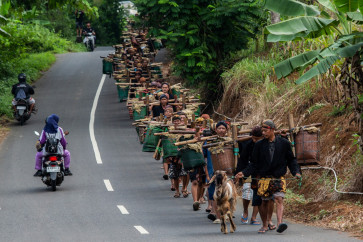
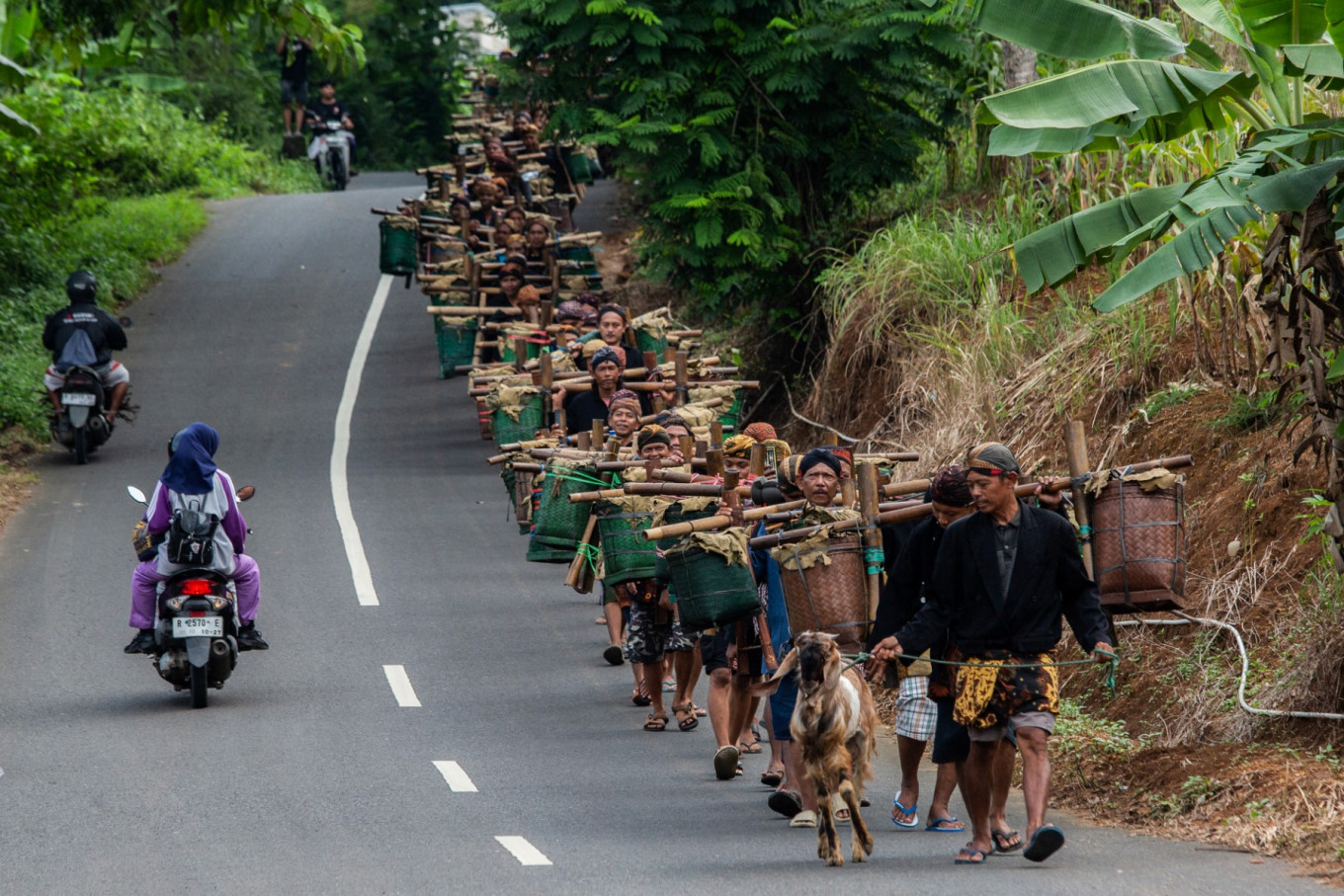 People of the Bonokeling indigenous community walk carrying food offerings during the 'Unggah-unggahan' ceremonial procession in remembrance and gratitude to their ancestors on Feb. 20, in Banyumas, Central Java. Bonokeling people from various locations walk about 40 kilometers over two days to gather at the Bonokeling cemetery, bringing livestock, rice and snacks to cook and share as a way to mark the start of the Islamic holy month of Ramadan. (AFP/Devi Rahman)
P
rotections for indigenous people’s rights in Indonesia have seen little progress throughout 2025, with legislation in favor of local communities stalled and repression persisting despite promises made by the government on the global stage.
Among the promises was a pledge to recognize 1.4 million hectares of customary forest by 2029. It was introduced by Forestry Minister Raja Juli Antoni at the United Nations climate change conference in Brazil, or COP30, in November.
Indonesia is home to an estimated 40 to 70 million indigenous people spread across the archipelago who maintain deep ancestral ties to their land as well as distinct social and cultural systems.
But legal recognition of their lands is still scarce.
The Indigenous People Alliance of the Archipelago (AMAN), which represents 2,645 communities, identified 33.6 million ha of customary forests and coastal areas. But only 366,955 ha belonging to 169 communities had been recognized by the government as of December.
Read also: Skepticism persists as Indonesia joins global deal on indigenous land

The Forestry Ministry has pledged to expedite the recognition process, including by involving AMAN in a special task force on the matter. But AMAN advocacy and legal director Muhammad Arman was skeptical, saying the plan, considered modest for a four-year period compared to the extent of customary areas potentially recognized, was vulnerable to procedural obstacles such as lengthy political processes and complex verification mechanisms.