The Jakarta Post
Please Update your browser
Your browser is out of date, and may not be compatible with our website. A list of the most popular web browsers can be found below.
Just click on the icons to get to the download page.


Popular Reads
Top Results
No results found. Please check your search term and try again
Can't find what you're looking for?
View all search results
Popular Reads
Top Results
No results found. Please check your search term and try again
Can't find what you're looking for?
View all search resultsFormer minister Yaqut named suspect in haj quota graft scandal
Corruption Eradication Commission (KPK) investigators have questioned former religious affairs minister Yaqut Cholil Qoumas three times since kicking off in June 2025 an investigation into alleged graft pertaining to the 2024 haj quota allocation.
Change text size
Gift Premium Articles
to Anyone
Share the best of The Jakarta Post with friends, family, or colleagues. As a subscriber, you can gift 3 to 5 articles each month that anyone can read—no subscription needed!
 Set as preferred source
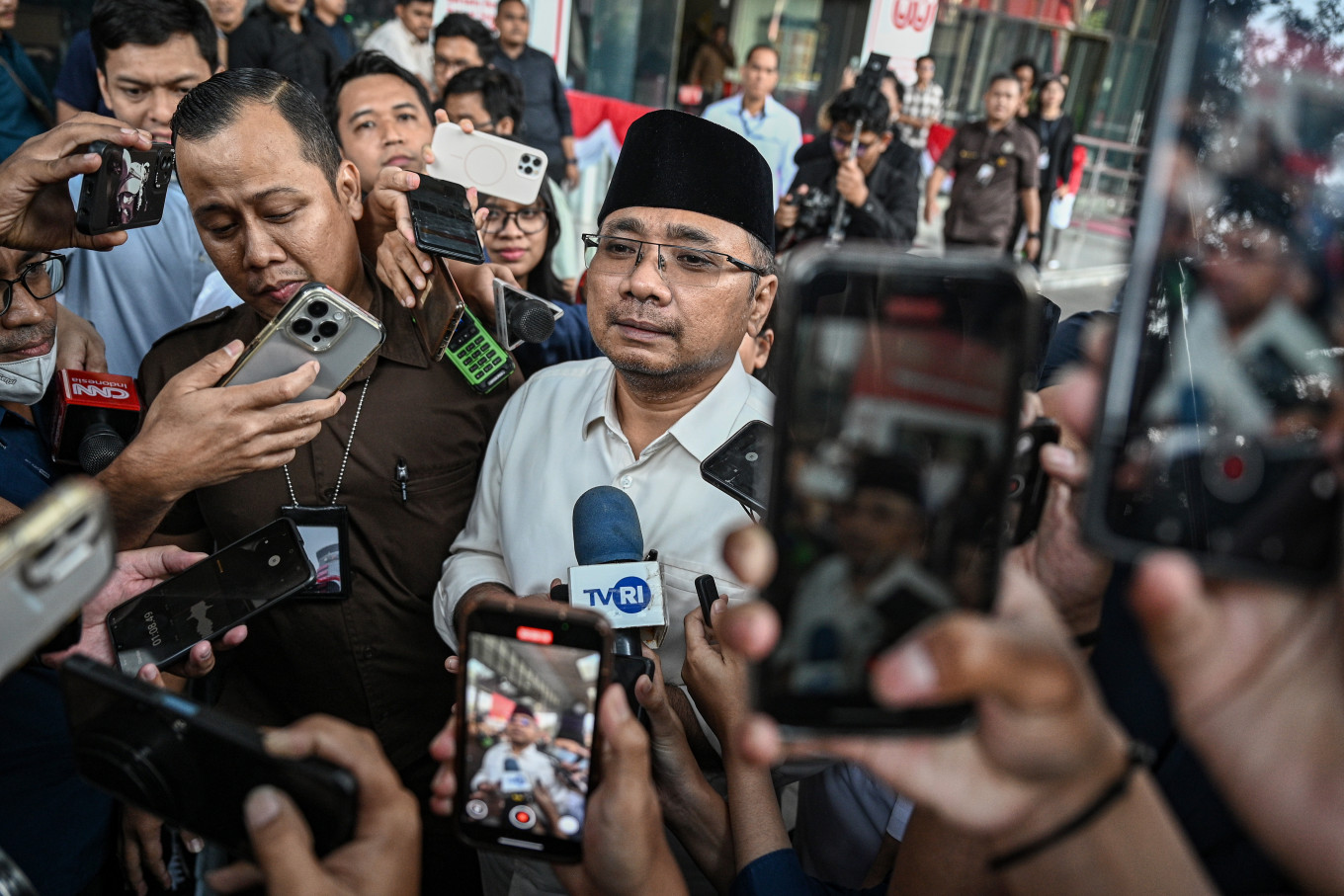 Former religious affairs minister Yaqut Cholil Qoumas (center, in white shirt) leaves the South Jakarta headquarters of the Corruption Eradication Commission (KPK) on Sept. 1, 2025, following his second interrogation as a witness in an ongoing probe into alleged misallocation of the haj quota in 2024 when he was a minister. (Antara/Fauzan)
T
he Corruption Eradication Commission (KPK) has named former religious affairs minister Yaqut Cholil Qoumas and his former special staffer as suspects in a graft case pertaining to the alleged misallocation of the 2024 haj quota.
KPK spokesperson Budi Prasetyo confirmed the suspect naming on Friday, identifying Yaqut and former special staff Ishfah Abidal Aziz only by their initials and their former positions in the ministry. The sprindik (letters ordering the start of the investigation) were issued on Thursday.
As of Friday, neither suspect had been arrested by the antigraft body.
The case centers on the alleged mismanagement of an extra haj quota of 20,000 pilgrims Indonesia received from Saudi Arabia in 2024, which was given following a request made by then-president Joko “Jokowi” Widodo to reduce wait times for pilgrims registering for the state-subsidized regular scheme.
In 2024, Indonesia, home to the world’s largest Muslim population, received an initial haj quota of 221,000 pilgrims. The extra 20,000 slots made the total quota the largest in the country’s history.
Under the Haj Law, the total quota from Saudi Arabia is divided between regular pilgrims then-managed by the Religious Affairs Ministry and special ones, whose trips are handled by travel agencies offering higher-priced trips with more luxurious facilities. The mandated ratio between regular and special pilgrims is 92 to 8 percent.

Waiting times for Indonesian regular pilgrims are notoriously long, ranging from 11 to 47 years, due to high demand and limited quotas.