TheJakartaPost
Please Update your browser
Your browser is out of date, and may not be compatible with our website. A list of the most popular web browsers can be found below.
Just click on the icons to get to the download page.


Popular Reads
Top Results
No results found. Please check your search term and try again
Can't find what you're looking for?
View all search results
Popular Reads
Top Results
No results found. Please check your search term and try again
Can't find what you're looking for?
View all search resultsIndonesia records first death linked to super flu
Subclade K, representing a significant evolution in the H3N2 virus, was first identified by the United States Centers for Disease Control and Prevention (CDC) in August 2025 and has since been reported in more than 80 countries.
Change text size
Gift Premium Articles
to Anyone
Share the best of The Jakarta Post with friends, family, or colleagues. As a subscriber, you can gift 3 to 5 articles each month that anyone can read—no subscription needed!
 Set as preferred source
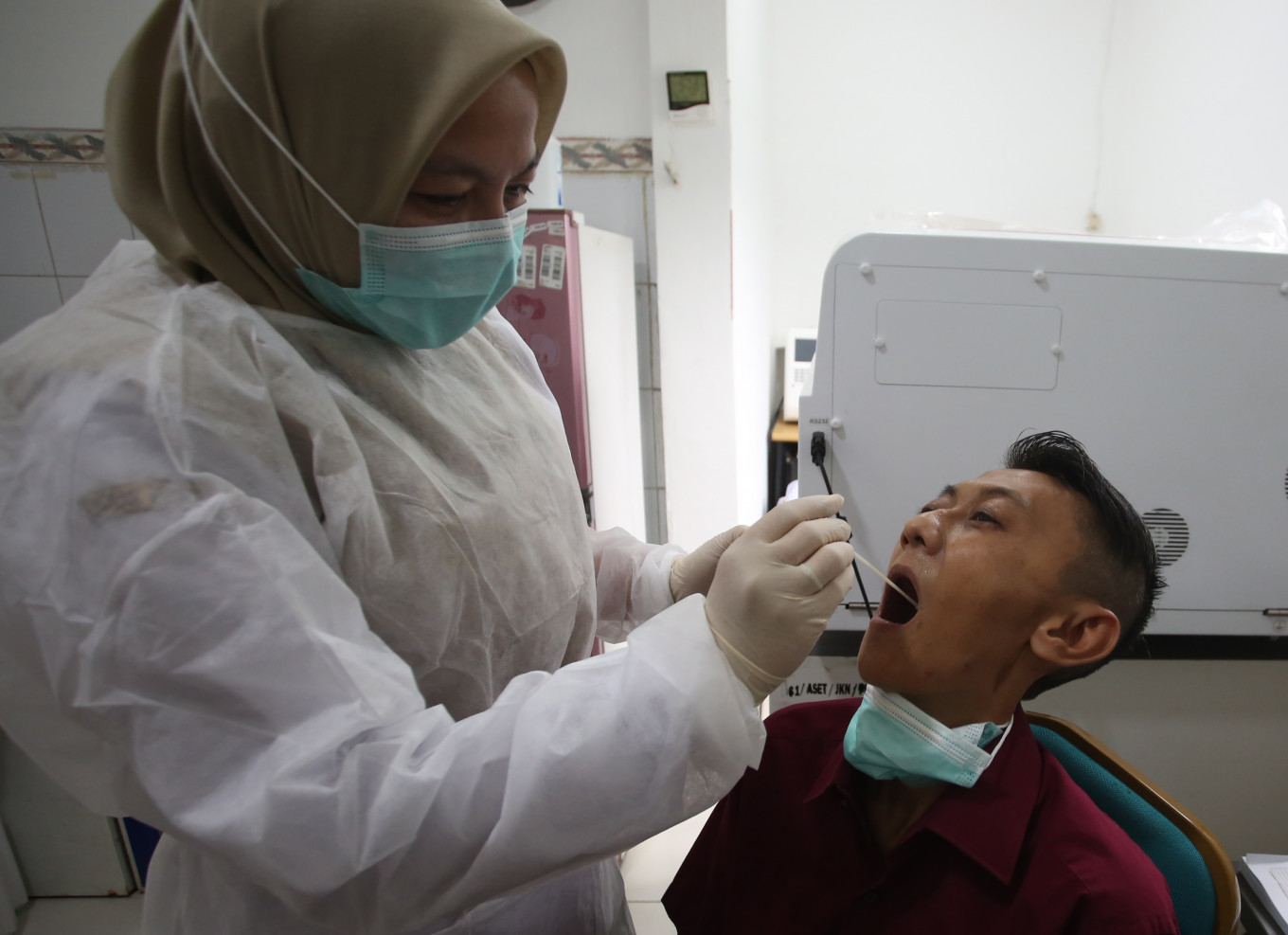 A healthcare worker performs a swab test on a patient during influenza symptom screening at a community health center (Puskesmas) in Serpong, South Tangerang, Banten, on Wednesday, Jan. 7, 2026. (Antara/Muhammad Iqbal)
A
hospital in Bandung, West Java, has reported Indonesia’s first death linked to the so-called super flu, as health authorities step up surveillance to contain the virus.
The term super flu refers to the H3N2 influenza A variant known as subclade K, which has been spreading globally since the final quarter of 2025.
Subclade K, representing a significant evolution in the H3N2 virus, was first identified by the United States Centers for Disease Control and Prevention (CDC) in August 2025 and has since been reported in more than 80 countries.
Yovita Hartantri, head of the New and Re-emerging Infectious Diseases Team at Hasan Sadikin Regional Hospital in Bandung, said the hospital treated 10 patients with influenza A subclade K between September and November last year.
“Among the 10 patients, there were two infants aged nine months and one year, one child aged 11, and the majority were adults aged 20–60, with two patients over 60,” she said on Thursday.
She added that the patients exhibited a range of symptoms, with at least three developing severe complications.

“One patient admitted to intensive care passed away, but the death was associated with multiple comorbidities, including stroke, heart failure and a kidney infection. We cannot say the virus alone caused the death, as the patient had several underlying conditions,” Yovita said.
Yovita said Hasan Sadikin Regional Hospital had seen a surge in influenza A cases since August 2025, which peaked in October before gradually declining in November.
Read also: Regions step up monitoring, vigilance against super flu
At the hospital, influenza A accounts for approximately 30 percent of all influenza-like illnesses and acute respiratory infections, while subclade K makes up around 34 percent of patients testing positive for influenza A.
Yovita suggested that the current spread of the so-called super flu may be linked to the winter season in the Northern Hemisphere, particularly in the US.
Iwan Abdul Rachman, director of medical and nursing services at Hasan Sadikin Hospital, said that symptoms of the super flu are similar to those of the common cold but are generally more severe and longer-lasting.
“There is no need to panic. Currently, the trend is declining across all regions. The most important measures are to prevent transmission by wearing masks, washing hands regularly and seeking medical care if symptoms worsen,” he said.
According to assessments by the World Health Organization (WHO) and available epidemiological data, subclade K has not been linked to increased disease severity.
Its clinical presentation remains similar to that of other seasonal influenza strains. Common symptoms include fever, coughing, nasal congestion or runny nose, headache, sore throat, fatigue and other typical flu-related complaints.
The WHO also noted that early estimates suggest the influenza vaccine continues to offer protection against hospitalization for both children and adults, although its effectiveness specifically against subclade K remains uncertain.
From August to December 2025, Indonesia confirmed 62 cases of the super flu across eight provinces, with the highest numbers reported in East Java, South Kalimantan and West Java. Most cases were reported among women and children.
Regional health authorities have intensified surveillance and vigilance against the super flu, including increased health monitoring of international tourists and returning travelers, the implementation of an early detection and rapid reporting system, and enhanced public health education and promotion campaigns.
Read also: Health Ministry says ‘super flu’ cases under control
Health Minister Budi Gunadi Sadikin has urged the public to remain vigilant but not to panic. “This is similar to regular flu,” he stressed.
“Although it spreads quickly, it is not as deadly as some COVID-19 variants, the fatality rate is very low,” Budi said on Wednesday. “With good nutrition, adequate sleep and regular exercise, we can strengthen our immune system and recover from mild viruses like super flu," he added. (nal)