The Jakarta Post
Please Update your browser
Your browser is out of date, and may not be compatible with our website. A list of the most popular web browsers can be found below.
Just click on the icons to get to the download page.


Popular Reads
Top Results
No results found. Please check your search term and try again
Can't find what you're looking for?
View all search results
Popular Reads
Top Results
No results found. Please check your search term and try again
Can't find what you're looking for?
View all search resultsExtractive-led economic growth fuels environmental crisis
Around 283,000 hectares of forest, four times the size of Jakarta, were lost throughout 2025 to make way for various extractive businesses across the country, according to the Indonesian Forum for the Environment (Walhi).
Change text size
Gift Premium Articles
to Anyone
Share the best of The Jakarta Post with friends, family, or colleagues. As a subscriber, you can gift 3 to 5 articles each month that anyone can read—no subscription needed!
 Set as preferred source
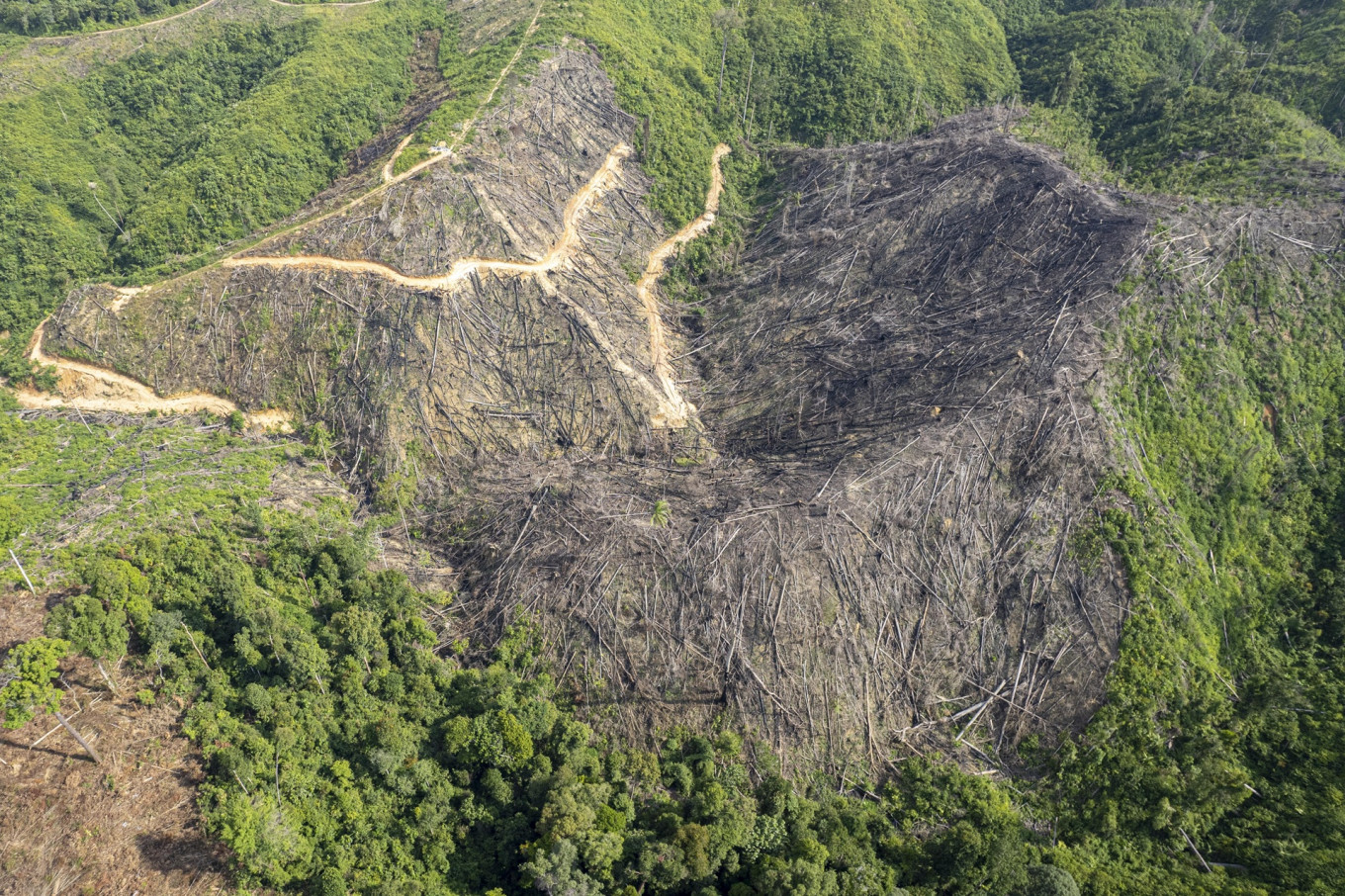 A deforested area of the Open Orangutan Sanctuary 'sspecial block of the Bukit Tigapuluh ecosystem is seen on Jan. 22, 2026, in West Tanjung Jabung regency, Jambi. The Jambi Natural Resources Conservation Agency (BKSDA) recorded around 600 hectares of the special block has been encroached and deforested. (Antara/Wahdi Septiawan)
T
he ambition from President Prabowo Subianto’s administration to increase the country’s economic growth to 8 percent through expanding extractive business may risk accelerating environmental degradation and widening social injustice, the Indonesian Forum for the Environment (Walhi) has warned.
Since taking office in October 2024, Prabowo has boasted the goal for the 8-percent gross domestic product growth by the end of his term in 2029; a target met by skepticism among economists over its feasibility. The latest projection from Bank Indonesia (BI) was a 4.9 to 5.7 percent growth for this year, according to central bank governor Perry Warjiyo.
Walhi warned efforts to pursue the high-growth goal could push Indonesia into an ecological crisis, following government policies and programs that led to the expansion of large-scale extractive activities.
“There is a high price to pay for growth. What was supposed to be the foundation for prosperity instead ends up pushing vulnerable communities further to the margins,” Walhi urban campaigner Wahyu Eka Setyawan said in a press briefing on Wednesday.
The group noted several policies rolled out throughout 2025 may lead to further ecological degradation. Among them is a plan to open oil palm plantations in Papua, while the country’s easternmost island and communities living on it had endured repression that came with large forest clearing for a food estate project.
The food estate, declared a national strategic project (PSN) aimed at achieving food self-sufficiency, is projected to open up more than 2 million hectares of forest, which Walhi described as the country’s “largest project to legalize deforestation”.

Read also: Unchecked plantations, construction fuel deadly West Java landslide