The Jakarta Post
Please Update your browser
Your browser is out of date, and may not be compatible with our website. A list of the most popular web browsers can be found below.
Just click on the icons to get to the download page.


Popular Reads
Top Results
No results found. Please check your search term and try again
Can't find what you're looking for?
View all search results
Popular Reads
Top Results
No results found. Please check your search term and try again
Can't find what you're looking for?
View all search resultsWomen take lead in community climate action
While women-led initiatives help address challenges and needs to mitigate and adapt to climate crises, they often face tall barriers in participating in formal decision-making to push for greater impacts.
Change text size
Gift Premium Articles
to Anyone
Share the best of The Jakarta Post with friends, family, or colleagues. As a subscriber, you can gift 3 to 5 articles each month that anyone can read—no subscription needed!
 Set as preferred source
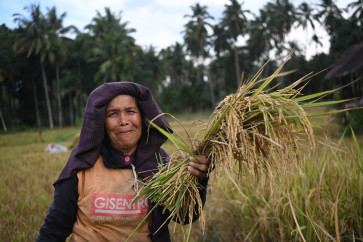
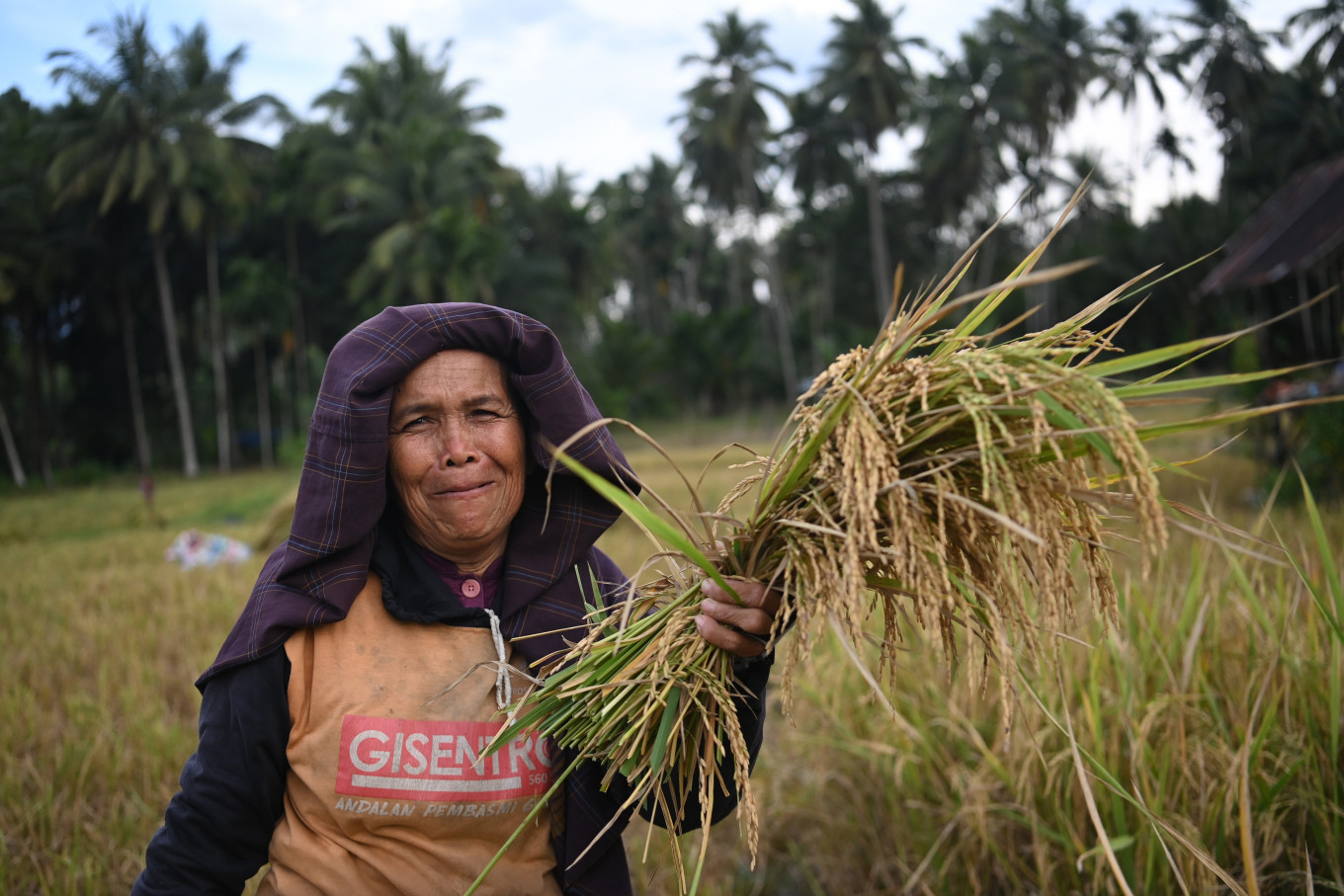 A farmer harvests rice on Jan. 28, 2026, in in Tolang Jae village, Sayur Matinggi district, South Tapanuli, North Sumatra. As climate change disrupts their daily life, women are stepping forward and becoming key drivers in environmental conservation and energy transition in communities. (Antara/Indrianto Eko Suwarso)
W
hile prolonged drought in recent years in East Nusa Tenggara (NTT) and West Nusa Tenggara (NTB) has disrupted agriculture and other sectors, the water crisis has been disproportionately affecting women, who often bear the burden of domestic responsibilities such as cooking and cleaning.
The situation prompted several female farmers in both provinces, including Imakulata Jedia of a women-majority farmer group in West Manggarai, NTT, to work in restoring degraded land and water sources.
“We restored degraded areas, including by planting trees around springs where water flow had declined to increase the water supply,” she said in a discussion held by the Women Research Institute in Jakarta on Wednesday.
The efforts eventually bear fruit: Plants like bamboo as well as eucalyptus and banyan trees helped improve water absorption and make soil in Imakulata’s village become productive again, allowing farmers to grow vegetables and local food crops for sale.
In other villages in NTB, similar efforts also restored drying springs, helping women to save an hour usually spent walking to a nearby clean water source.
As climate change disrupts many aspects of daily life, women-led actions have become key drivers in environmental conservation and energy transition in local communities across the country.

Baiq Sri Anom Padma from Rarang village in East Lombok, NTB, took an initiative to process piling organic waste and livestock manure around her home into biogas. The waste was previously improperly disposed of and affected the environment, sanitation and local residents’ health.