The Jakarta Post
Please Update your browser
Your browser is out of date, and may not be compatible with our website. A list of the most popular web browsers can be found below.
Just click on the icons to get to the download page.


Popular Reads
Top Results
No results found. Please check your search term and try again
Can't find what you're looking for?
View all search results
Popular Reads
Top Results
No results found. Please check your search term and try again
Can't find what you're looking for?
View all search resultsGovt instructs cleanups to solve waste problem
Rather than pushing the community for mass actions to pick up trash, the government should focus on addressing systemic flaws in the country’s waste management system, environmentalists have said.
Change text size
Gift Premium Articles
to Anyone
Share the best of The Jakarta Post with friends, family, or colleagues. As a subscriber, you can gift 3 to 5 articles each month that anyone can read—no subscription needed!
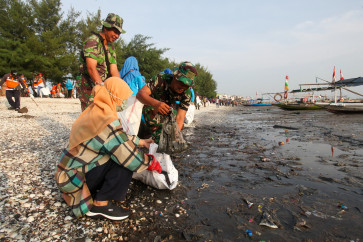
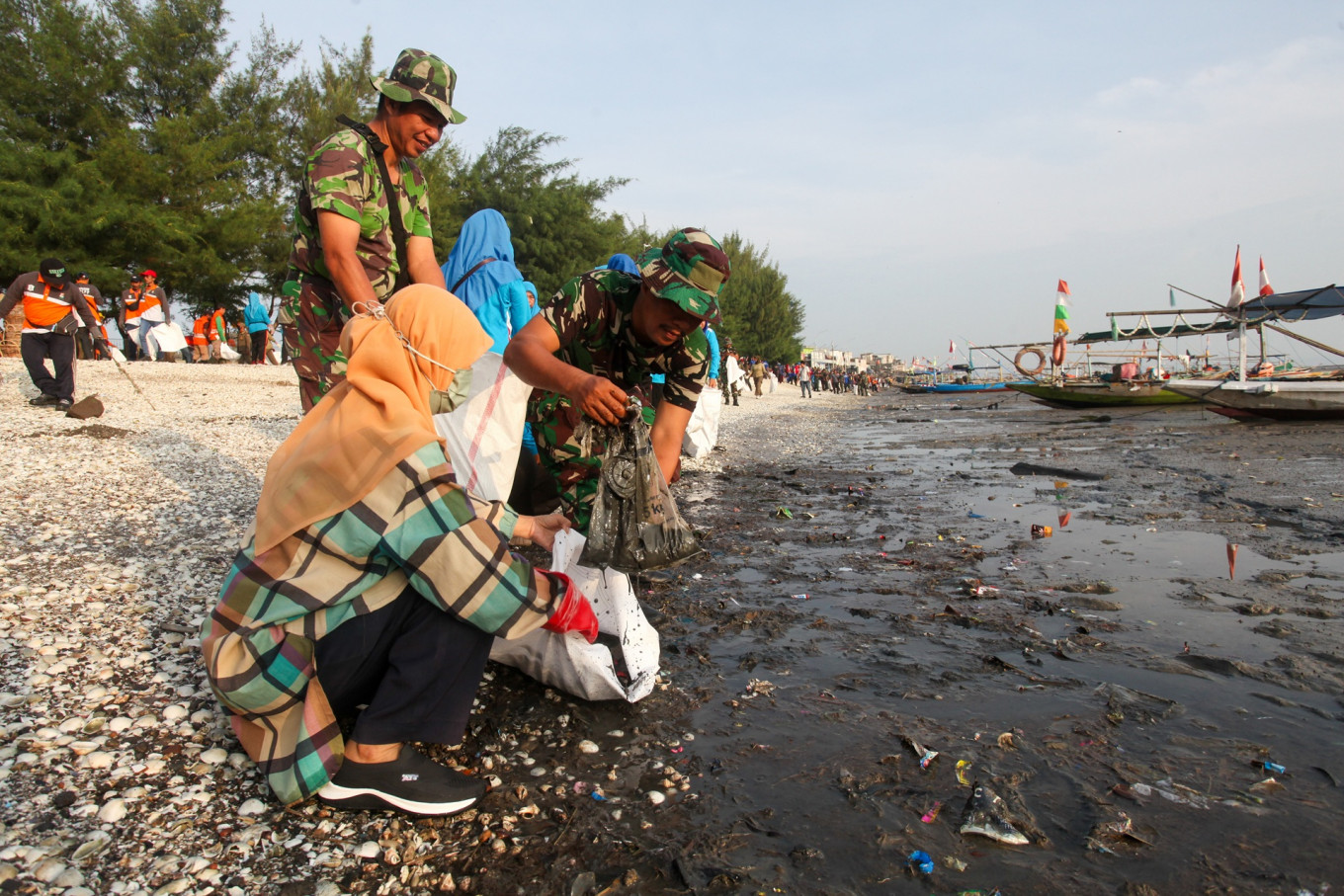 Indonesian Military (TNI) personnel and local residents pick up trash on Feb. 15 from Kenjeran Beach in Surabaya, East Java, during a community beach cleanup. The activity was launched following President Prabowo Subianto's order for regular cleanups by regional administrations and local communities. (Antara/Didik Suhartono)
T
he government has ordered local authorities to launch regular cleanups of bodies of water as part of measures to handle the worsening waste crisis, but environmentalists warn these campaigns are insufficient to address the country’s systemic poor waste management.
In the past week, regional authorities across the country have staged cleanups in rivers, beaches and lakes following a nationwide instruction issued by President Prabowo Subianto.
Speaking at the Indonesia Economic Outlook 2026 event in Jakarta on Feb. 13, the President introduced a new initiative called ASRI, an acronym for Aman, Sehat, Resik, Indah (secure, healthy, clean, beautiful), mandating regular and collective cleanup operations by official institutions, schools and local communities to create more orderly and healthy environments.
“I request that we demonstrate [our commitment] within the shortest time possible,” Prabowo ordered during the event.
The initiative came just a week after the President made a public statement on Feb. 2 criticizing Bali’s growing waste problem, claiming he had received complaints from foreign leaders over polluted beaches on the resort island.
Bali and various other regions have struggled with an ongoing waste crisis, with the Environment Ministry declaring a “waste emergency” status in 336 cities and regencies since late 2025 due to the regional administrations’ failure to shut down landfills operated as open dumping sites.

In open dumping landfills, waste is piled and disposed of in an environmentally hazardous manner, as opposed to a structured burial to accelerate decomposition in as sanitary of a manner as possible. Improper handling of waste in landfills may increase the risk of fires, trash avalanches and other health hazards.