TheJakartaPost
Please Update your browser
Your browser is out of date, and may not be compatible with our website. A list of the most popular web browsers can be found below.
Just click on the icons to get to the download page.


Popular Reads
Top Results
No results found. Please check your search term and try again
Can't find what you're looking for?
View all search results
Popular Reads
Top Results
No results found. Please check your search term and try again
Can't find what you're looking for?
View all search resultsKB village launched in West Lombok
To commemorate World Contraception Day on Tuesday, the National Population and Family Planning Board (BKKBN) has named Kuranji Bangsal village in West Nusa Tenggara (NTB) a family planning village, known as a KB village, in a program that aims to control the population and improve human development
Change text size
Gift Premium Articles
to Anyone
Share the best of The Jakarta Post with friends, family, or colleagues. As a subscriber, you can gift 3 to 5 articles each month that anyone can read—no subscription needed!

T
o commemorate World Contraception Day on Tuesday, the National Population and Family Planning Board (BKKBN) has named Kuranji Bangsal village in West Nusa Tenggara (NTB) a family planning village, known as a KB village, in a program that aims to control the population and improve human development.
The main reason behind the move is that Kuranji Bangsal has a lack of access to education and health, and few residents participate in family planning, so the village meets the conditions set in the program first launched by President Joko “Jokowi” Widodo in 2016.
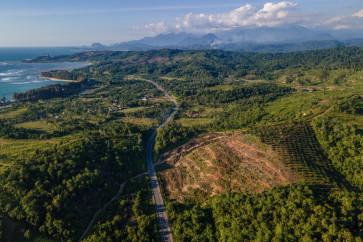
Located in a remote coastal area in Kuranji Dalang subdistrict of West Lombok regency, the village has a population of 726 people or 271 families, most of whom are agricultural manual workers and fishermen.
“Eighty percent of the population [in Kuranji Bangsal] have no formal education after elementary school, while only 60 residents participate in family planning,” said Kuranji Dalang subdistrict head Sukradin, who expressed a hope that Kuranji Bangsal’s new status could help it gain more attention from the government.
Kuranji Bangsal adds to the existing 11 other family planning villages in West Lombok. It is also among 700 villages that have been named KB villages across the country this year.
Based on the assessment of the existing 11 KB villages, West Lombok administration’s secretary Muhammad Taufiq said the village program was very effective at changing the mindset of people who had previously believed that having more kids would give them more fortune.
“Now, thanks to the program, this mindset has been gradually changed,” he said.
Realizing the challenges a number of its villages were facing, particularly amid the high number of child marriages, the West Lombok administration and some NGOs initiated last year a campaign called Anti Merariq Qodek (GAMAQ), which aims to prevent child marriage.
The campaign is in line with a 2014 NTB governor’s instruction that recommends a minimum age of 21 years for both men and women to get married, a few years older than the 16-year and 19-year minimum age set by the Marriage Law for women and men, respectively.
Child marriage accounts for about 45 percent of the total number of marriages recorded in the province.
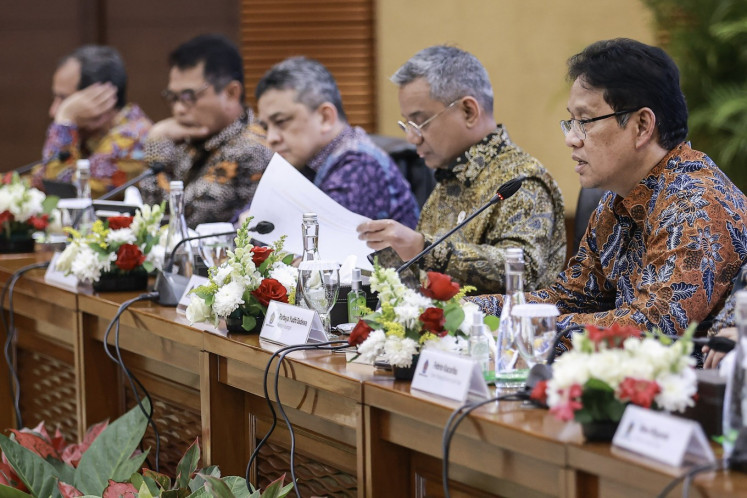
Speaking at the launch of the KB village in Kuranji Dalang, BKKBN head Surya Chandra Surapaty said the program is expected to see higher participation in family planning in Kuranji Bangsal village, which eventually would be able to control the birth rate and improve quality of life.
The KB village program involves various stakeholders and focuses on community development covering various aspects such as the economy, education, health, housing and the environment.
This year, the government has stepped up its efforts to promote family planning at a grass roots level by expanding its target to assign one KB village in every district across the country. In 2016, the target was to have one family planning village in every regency, resulting in at least 514 KB villages having been set up across all provinces.