The Jakarta Post
Please Update your browser
Your browser is out of date, and may not be compatible with our website. A list of the most popular web browsers can be found below.
Just click on the icons to get to the download page.


Popular Reads
Top Results
No results found. Please check your search term and try again
Can't find what you're looking for?
View all search results
Popular Reads
Top Results
No results found. Please check your search term and try again
Can't find what you're looking for?
View all search resultsSemarang welcomes Ramadan with Dugdheran carnival
In the street performance, the Warak, a symbol of greed and anger, hatches an egg, a symbol of purity that symbolizes the spirit of Ramadan.
Change text size
Gift Premium Articles
to Anyone
Share the best of The Jakarta Post with friends, family, or colleagues. As a subscriber, you can gift 3 to 5 articles each month that anyone can read—no subscription needed!
 Set as preferred source
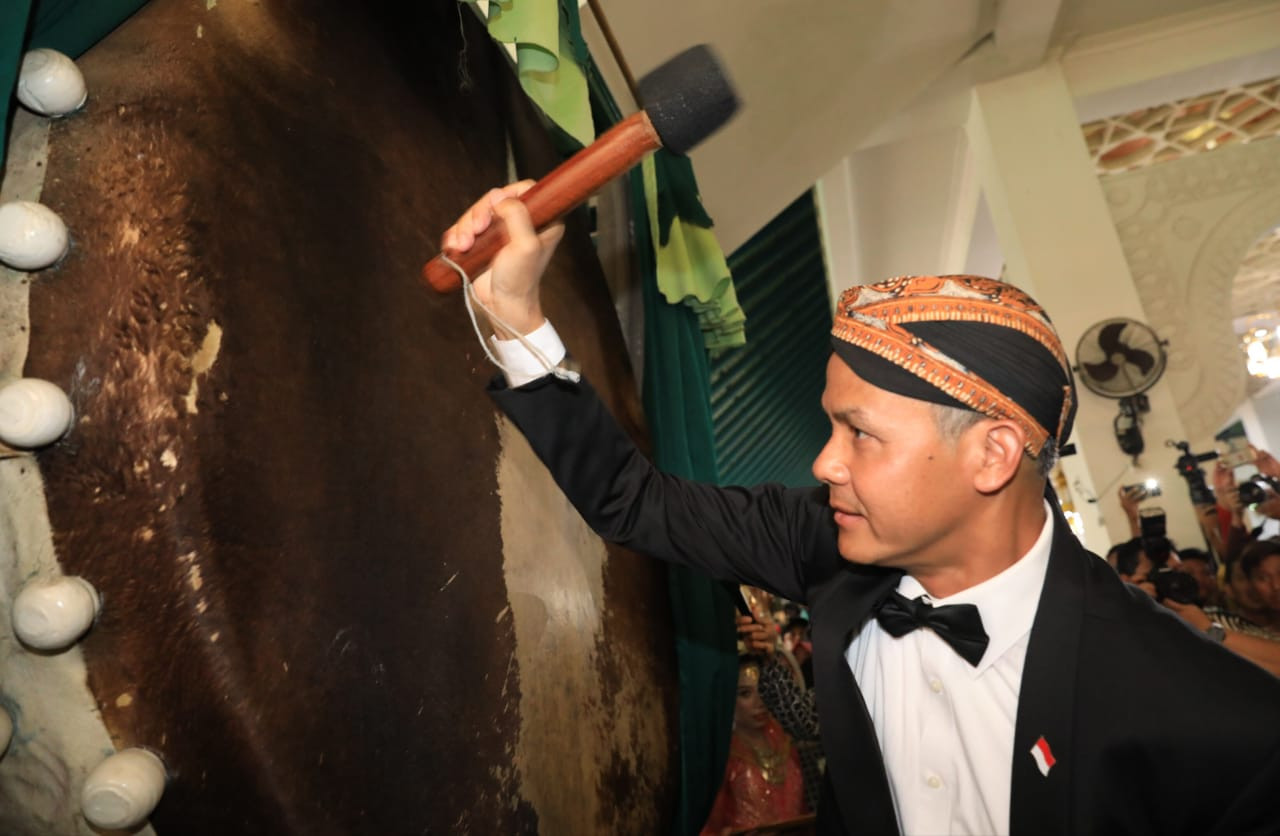 Central Java Governor Ganjar Pranowo hits a 'bedug' at the Central Java Grand Mosque on Saturday to mark the beginning of Ramadan during a Dhugdheran carnival.
(JP/Suherdjoko)
Central Java Governor Ganjar Pranowo hits a 'bedug' at the Central Java Grand Mosque on Saturday to mark the beginning of Ramadan during a Dhugdheran carnival.
(JP/Suherdjoko)
T
housands of residents flocked to the city center of Semarang, West Java, on Saturday to welcome the fasting month, which will begin on Monday.
They joined the Dhugdheran street parade, a city tradition dating back to 1881 that features Warak (a mythical creature that resembles a dragon, a goat and a camel), which represents the ancestors of Semarang residents.
The characteristics of a dragon represent residents of Chinese descent, while the goat and camel represent those whose ancestors came from Java and the Middle East, respectively.
In the street performance, the Warak, a symbol of greed and anger, hatches an egg, a symbol of purity that symbolizes the spirit of Ramadan, encouraging residents to combat greed, anger and other worldly desires during the holy month to purify themselves.
Semarang Mayor Hendrar Prihadi and Central Java Governor Ganjar Pranowo took part in the carnival by playing the roles 19th -century leaders who usually held a halaqah (a convention with ulema) before deciding on the official start of Ramadan.
Hendrar acted as Tumenggung Aryo Purboningrat, the regent of Semarang in 1881, who held the halaqah with ulema at Kauman Mosque to determine when the fasting month begins.
The announcement of the beginning of Ramadan was then brought to the Grand Mosque of Central Java, where Kanjeng Mas Raden Tumenggung Probo Hadikusuma — played by Ganjar — was waiting.
“Let’s use this month perform good deeds and deliver positive sentiments,” Ganjar said after reading the halaqah results.
The manuscript’s reading was followed by the sounds of a bedug (mosque drum) and firecrackers. The sound the bedug makes, which residents once described as “dug, dug, dug, der”, inspired the name of the carnival, Dhugdheran.