TheJakartaPost
Please Update your browser
Your browser is out of date, and may not be compatible with our website. A list of the most popular web browsers can be found below.
Just click on the icons to get to the download page.


Popular Reads
Top Results
No results found. Please check your search term and try again
Can't find what you're looking for?
View all search results
Popular Reads
Top Results
No results found. Please check your search term and try again
Can't find what you're looking for?
View all search resultsForeign policy tightens up top, but not below
As the president centralizes foreign policy in his own hands, guided by instinct and private diplomacy, a generation of young Indonesians are determined to break it open.
Change text size
Gift Premium Articles
to Anyone
Share the best of The Jakarta Post with friends, family, or colleagues. As a subscriber, you can gift 3 to 5 articles each month that anyone can read—no subscription needed!
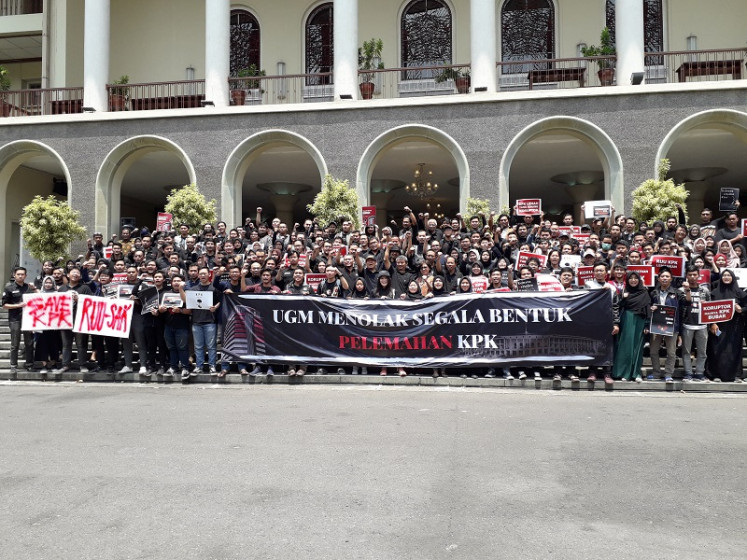
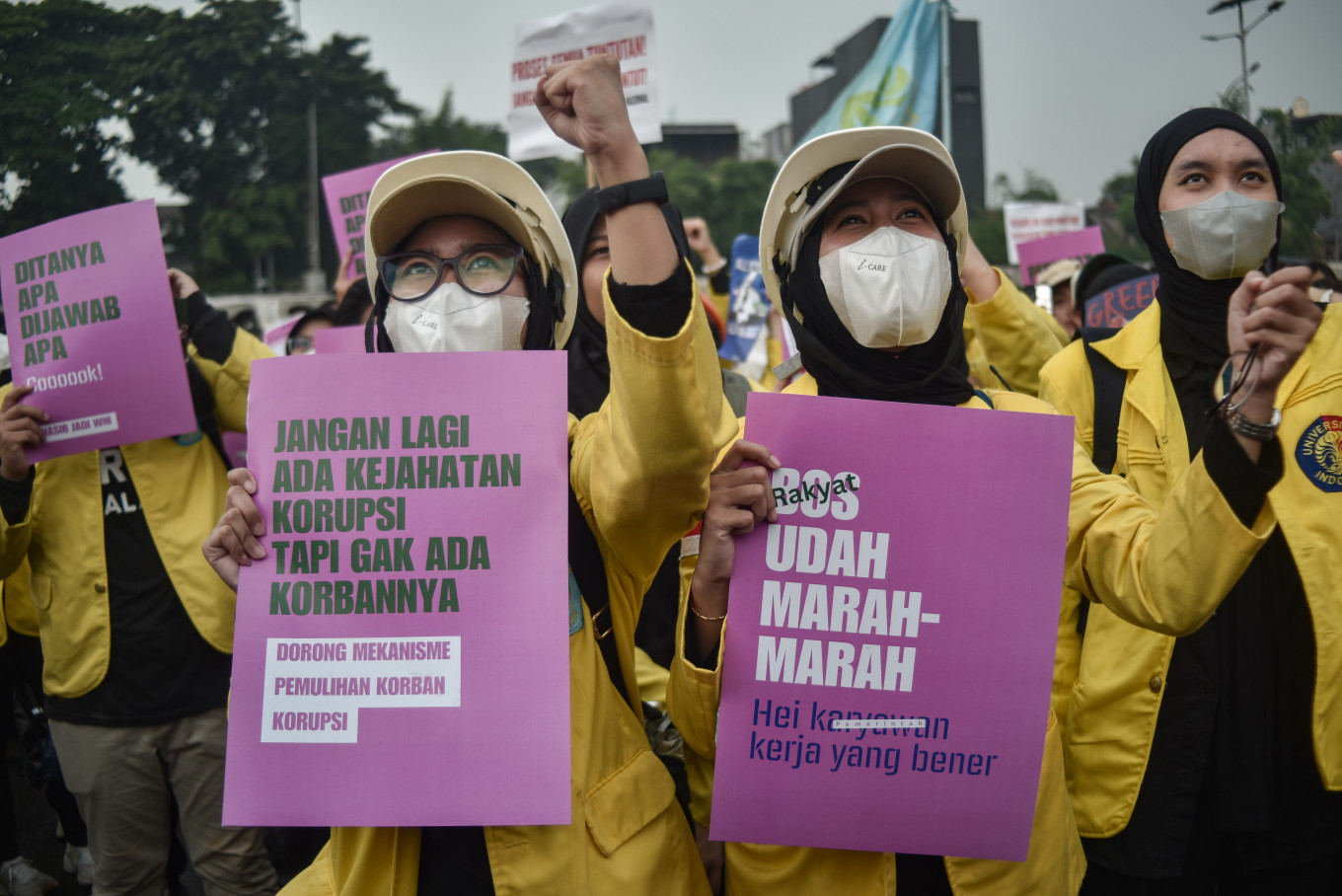 University students hold posters of demands during a protest on Sept. 9, in front of the House of Representatives complex in Senayan, Central Jakarta. (Antara/Fakhri Hermansyah)
T
housands of young people stood in a long line outside Kasablanka Hall in South Jakarta on Saturday morning. They had travelled from every corner of Indonesia, on their own initiative and with their own money.
No, they were not Swifties lining up for a Taylor Swift concert, nor fans trailing Korean girl groups or boy bands. They came for something far more serious, to challenge the grip of the country’s elite.
They came to attend what Office of the Coordinating Infrastructure and Development Minister Agus Harimurti Yudhoyono, in his keynote speech, called the biggest annual foreign policy event for young Indonesians, the Indonesian Foreign Policy Conference organized by the Foreign Policy Community of Indonesia (FPCI).
Their presence highlights one of the most striking contrasts in Indonesia today: a president who centralizes foreign policy in his own hands, guided by instinct and private diplomacy, and a generation of young Indonesians determined to break it open. As President Prabowo Subianto turns Indonesia’s global posture into a personal performance, these youths treat foreign policy as a civic space. As he narrows it inside the palace, they democratize it in halls, classrooms, TikTok feeds and midnight study circles across the archipelago.
Their journey to Jakarta is a form of resistance, a collective refusal to let Indonesia’s world affairs be determined by one man alone.
Across Indonesia, from universities in Aceh to Papua’s community centers, young people have developed an extraordinary appetite for international affairs. They debate the Association of Southeast Asian Nations (ASEAN) future, question the meaning of non-alignment, follow China’s maneuvers, dissect BRICS and scrutinize Indonesia’s silence on Palestine. They talk about climate diplomacy, migrant workers, global inequality and the shifts reshaping world politics. Their conversations often show a depth missing in the government’s own statements.

For them, foreign policy is no longer an elite abstraction. It is daily life. It shapes the price of rice, job opportunities, regional stability and Indonesia’s ability to navigate an increasingly turbulent world.