The Jakarta Post
Please Update your browser
Your browser is out of date, and may not be compatible with our website. A list of the most popular web browsers can be found below.
Just click on the icons to get to the download page.


Popular Reads
Top Results
No results found. Please check your search term and try again
Can't find what you're looking for?
View all search results
Popular Reads
Top Results
No results found. Please check your search term and try again
Can't find what you're looking for?
View all search resultsMorowali and the politics of air sovereignty
State presence in airspace governance has come to the forefront with the controversy over Morowali, sounding a warning bell for Indonesia's air sovereignty.
Change text size
Gift Premium Articles
to Anyone
Share the best of The Jakarta Post with friends, family, or colleagues. As a subscriber, you can gift 3 to 5 articles each month that anyone can read—no subscription needed!
 Set as preferred source
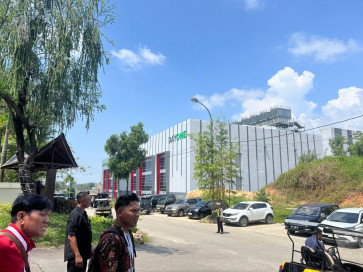
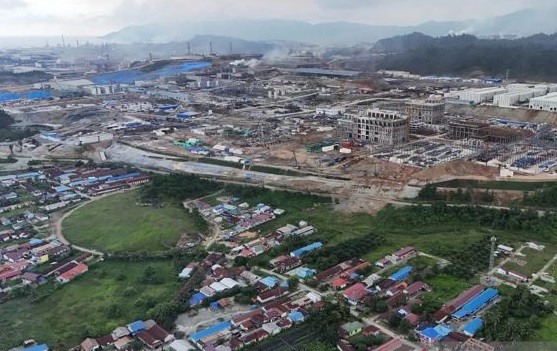 Residential areas in Bahodopi district stand on Jan. 3, 2024, against the backdrop of rolling hills covered by haze due to emissions from the Indonesia Morowali Industrial Park (IMIP) in Morowali regency, Central Sulawesi. (Antara/Mohamad Hamzah)
T
he recent controversy over Central Sulawesi’s Morowali regency serves as a sobering reminder of what it truly means to be sovereign in the air. On paper, the airspace above Morowali falls indisputably under the sovereignty and authority of the Republic of Indonesia. There is no international arrangement delegating its air navigation services to any foreign state, yet it is precisely in this fully domestic airspace that conflict has erupted.
Defense Minister Sjafrie Sjamsoeddin has publicly flagged the operation of international flights in the area without adequate oversight from state institutions, warning of a potential “state within a state” emerging inside a strategic industrial enclave, the Indonesia Morowali Industrial Park (IMIP). Conversely, Deputy Transportation Minister Suntana insists that the IMIP special airport is legal, registered and supervised by his ministry.
A paradox has emerged: In airspace where Indonesia is formally and fully sovereign, the state can remain operationally absent. This begs a sharper question: If Morowali, located within a Flight Information Region (FIR) controlled entirely by Indonesia, can experience such gaps in state presence, what does that imply for Tanjung Pinang and Natuna in the Riau Islands? In those regions, airspace management has been delegated to a foreign authority under a 25-year arrangement signed in 2022, with an explicit option for extension.
Legally, the IMIP special airport is a special purpose facility. It is not required to serve general public traffic, access is restricted and it does not automatically host immigration, customs and quarantine posts that are found at regular international airports. While technically under the oversight of the Transportation Ministry regarding safety and permits, problems arise when business jets fly in from abroad and out of the country through arrangements that lack transparency.
This opacity is what prompted the defense minister’s warning. On the one hand, transport authorities believe they have fulfilled all procedural requirements. On the other, the defense establishment sees serious gaps in border control, security and integration with the national air defense system.
The Morowali airspace controversy is a concrete illustration of how absolute, exclusive air sovereignty can be reduced to sovereignty on paper when governance is fragmented.

A more troubling contrast appears in Tanjung Pinang, Natuna and other sectors covered by the FIR arrangements between Indonesia and Singapore. The 2022 agreement includes FIR realignment, an extradition treaty and defense cooperation.