The Jakarta Post
Please Update your browser
Your browser is out of date, and may not be compatible with our website. A list of the most popular web browsers can be found below.
Just click on the icons to get to the download page.


Popular Reads
Top Results
No results found. Please check your search term and try again
Can't find what you're looking for?
View all search results
Popular Reads
Top Results
No results found. Please check your search term and try again
Can't find what you're looking for?
View all search resultsBiosecurity efforts boost Indonesia’s food resilience
ASF may not infect humans, yet its impact runs deep.
Change text size
Gift Premium Articles
to Anyone
Share the best of The Jakarta Post with friends, family, or colleagues. As a subscriber, you can gift 3 to 5 articles each month that anyone can read—no subscription needed!
 Set as preferred source
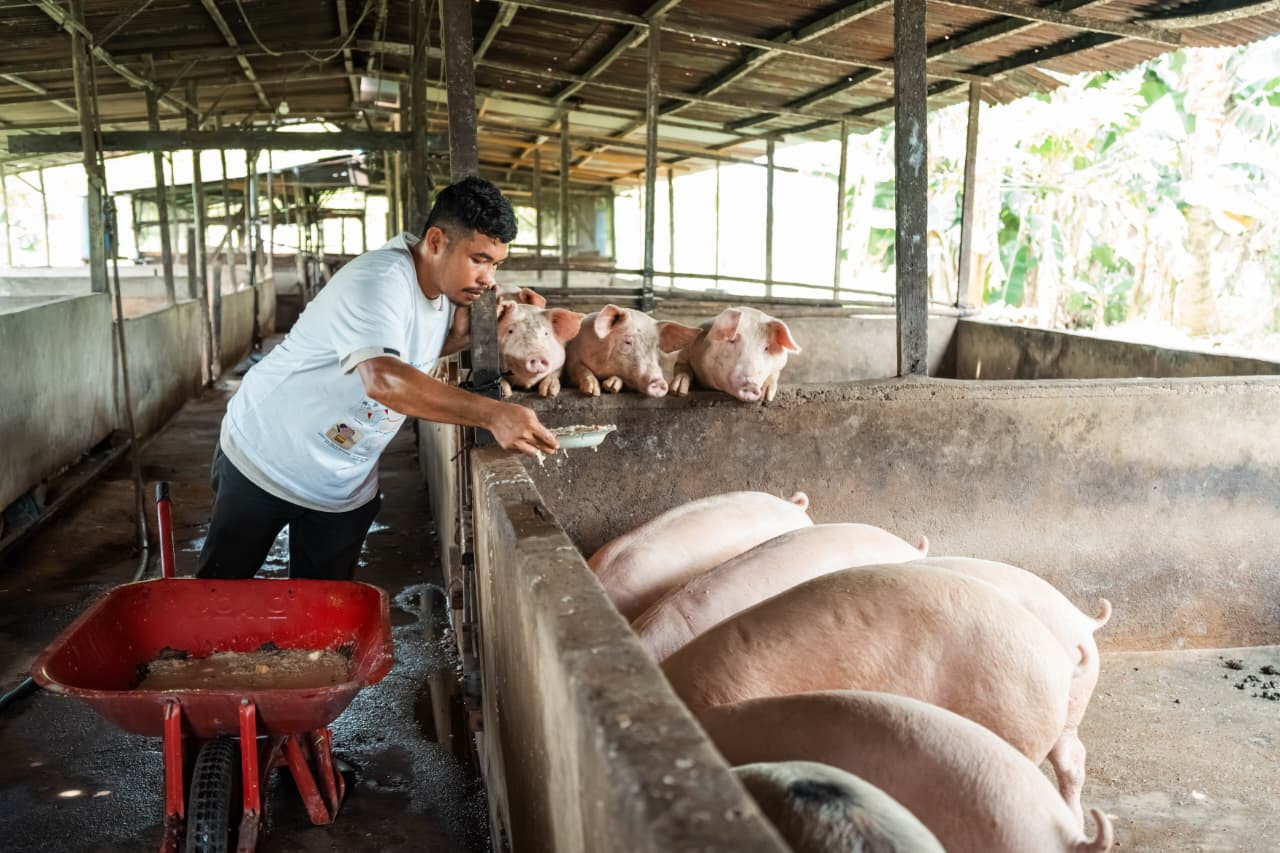 A man feeds pigs at a farm in Pontianak in April 2025. (FAO Indonesia/-)
F
ood security is a cornerstone of Indonesia’s stability and national welfare. As the world faces mounting pressures such as the climate crisis, food price volatility and supply chain disruptions, Indonesia is working to fortify its food system to guarantee sufficient, safe and affordable food for all.
With a population of more than 280 million, Indonesia has shown commendable progress, evident in its largest government rice reserves in decades. However, maintaining food security requires sustained attention, particularly also in the livestock subsector, which provides essential protein for the population.
Amid ongoing efforts to strengthen food security, African Swine Fever (ASF) poses a formidable challenge, threatening not only pig populations but also the livelihoods of farmers and the stability of local food systems.
ASF may not infect humans, yet its impact runs deep. The loss of livestock also strips away a crucial source of protein that underpins nutritional welfare, particularly in regions still grappling with food security challenges. Over a million Indonesian households rely on pig farming, especially in areas where food insecurity remains a concern. Healthy livestock secures a safe and sustainable supply of animal-source foods.
Indonesia’s strongest defense against ASF lies in prevention, early detection and rapid response to contain the disease before it spreads. In response to recent spikes in ASF activity across Asia and the Pacific, Indonesia, through the Agriculture Ministry, has taken decisive action by reinforcing biosecurity measures and urging stronger vigilance at all levels.
In collaboration with the Food and Agriculture Organization of the United Nations (FAO) and with support from the Ministry of Agriculture, Food and Rural Affairs of the Republic of Korea, Indonesia has been implementing the Community ASF Biosecurity Interventions (CABI) program. This initiative empowers farmers to adopt practical and affordable biosecurity practices to protect their herds and strengthen on-farm resilience against ASF.

Experience from the field tells us a powerful story: simple actions can protect entire communities. By limiting access to pig pens, keeping farms clean and managing waste properly, farmers have seen their herds grow healthier. These improvements have also strengthened local economies and renewed confidence among farming communities. The impact is clear with healthier herds, stronger markets and more resilient rural livelihoods.