The Jakarta Post
Please Update your browser
Your browser is out of date, and may not be compatible with our website. A list of the most popular web browsers can be found below.
Just click on the icons to get to the download page.


Popular Reads
Top Results
No results found. Please check your search term and try again
Can't find what you're looking for?
View all search results
Popular Reads
Top Results
No results found. Please check your search term and try again
Can't find what you're looking for?
View all search resultsBuilding a financially healthy Indonesia
Setting up a national council for financial health, as the President has announced, is the first step in improving financial well-being for all Indonesians, whose experiences will also inform efforts toward ensuring financial health as a global challenge.
Change text size
Gift Premium Articles
to Anyone
Share the best of The Jakarta Post with friends, family, or colleagues. As a subscriber, you can gift 3 to 5 articles each month that anyone can read—no subscription needed!
 Officials install a banner on the fence of an administrative building on June 30, 2024, as part of an anti-online gambling campaign in Bogor, West Java. (AFP/Aditya Aji)
I
ndonesia has always held a special place in my work for the United Nations. I have had the privilege of visiting the country three times to advocate for financial inclusion and in that time, have witnessed impressive progress driven by the commitment and innovation of public and private sector leaders. I remain deeply encouraged by efforts to ensure that all Indonesians are included in the formal financial system.
My visit to Indonesia two weeks ago marked a new step in our journey. This time, building on the foundation of financial inclusion, I came to advocate for financial health.
Financial health has four components: First, the ability to manage day-to-day finances like paying bills on time and balancing income and expenses; second, building resilience to financial shocks through saving buffers and risk protection; third, saving for and investing in the future, including retirement and education; and finally, feeling confident about one’s financial life.
For many Indonesians, good financial health remains out of reach. Today, three in 10 consumers rely on payday loans to get through the month and only one in 10 adults is saving formally for old age. Meanwhile, financial scams are on the rise: seven in 10 Indonesians face digital scam attempts every week.
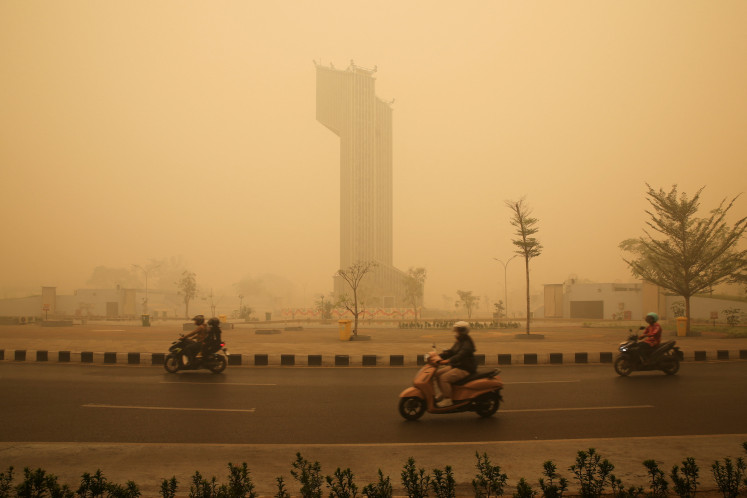
Over 100 million Indonesians are exposed to climate hazards, and both life and livelihood are at risk when disasters strike, as seen so painfully in the recent floods and landslides in Sumatra. I would like to express my heartfelt condolences to the families of those who tragically lost their lives.
The issue of financial health is not unique to Indonesia. In the United States, only 31 percent of adults are considered financially healthy. In the Philippines, 68 percent of adults are worried about facing severe financial hardship. In my own country, the Netherlands, approximately one in five households is financially unhealthy. It is a problem we need to tackle across the world.

In November, I met with Indonesians from diverse backgrounds, policymakers and leaders of the financial and private sectors to discuss this issue. We examined how the financial system in Indonesia might better support the financial lives of all Indonesians and contribute to their financial well-being. After these discussions, it was especially encouraging to hear directly from leaders that financial health is now recognized as a national priority, something that had not been the case before.