The Jakarta Post
Please Update your browser
Your browser is out of date, and may not be compatible with our website. A list of the most popular web browsers can be found below.
Just click on the icons to get to the download page.


Popular Reads
Top Results
No results found. Please check your search term and try again
Can't find what you're looking for?
View all search results
Popular Reads
Top Results
No results found. Please check your search term and try again
Can't find what you're looking for?
View all search resultsSumatra’s prolonged plight
The government's response to the Sumatra flooding and landslides is turning into a case study of what not to do after a major disaster.
Change text size
Gift Premium Articles
to Anyone
Share the best of The Jakarta Post with friends, family, or colleagues. As a subscriber, you can gift 3 to 5 articles each month that anyone can read—no subscription needed!
 Set as preferred source
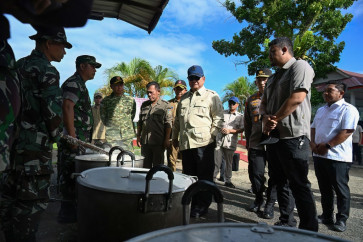
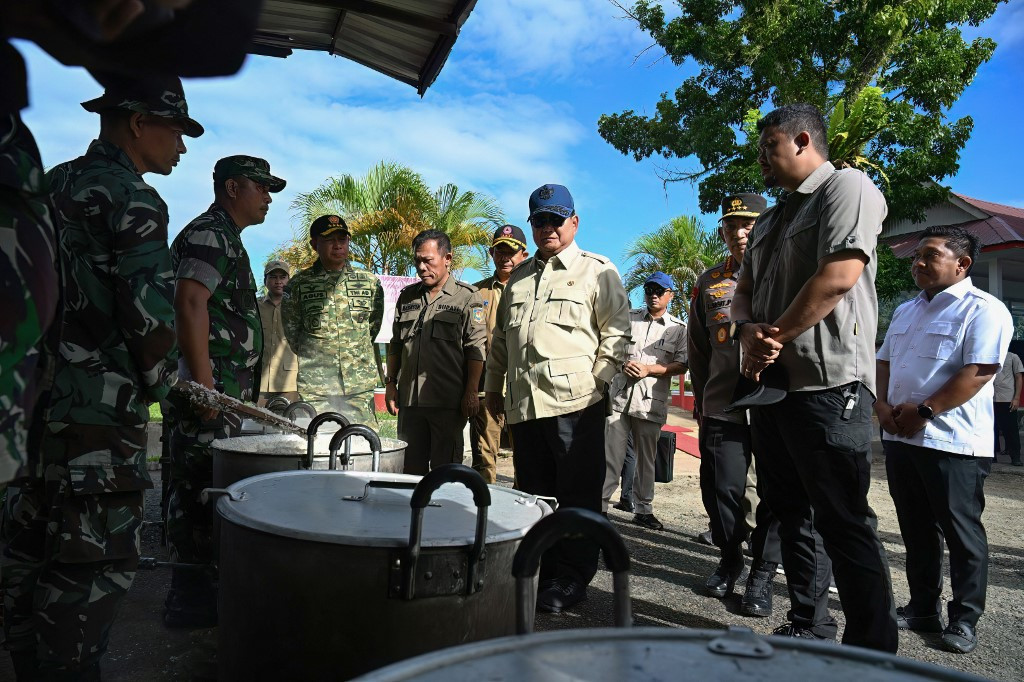 President Prabowo Subianto (center) inspects an emergency kitchen preparing food for disaster survivors on Dec. 1, 2025, at an evacuation post in Pandan, Central Tapanuli regency, North Sumatra. (AFP/YT Haryono)
I
t has been a heartbreaking three weeks for thousands of people who have survived the Sumatra flooding and landslides. As the floodwaters recede, an inconvenient truth is emerging: Help isn't arriving fast enough in many places and humanitarian workers are stretched to their limits to assist those in need, even with support from the police, the military and volunteers.
Despite nearly 1,000 lives lost and thousands of others displaced, there is a strange gap between what we see on the news and what is happening on the muddy ground. The government’s pledge to deliver timely food and medical supplies to Aceh, North Sumatra and West Sumatra is being put to the test.
People in at least eight North Sumatra districts are still isolated after the disaster cut access, leaving them heavily dependent on air-dropped aid. In Aceh’s Bener Meriah regency, a TikTok video posted on Tuesday showed a survivor walking for three hours in search of relief aid that had yet to reach him and his family.
The government’s decision to extend the emergency period in West Sumatra was a tacit admission of its insufficient initial response to handle the catastrophic scale of the disaster.
President Prabowo Subianto has been seen making two visits to the affected provinces to console and reassure survivors. But there is a huge difference between visiting and managing a disaster zone.
While the President has issued loud and clear directives, promising that "no one will be left alone”, the government machinery has apparently stalled. Aid trucks have been bogged down by red tape and broken roads, even as VIP convoys distributing aid packages passed through unhindered.

The frustration is compounded by what many are calling "performative governance". Instead of coordinating complex relief efforts, too many officials are focused on image building: posing for photos and using their social media accounts to advertise their charitable acts to the world.