The Jakarta Post
Please Update your browser
Your browser is out of date, and may not be compatible with our website. A list of the most popular web browsers can be found below.
Just click on the icons to get to the download page.


Popular Reads
Top Results
No results found. Please check your search term and try again
Can't find what you're looking for?
View all search results
Popular Reads
Top Results
No results found. Please check your search term and try again
Can't find what you're looking for?
View all search resultsEconomic, not family affairs
Prabowo’s administration should avoid complacency and resist politically expedient fixes to complex economic problems.
Change text size
Gift Premium Articles
to Anyone
Share the best of The Jakarta Post with friends, family, or colleagues. As a subscriber, you can gift 3 to 5 articles each month that anyone can read—no subscription needed!
 Set as preferred source
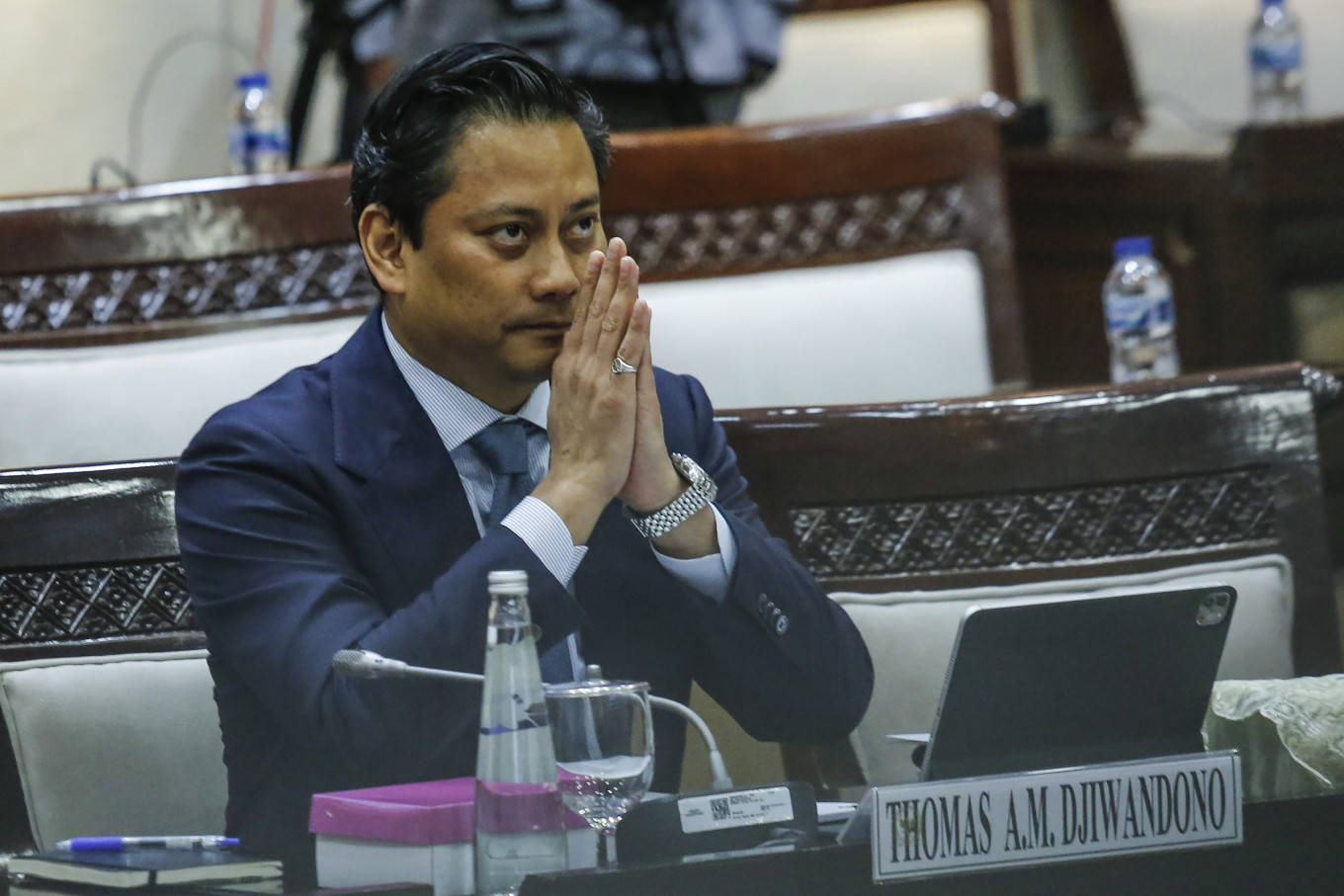 Bank Indonesia (BI) deputy governor nominee Thomas “Tommy” Djiwandono prepares to attend a confirmation hearing on Jan. 26, 2026 at House of Representatives Commission XI overseeing financial affairs at the Senayan Legislative Complex in Central Jakarta. (Antara/Apsrilla Dwi Adha)
I
t has been turbulent weeks for the country's economy. The appointment of Thomas Djiwandono, a nephew of President Prabowo Subianto, as a deputy governor of Bank Indonesia (BI), immediately unsettled markets. Concerns over the central bank’s independence fueled investor anxiety and added pressure on the rupiah.
Confidence deteriorated further after global index provider MSCI flagged the Indonesia Stock Exchange (IDX) for deficiencies in shareholding transparency and allegations of coordinated trading. MSCI has suspended tracking the IDX and demanded significant reforms, warning that failure to comply could lead to a downgrade of Indonesia’s market status and trigger greater capital outflow.
The government has continued to insist that Indonesia’s economic fundamentals remain strong. But structural vulnerabilities remain evident. Amid the volatility of the markets, even a single external or domestic shock could have disproportionate effects.
This is why Prabowo’s administration should avoid complacency and resist politically expedient fixes to complex economic problems. Slowing growth and the weakening of rupiah do justify reconsidering fiscal and monetary strategies. Less conservative policies may be warranted amid heightened global uncertainty, including lower commodity prices and a stronger United States dollar. However, any shift must be carefully calibrated and institutionally sound.
Indonesia once benefited from the post-COVID 19 pandemic commodity boom, which boosted exports and accelerated recovery. That tailwind has faded. The government revenue declined last year, forcing increased borrowing and pushing the budget deficit close to the legal ceiling of 3 percent of gross domestic product.
The expanded government spending failed to deliver the targeted growth. Finance Minister Purbaya Yudhi Sadewa's plan to inject Rp 200 trillion (US$11.9 billion) into the banking system met with lukewarm response, forcing the government to withdraw Rp 75 trillion to be allocated for other posts in the state budget.

The less successful injection suggests that the current economic problem is not liquidity, but higher perception of investment and consumption risks as businesses face unstable policies and stagnant domestic demand.