TheJakartaPost
Please Update your browser
Your browser is out of date, and may not be compatible with our website. A list of the most popular web browsers can be found below.
Just click on the icons to get to the download page.


Popular Reads
Top Results
No results found. Please check your search term and try again
Can't find what you're looking for?
View all search results
Popular Reads
Top Results
No results found. Please check your search term and try again
Can't find what you're looking for?
View all search resultsWho owns the ocean’s genetic wealth?
As geopolitics spreads into a new global era, developing states risk being sidelined unless they step up now to demand an equitable, inclusive seat at the High Seas Treaty table.
Change text size
Gift Premium Articles
to Anyone
Share the best of The Jakarta Post with friends, family, or colleagues. As a subscriber, you can gift 3 to 5 articles each month that anyone can read—no subscription needed!
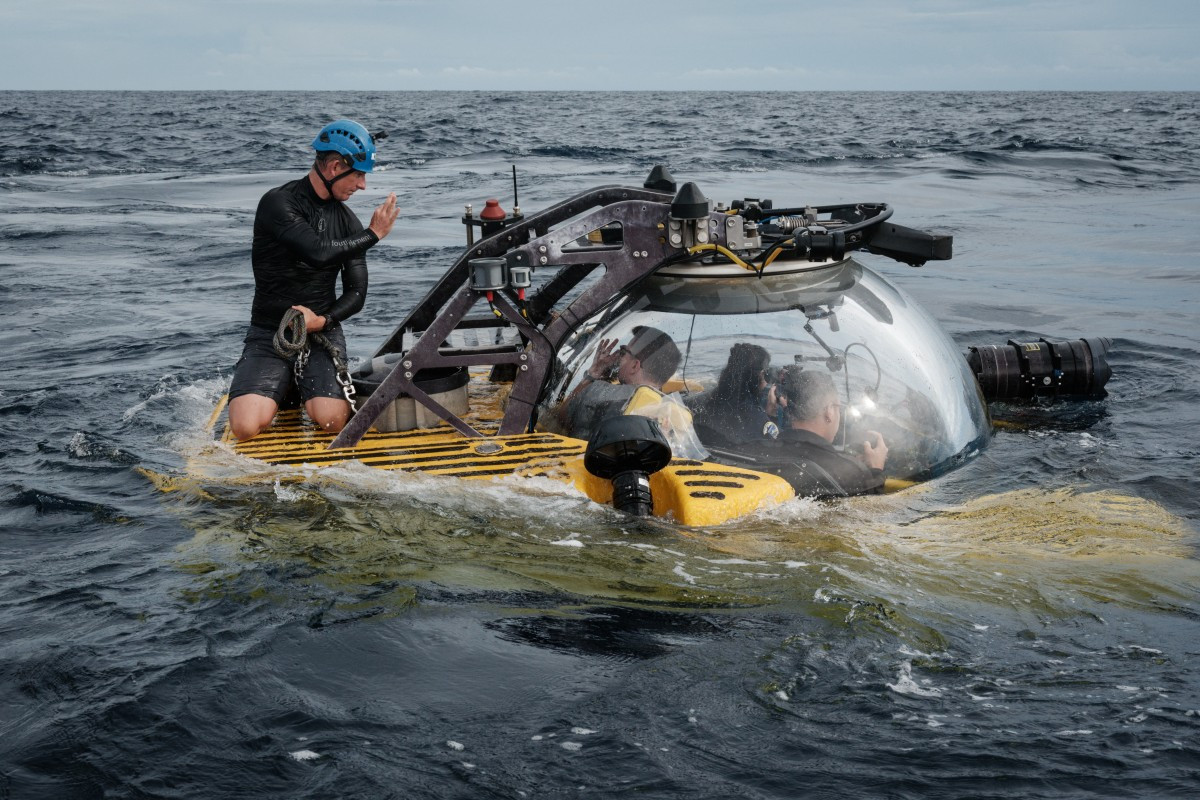 A crew member (left) from the OceanXplorer, a research vessel operated by the marine nonprofit OceanX, completes safety protocols with the pilot of a submersible on Jan. 12, 2026, prior to a deep-sea mission in the waters off Sulawesi Island (AFP/Yasuyoshi Chiba)
W
hen the High Seas Treaty, formally the Biodiversity Beyond National Jurisdiction (BBNJ) Agreement, entered into force this January, it marked the most significant shift in ocean governance since the 1982 United Nations Convention on the Law of the Sea (UNCLOS). For the first time, the world has agreed on a framework to conserve and sustainably use marine biodiversity in areas beyond national jurisdiction, which make up nearly half the planet.
But as the treaty moves from aspiration to implementation, a geopolitical fault line is emerging: Who will benefit from the scientific, technological and economic value of the high seas? Without clear rules, the High Seas Treaty risks entrenching existing inequalities rather than correcting them.
The stakes are enormous. The high seas are a strategic arena where states compete for influence, technology and economic advantage. Marine genetic resources (MGRs) from the deep ocean underpin new pharmaceuticals, enzymes, industrial materials and climate-resilient crops. The global market for genetic resources is projected to reach tens of billions of dollars in the coming decade.
For developing coastal states, especially those with limited research capacity, the BBNJ Agreement’s promise of “fair and equitable benefit sharing” is not just a legal principle but a geopolitical necessity. And to secure it, many may need to turn to the International Tribunal for the Law of the Sea (ITLOS) for authoritative clarification.
The BBNJ Agreement outlines a wide range of activities: area-based management tools, environmental impact assessments, marine scientific research, in situ collection of genetic resources and the use of digital sequence information. These activities require advanced vessels, deep-sea sampling equipment, high-throughput sequencing technologies and specialized scientific expertise. As the document notes, “such activities are seemingly beyond the financial and technological reach of developing states parties”.
For decades, marine science has been dominated by a small group of wealthy nations. But under BBNJ, the consequences are more acute: the ability to participate in scientific activities directly determines the ability to benefit from them.

The treaty attempts to address this through capacity building and technology transfer provisions overseen by a dedicated committee. Yet these mechanisms remain vague, and their effectiveness will depend heavily on political will.
In a geopolitical environment where ocean science is increasingly tied to national competitiveness, developing states cannot rely solely on goodwill. They need legal clarity and enforceability.
Benefit sharing is at the heart of the treaty’s geopolitical tension. The BBNJ Agreement envisions both monetary and nonmonetary benefits, including access to samples, data, training and technology. But the modalities of how benefits will be calculated, distributed and enforced remain unsettled.
A key challenge is balancing economic valuation of monetary and nonmonetary benefits, which should be turned into a calculation formula for the sake of legal certainty. Without such clarity, disputes are inevitable.
Who owns the digital sequence information derived from a deep-sea organism? How should profits from commercial applications be shared? What obligations do technologically advanced states have to those without research capacity?
Developing states should seek an advisory opinion from ITLOS to clarify their rights and obligations under the BBNJ Agreement. This is not only legally sound but also geopolitically strategic.
There are two relevant precedents: the 1999 Southern Bluefin Tuna advisory opinion, which clarified the legality of unilateral experimental fishing in areas beyond national jurisdiction, and the 2022 advisory opinion, requested by the Commission of Small Island States (COSIS) on climate change and international law.
The two cases demonstrate that ITLOS can play a crucial role in interpreting treaty obligations in contested or ambiguous areas.
An advisory opinion on BBNJ benefit sharing could clarify the legal meaning of “fair and equitable” distribution, define the responsibilities of technologically advanced states and establish principles for valuing both monetary and nonmonetary benefits. It would also strengthen the negotiating position of developing states in the Conference of the Parties (COP) and help prevent disputes before they escalate into geopolitical conflicts.
In a treaty whose implementation depends heavily on interpretation, ITLOS can provide the legal backbone needed to ensure equity.
If developing states do not secure clear rules on benefit sharing early, they risk being permanently marginalized in the emerging high seas economy. As decisions are increasingly shaped by states with greater capacity, this could mean losing access to high-value genetic resources that support health, agriculture and biotechnology, becoming dependent on foreign scientific infrastructure that reinforces existing technological hierarchies and having limited influence over global ocean governance.
It would also weaken their ability to participate meaningfully in marine conservation, undermining one of the treaty’s core objectives.
In geopolitical terms, the high seas could become another domain like space or artificial intelligence, where technological power determines who benefits and who is left behind.
The BBNJ Agreement is still in its infancy. Institutional bodies are being established, guidelines are being drafted and funding mechanisms are being negotiated. This is precisely the moment when legal clarity matters most. Once norms solidify, it will be far harder for developing states to reshape them.
Seeking an ITLOS advisory opinion is not an act of confrontation. It is a proactive step to ensure that the treaty fulfills its promise: that the high seas, as the “common heritage of humankind”, do not become the exclusive domain of a technologically privileged few.
For developing coastal states, especially those with limited scientific capacity, the path forward involves: coordinating regionally to request an ITLOS advisory opinion; strengthening participation in BBNJ committees, especially on benefit sharing and technology transfer; building alliances with small island states, African coastal states and landlocked developing countries; advocating for transparent, enforceable benefit sharing formulas; and ensuring that capacity building commitments translate into real, measurable support.
The geopolitics of the high seas are shifting rapidly. The BBNJ Agreement offers a chance to shape a more equitable future, but only if developing states assert their rights early and decisively.
---
The writer is a law professor at Atma Jaya Catholic University of Indonesia. This article is republished under a Creative Commons license.