The Jakarta Post
Please Update your browser
Your browser is out of date, and may not be compatible with our website. A list of the most popular web browsers can be found below.
Just click on the icons to get to the download page.


Popular Reads
Top Results
No results found. Please check your search term and try again
Can't find what you're looking for?
View all search results
Popular Reads
Top Results
No results found. Please check your search term and try again
Can't find what you're looking for?
View all search resultsGovt backtracks on EV taxation as adoption rises
The latest ministerial regulation appears to be the final blow to the remaining support for the EV industry, which had been showing signs of taking off in Indonesia.
Change text size
Gift Premium Articles
to Anyone
Share the best of The Jakarta Post with friends, family, or colleagues. As a subscriber, you can gift 3 to 5 articles each month that anyone can read—no subscription needed!
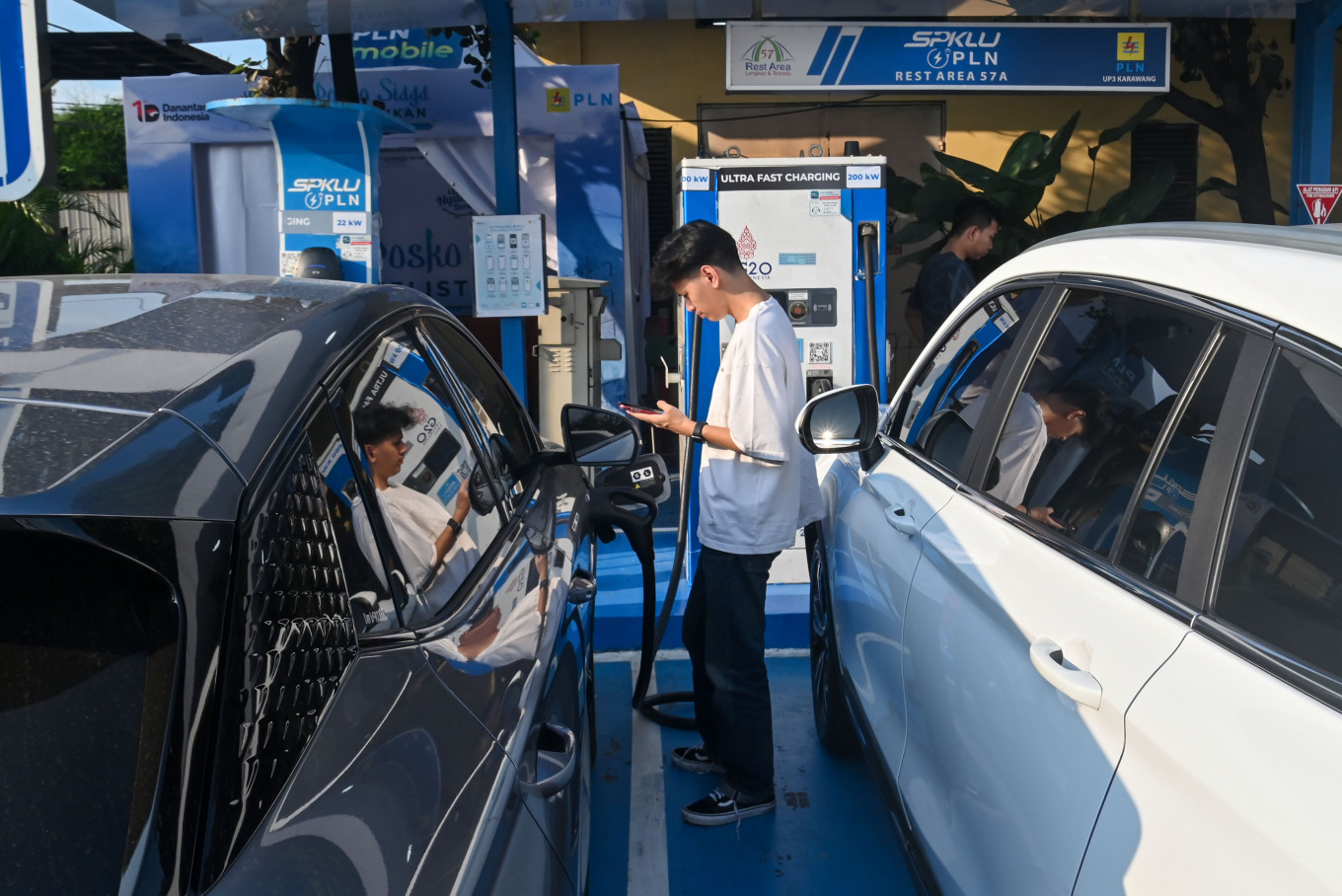 Powering up: A traveler charges an electric vehicle on March 15, 2026, at a public EV charging station operated by energy giant PT PLN at a rest area on the Jakarta-Cikampek toll road in Karawang regency, West Java. The transition to transportation electrification requires political will, as well as subsidies and a clear long-term strategy. (Antara/Fakhri Hermansyah)
T
he Home Ministry has walked back a new regulation scrapping tax exemptions for electric vehicles after a backlash, with critics saying it had undermined the country’s push for EV adoption over the past few years.
The ministry issued earlier this month Home Ministry Regulation (Permendagri) No. 11/2026 on motor vehicle tax, mandating EVs as taxable regional assets, and therefore, a subject for local taxation.
The regulation was welcomed by regional heads including West Java Governor Dedi Mulyadi and Jakarta Governor Pramono Anung, saying that they would implement the taxation immediately. Amid greatly reduced central government transfers to regions, local administrations have been scrambling to create new sources of income, including by levying new local taxes.
Car manufacturers and consumers, along with economists, have been puzzled by the sudden emergence of the regulation, describing it as inconsistent with the national program that started under former president Joko “Jokowi” Widodo to push the energy transition and support the growth of an EV battery industry in Indonesia.
As the controversy grew, Home Minister Tito Karnavian issued a circular signed on Wednesday in which he called on regional administrations to provide fiscal incentives in the forms of “exemptions” for EV taxes, citing global economic pressures, volatile oil and gas prices that also affected the country’s economy and the need to support renewable energy adoption.
“Governors [are instructed] to report the fiscal incentives as proven by governor decrees [stipulating the incentives] by May 31, 2026,” the circular said in a copy received by The Jakarta Post.

Leaving Jokowi's legacy?