The Jakarta Post
Please Update your browser
Your browser is out of date, and may not be compatible with our website. A list of the most popular web browsers can be found below.
Just click on the icons to get to the download page.


Popular Reads
Top Results
No results found. Please check your search term and try again
Can't find what you're looking for?
View all search results
Popular Reads
Top Results
No results found. Please check your search term and try again
Can't find what you're looking for?
View all search resultsA few bad LPDP apples
The recent furor related to a couple of LPDP recipients shows that the government must run a rigorous screening process for all candidates, including a social media background check, to ensure that the national scholarship is granted to a deserving individual who represents the country, and preferably one from straitened circumstances.
Change text size
Gift Premium Articles
to Anyone
Share the best of The Jakarta Post with friends, family, or colleagues. As a subscriber, you can gift 3 to 5 articles each month that anyone can read—no subscription needed!
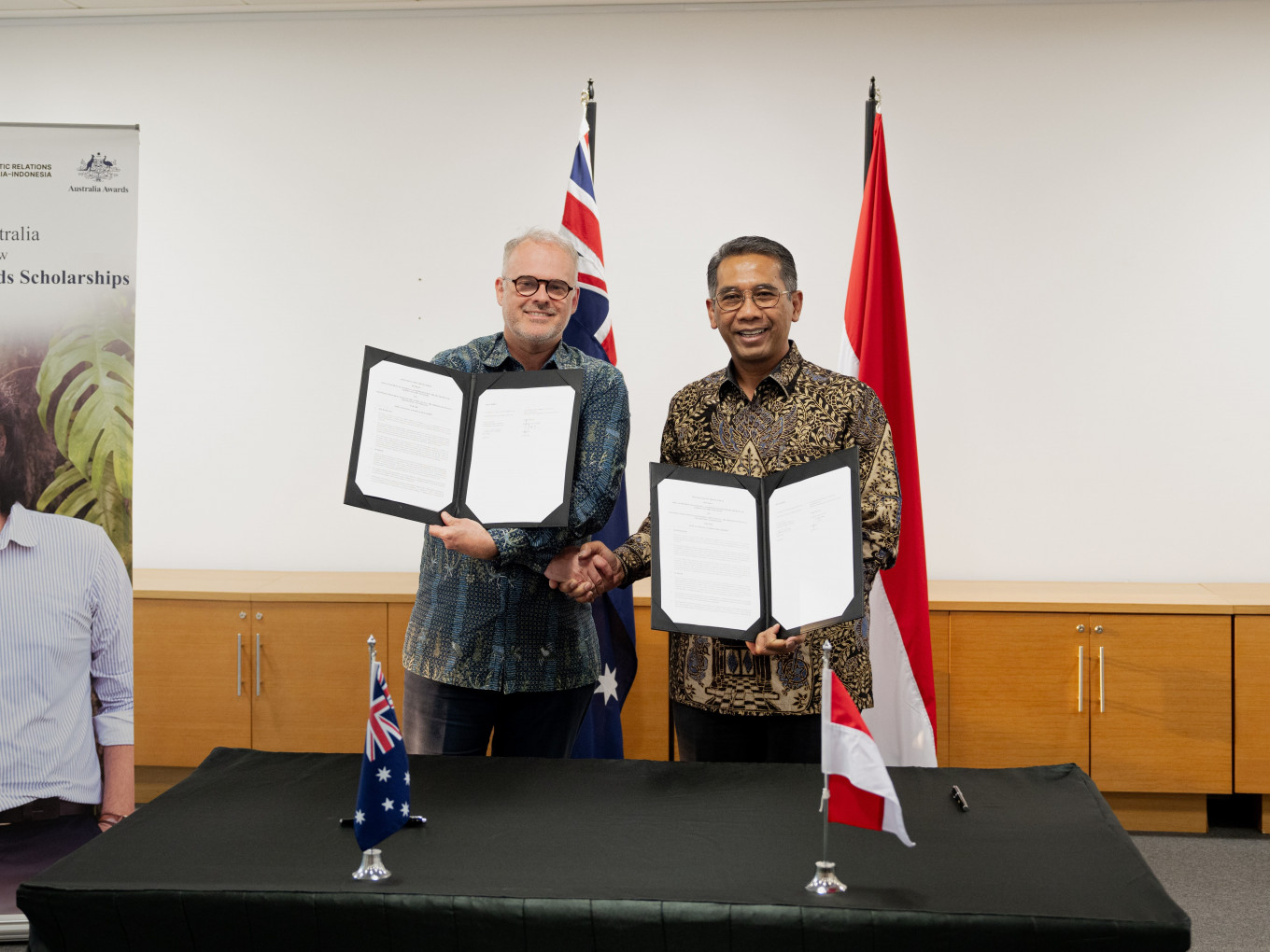 Andin Hadiyanto (right), president director of the Education Endowment Fund (LPDP), and Adrian Lochrin, the Australian Embassy’s acting deputy head of mission, hold up copies of a cooperation agreement between the LPDP and the Australian Awards Scholarship (AAS) on Aug. 26, 2024, during a signing ceremony at the Australian Embassy in Kuningan, South Jakarta. (The courtesy of /LPDP)
H
igher education scholarships are a privilege reserved for the few, specifically those with talent and brain. With this privilege comes a moral responsibility and a code of ethics, rooted in humility and gratitude toward the providers.
When we are talking about the government’s Education Endowment Fund (LPDP), a national scholarship program administered by the Finance Ministry, the last thing we want to see are recipients who not only exhibit entitlement but also thumb their nose at the very people who fund the program: taxpayers.
Finance Minister Purbaya Yudhi Sadewa was correct in demanding that Arya Iwantoro return the estimated Rp 2.64 billion (US$16,000), including interest, he received to pay for his master’s degree and his current PhD studies in the United Kingdom, which he is now halfway through. Purbaya said Arya had agreed to pay back all the money.
The furor unfolded when Arya’s wife Dwi Sasetyaningtyas posted on her blog that their children had obtained British citizenship. Commenting on the many privileges that came with being a British national, she added, “It’s enough that I remain an Indonesian national. The children don’t have to.”
The remark triggered a huge backlash from Indonesian netizens, particularly on learning that the couple were both LPDP recipients.
This prompted all kinds of demands from the online public, from tighter applicant screening and reserving the scholarship for only the brightest among the poor to even shutting down the program and using the fund for other impactful poverty programs. It did not escape their attention that Arya and Dwi both come from well-to-do families and probably could have afforded to pay their overseas studies on their own.

Launched in 2011, the LPDP program has sent thousands of Indonesians to pursue graduate studies at top universities around the world. It’s a worthy human resources investment for the country’s future and is given only to the brightest candidates, irrespective of social or economic status.