TheJakartaPost
Please Update your browser
Your browser is out of date, and may not be compatible with our website. A list of the most popular web browsers can be found below.
Just click on the icons to get to the download page.


Popular Reads
Top Results
No results found. Please check your search term and try again
Can't find what you're looking for?
View all search results
Popular Reads
Top Results
No results found. Please check your search term and try again
Can't find what you're looking for?
View all search resultsMore than just police reform: A social contract for policing
True police reform is more than a change in regulation; it is a living social contract where legitimacy is earned daily and security is co-produced by the police and the public.
Change text size
Gift Premium Articles
to Anyone
Share the best of The Jakarta Post with friends, family, or colleagues. As a subscriber, you can gift 3 to 5 articles each month that anyone can read—no subscription needed!
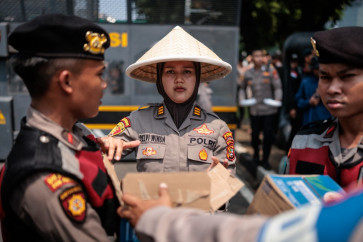
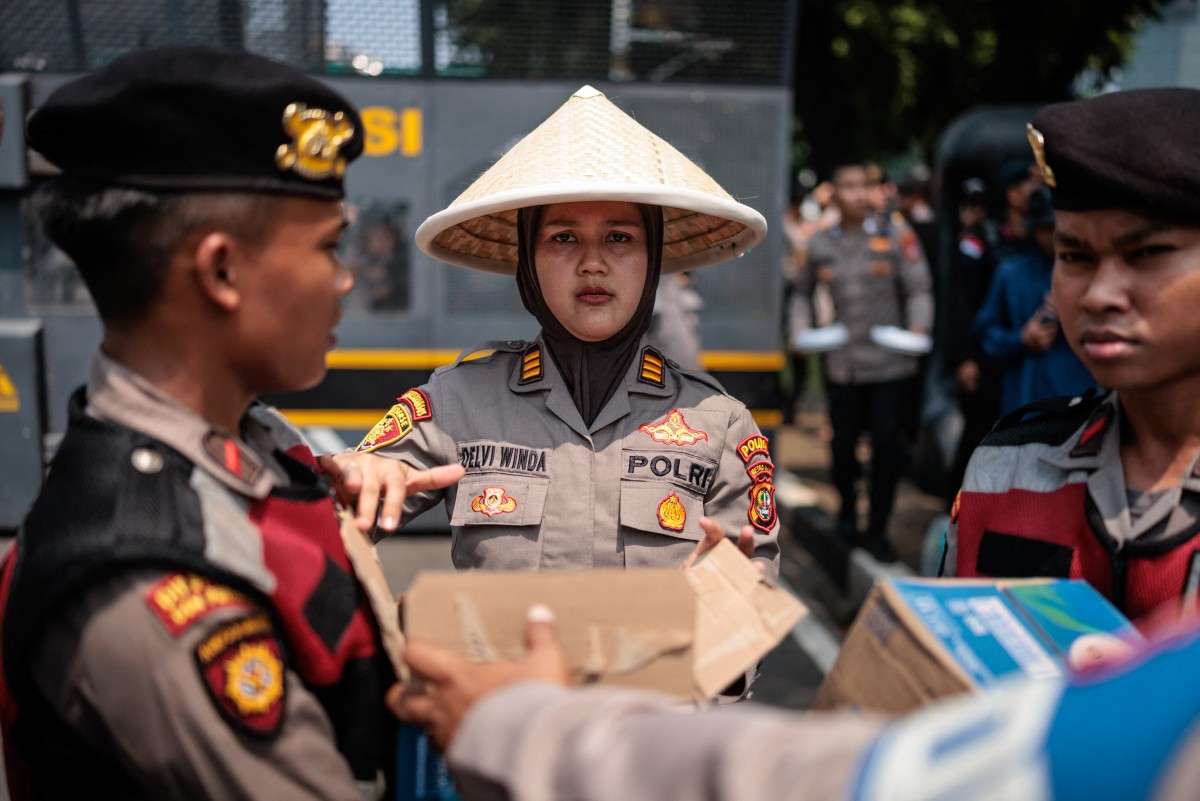 Police officers deliver water bottles to rallygoers on Sept. 24, 2025, during a demonstration on National Farmers' Day in Jakarta. (AFP/Yasuyoshi Chiba)
T
he presence of the police is one of those societal constants we often take for granted in modern life. Police forces appear ubiquitously, in uniform, in plain clothes and across a vast array of social settings. In some nations, they mirror the appearance of soldiers; in others, their presence is more subtle. In short, they adapt to the specific societies they serve.
The development of police officers and their respective forces is inextricably tied to the evolution of the states they protect. Yet, all variations point toward a core, generic trait of policing: maintaining public order, ensuring domestic security and performing essential civil duties.
Does this suggest that the police should lack specialized capabilities for high-intensity needs? Certainly not. However, such roles must always align with the original purpose for which a police force was deemed necessary.
Historically, most global police forces originated from military functions. According to Morris Janowitz, police forces evolve through what he termed a "constabulary transformation", a process in which armed forces gradually adopt roles traditionally associated with civilian policing.
This transition is a natural consequence of societies becoming more complex, urbanized and democratic. In these sophisticated environments, the military is increasingly required to operate where brute force is counterproductive. Here, effectiveness depends less on overwhelming firepower and more on restraint, negotiation and a continuous, nuanced engagement with civilian life.
For Janowitz, the constabulary force serves as the bridge explaining the shift from the military to the police. This evolution accounts for the militaristic traits that certain forces, including those in Indonesia, still retain. Nevertheless, this does not obscure the fact that, professionally, the police and the military remain two distinct entities that identify themselves through different values.

As Samuel Huntington argued regarding the traits of professional soldiers, similar characteristics can be assigned to the police as a profession. Police are professionally trained to de-escalate, negotiate and weigh sociological values alongside the consequences of their actions, perspectives that differ significantly from the targeted operational focus of the military.