TheJakartaPost
Please Update your browser
Your browser is out of date, and may not be compatible with our website. A list of the most popular web browsers can be found below.
Just click on the icons to get to the download page.


Popular Reads
Top Results
No results found. Please check your search term and try again
Can't find what you're looking for?
View all search results
Popular Reads
Top Results
No results found. Please check your search term and try again
Can't find what you're looking for?
View all search resultsNecessary but disproportional
The ban can shield young people from being exposed to pornography, cyberbullying, online fraud and most of all, addictions, but at the expense of their freedom of expression.
Change text size
Gift Premium Articles
to Anyone
Share the best of The Jakarta Post with friends, family, or colleagues. As a subscriber, you can gift 3 to 5 articles each month that anyone can read—no subscription needed!
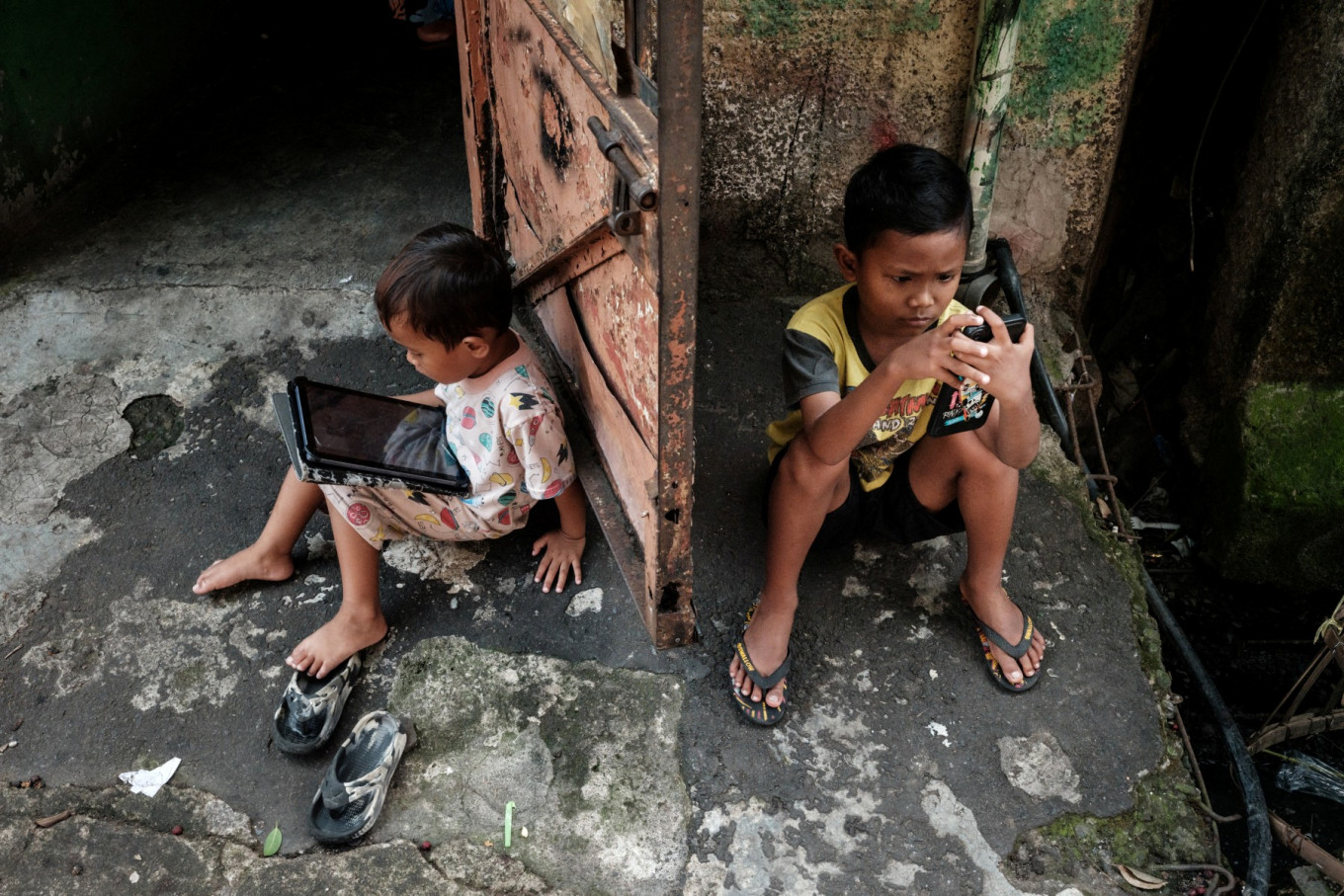 Children use portable digital devices on May 4, 2025, in Jakarta. (AFP/Yasuyoshi Chiba)
R
estricting teenagers from using social media sounds like fair game given all the troubles that it is causing to their safety, health, psychology and general wellbeing, but banning them completely, as the government is doing now for under 16 years old, seems overboard.
Article 19 of the International Covenant on Civil and Political Rights, of which Indonesia is a signatory, guarantees freedom of expression for everyone, including young adults, but it allows restrictions under certain conditions. The third of the three-part test for limiting speech requires that it is necessary and proportional.
We do not think banning social media for under-16 is proportional, when there are other less intrusive means to restrict its use and still protect them from harms.
Regulation No. 9/2026 from the Communication and Digital Ministry recognizes three levels of risk, prescribing different restrictions for each. Social media platforms must conduct their own risk analysis of the harms they may cause to teenagers, submit the study to the government for verification, and the minister then determines the restrictions, depending on if they are low, medium or high risks. The new ban applies to those with the highest risks.
The regulation will come into force on March 28, but Communications and Digital Minister Meutya Hafid had already determined that YouTube, X, TikTok, Facebook, Instagram, Thread, Bigo Live and Roblox were high-risk social media platforms and online games. They must begin deactivating accounts of under-16s and introduce age verification for users.
The ban shields young people from being exposed to pornography, cyberbullying, online fraud and most of all, addictions. But as Amnesty International Indonesia says, it is too simplistic a response to online harms.

The ban deprives these young adults of access to crucial modern communication tools, access to information and knowledge, their ability to express themselves, and undermine their creativity. The period between 13 and 16 years of age is a crucial phase on their way to adulthood. Any risk analysis by the social media platforms must look at this impact, not just at the more visible harms they are causing.