TheJakartaPost
Please Update your browser
Your browser is out of date, and may not be compatible with our website. A list of the most popular web browsers can be found below.
Just click on the icons to get to the download page.


Popular Reads
Top Results
No results found. Please check your search term and try again
Can't find what you're looking for?
View all search results
Popular Reads
Top Results
No results found. Please check your search term and try again
Can't find what you're looking for?
View all search resultsLessons for Indonesia from the harbingers of a new tanker war
Learning from the ongoing war in the Middle East, it is essential for TNI-AL to consider increasing capacities for mine hunting in particular and underwater warfare in general.
Change text size
Gift Premium Articles
to Anyone
Share the best of The Jakarta Post with friends, family, or colleagues. As a subscriber, you can gift 3 to 5 articles each month that anyone can read—no subscription needed!
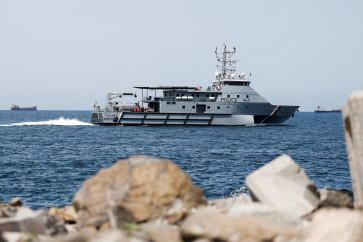
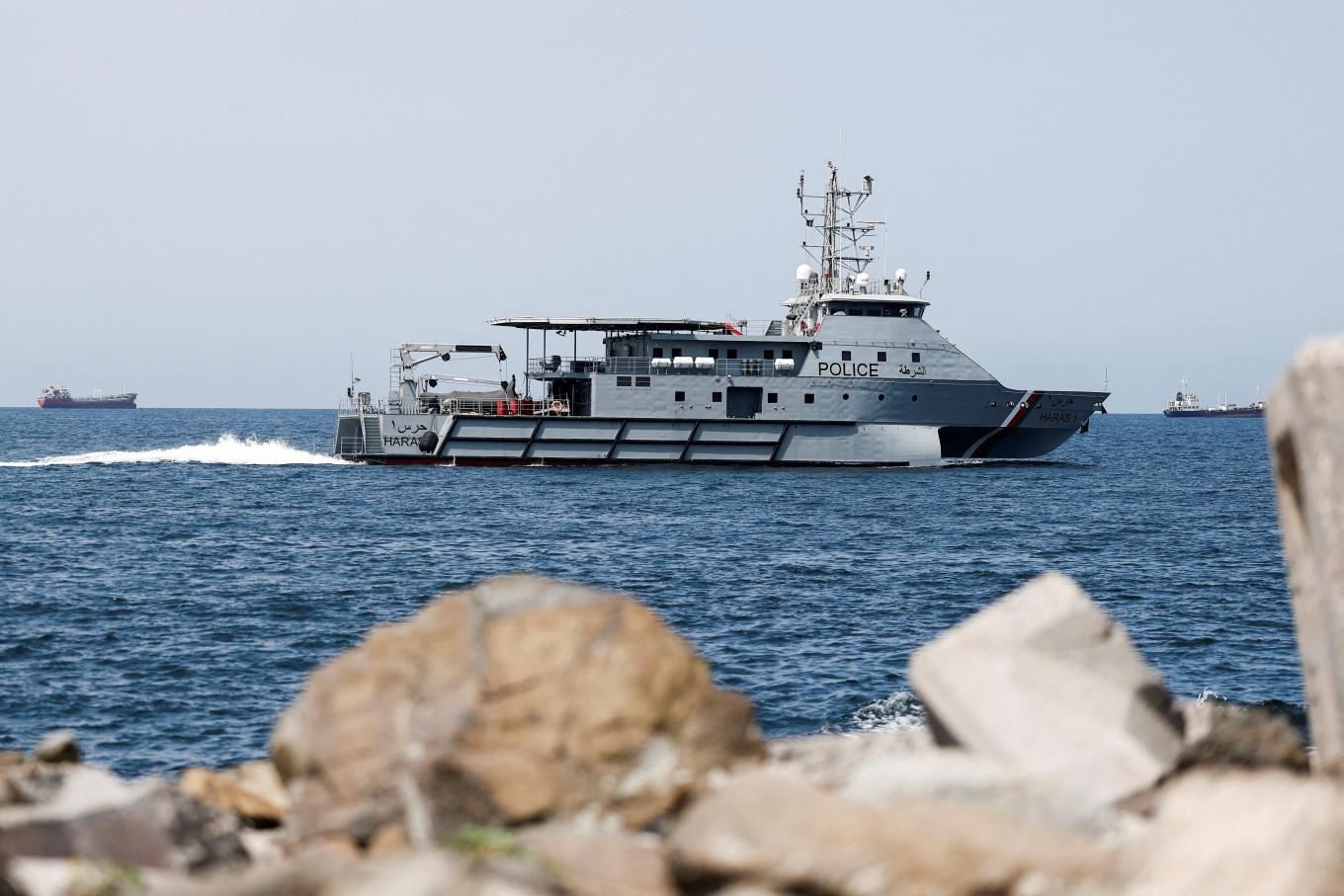 Dangerous waters: A Royal Oman Police Coast Guard patrol boat surveys the seas on March 12, off Muscat, as shipping traffic comes to a virtual standstill in the Strait of Hormuz, amid the United States-Israel war on Iran. (Reuters/Benoit Tessier)
O
n the night of March 11, three merchant ships were struck within a few hours by Iran in and around the Persian Gulf and the Strait of Hormuz while two tankers have also been attacked by what seems to be underwater drones within Iraqi territorial waters.
All these attacks signal a shift in strategy that was feared by most observers in the current conflict: attacking maritime trade and disrupting global exchanges. This strategy, which relies on attrition of noncombatant targets, has already been used by Iran in the 1980s during the infamous tanker war. What we are witnessing today could not only halt sea trade but also serve to teach Indonesia how to anticipate future threats.
What was dubbed the “tanker war” is a case study for naval and military planners: between 1984 and 1988, while the war between Iran and Iraq (1980-1988) was raging, both belligerents decided to target merchant vessels and tankers in the Persian Gulf. To do so, they used a mix of assets, ranging from expensive surface-to-surface and air-to-surface missiles to cheap naval mines, to fully paralyze sea lanes of communication (SLOC).
During this period, more than 500 ships were attacked in total, leading to hundreds of casualties and the disruption of oil and gas supply from the Persian Gulf. The use of naval mines to interdict and deny access has somehow been forgotten.
However, the threat that naval mines represent is still important and should not be underestimated for two reasons. First, this kind of weapon can be easily laid within a maritime corridor or a SLOC with limited equipment. It does not need to be a fully functional military mine, as maritime explosive devices are a simple and often low-cost solution that could be used by a large range of actors.
Second, the impact of mine warfare is far from only being kinetic: this is where the asymmetric leverage of such a strategy is paramount. Such a threat on a SLOC means that nations will need to deploy dedicated assets for mine countermeasure (MCM) missions. In the meantime, shipping insurance will skyrocket due to the evolution of risk perception: you don’t need to lay hundreds of mines, one is enough to create such a scenario and to attain your desired end state.

What is interesting is that mine warfare is somehow the neglected stepchild of naval forces worldwide. MCM assets are not considered top priority when it comes to procurement as they might lack the appeal of main surface combatants. Even when the assets are available, it seems that when planning operations, they are not considered more than a niche capability, despite the fact that they shape global freedom of navigation.