TheJakartaPost
Please Update your browser
Your browser is out of date, and may not be compatible with our website. A list of the most popular web browsers can be found below.
Just click on the icons to get to the download page.


Popular Reads
Top Results
No results found. Please check your search term and try again
Can't find what you're looking for?
View all search results
Popular Reads
Top Results
No results found. Please check your search term and try again
Can't find what you're looking for?
View all search resultsMuslims and Catholics walk together to achieve peace
Catholics and Muslims, together with all people of goodwill, are called to envision and open new paths through which life can be renewed.
Change text size
Gift Premium Articles
to Anyone
Share the best of The Jakarta Post with friends, family, or colleagues. As a subscriber, you can gift 3 to 5 articles each month that anyone can read—no subscription needed!
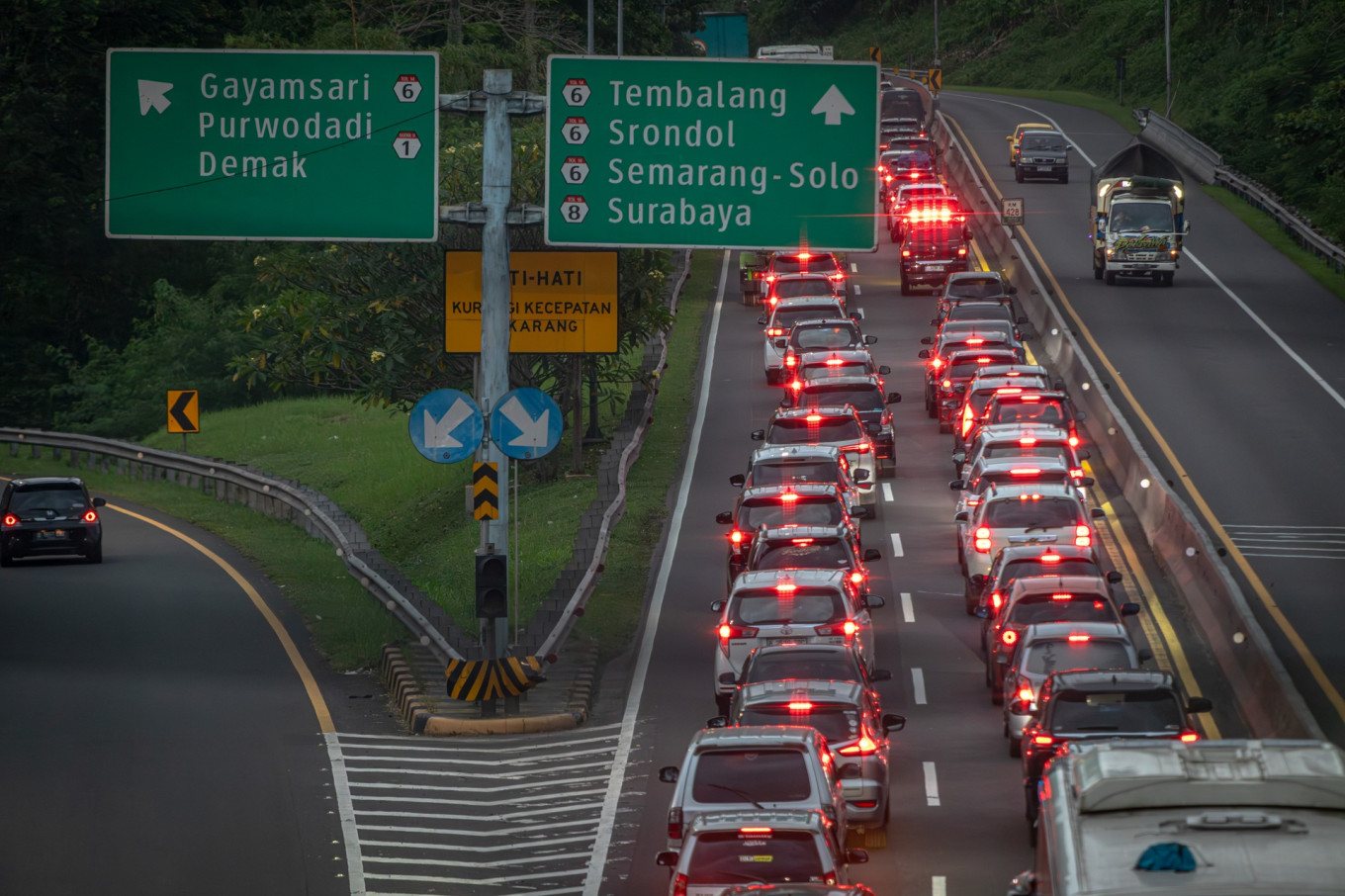 Cars are stuck at traffic at a segment of the trans-Java toll road in Semarang, Central Java, on March 14, 2026. Travelers from Greater Jakarta have begun the 'mudik' (exodus) ahead of the Idul Fitri holiday, which is expected to fall on March 20 or 21. (Antara/Aji Styawan)
E
very time Idul Fitri (Eid al-Fitr) arrives, the Catholic Church in the Vatican welcomes it with joy. This tradition begins at the start of Ramadan, when the Prefect of the Vatican’s Dicastery for Interreligious Dialogue sends an annual message of solidarity to the Muslim community. Historically, this practice dates back to the establishment of the Secretariat for Non-Christian Religions on May 17, 1964, by Pope Paul VI.
Over the decades, the institution has evolved to meet the needs of the times. Under the pontificate of John Paul II, the secretariat was transformed into the Pontifical Council for Interreligious Dialogue on June 28, 1988. More recently, under Pope Francis, it was reconstituted as the Dicastery for Interreligious Dialogue on March 19, 2022. Regardless of its official title, the core mission remains the same: to foster true brotherhood among all people, transcending differences in religion or belief.
This year, the Vatican’s message was delivered on Feb. 17, just one day before the start of Ramadan. In the opening paragraph, George Jacob Cardinal Koovakad, Prefect of the Dicastery, wrote:
“It is with great joy that I address this message to you on the occasion of the month of Ramadan, which culminates in the Feast of Eid al-Fitr. This important annual celebration gives me a good opportunity to express my closeness, solidarity, and respect to you, faithful to God, ‘the one, living and eternal, all-merciful and almighty, Creator of heaven and earth, who has also spoken to humanity’” (Second Vatican Council, Nostra Aetate, Oct. 28, 1965, 3).
Cardinal Koovakad further contextualized the significance of Ramadan and Lent within the Catholic tradition, both of which are defined by the spiritual discipline of fasting. In 2026, through a blessed convergence of the lunar and solar calendars, Catholics celebrate their season of devotion alongside Muslims. This shared journey toward Easter and Idul Fitri highlights a period of profound spiritual intensity.
As both communities walk together, they strive to follow God’s will more faithfully. This shared path allows Muslims and Catholics to acknowledge their inherent human fragility while confronting the trials that weigh on the human heart. Cardinal Koovakad noted that when we face personal or institutional trials, the complexity of the world can exceed our human capabilities. In an age of information overload and competing narratives, our powers of discernment often become clouded, leading to a sense of helplessness.

According to the cardinal, it is at this point of vulnerability that the temptation toward despair or violence often arises. Despair may seem like an honest response to a broken world, and violence can appear as a shortcut to justice. However, neither path is acceptable for a believer. A true believer focuses their gaze on the invisible Light of God, the Almighty, Merciful and Just, who “rules over men with justice” (Psalm 96:10). Such a believer strives to live according to divine commandments, finding hope for the future and the peace for which every human heart yearns.