TheJakartaPost
Please Update your browser
Your browser is out of date, and may not be compatible with our website. A list of the most popular web browsers can be found below.
Just click on the icons to get to the download page.


Popular Reads
Top Results
No results found. Please check your search term and try again
Can't find what you're looking for?
View all search results
Popular Reads
Top Results
No results found. Please check your search term and try again
Can't find what you're looking for?
View all search resultsRespect across faiths
While Bali’s quiet compromise proves that faiths can flourish together, a rising tide of state-backed intolerance threatens to unravel Indonesia’s fragile tapestry of unity in diversity..
Change text size
Gift Premium Articles
to Anyone
Share the best of The Jakarta Post with friends, family, or colleagues. As a subscriber, you can gift 3 to 5 articles each month that anyone can read—no subscription needed!
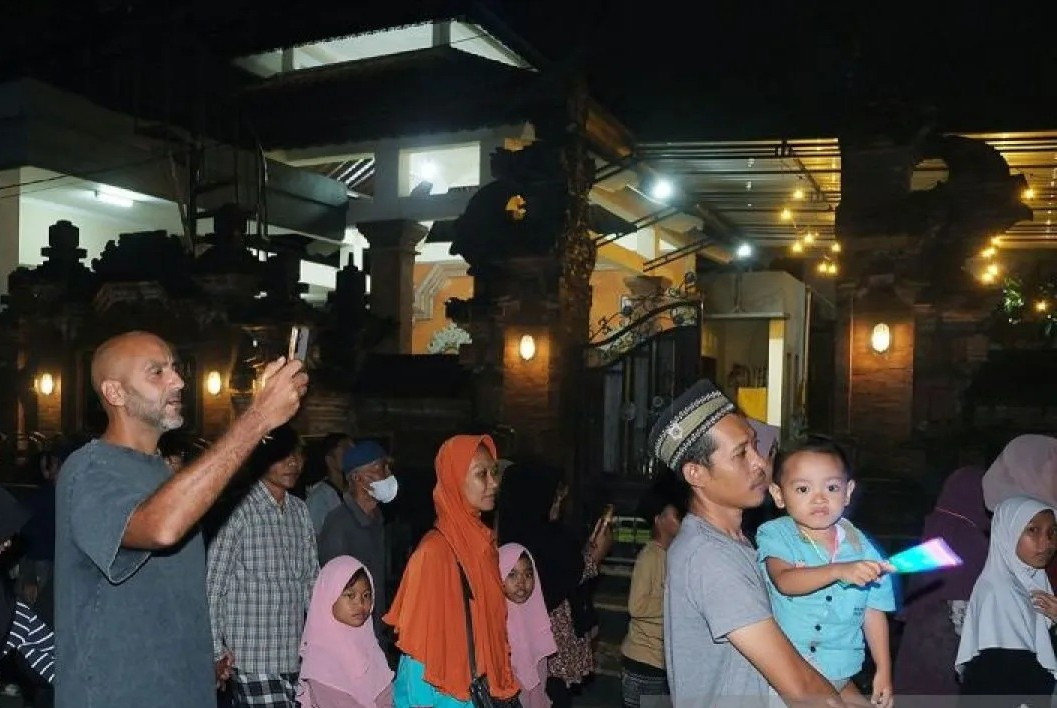 Using his mobile phone, a tourist records a takbiran Islamic procession in Canggu Permai, Badung regency, in the predominantly Hindu island of Bali on June 5, 2025. (Antara/Nyoman Hendra Wibowo)
T
his year, several major religious celebrations in Indonesia fall close together. Lunar New Year coincided with the start of the Islamic fasting month of Ramadan, while the Hindu Day of Silence, Nyepi, will occur alongside the eve of Idul Fitri, when many Muslims gather for the takbiran celebration.
At first glance, the convergence of such important religious observances might appear to create potential tension; however, in many parts of the country, communities have shown that coexistence and compromise remain possible.
On the Hindu-majority island of Bali, the commemoration of Nyepi, traditionally marked by 24 hours of silence during which residents and visitors refrain from travel, entertainment and most forms of activity, will be slightly adjusted this year to accommodate Idul Fitri eve celebrations. The night before Idul Fitri is usually celebrated with takbiran, a lively tradition involving chants praising God, often accompanied by fireworks and festive processions. These celebrations mark the end of Ramadan, a month devoted to spiritual purification, reflection and strengthening one’s relationship with the divine.
This year, however, Muslim communities in Bali have agreed to adapt their celebrations out of respect for their Hindu neighbors. To honor the silence observed during Nyepi, a day devoted to meditation and spiritual renewal, takbiran will be limited to mosque compounds, conducted with dim lighting and concluded earlier in the evening.
This arrangement offers an important lesson: a middle ground can always be found between traditions that may seem to clash but actually share common spiritual values. Respecting others’ beliefs does not weaken faith; rather, it strengthens the social fabric and allows a diverse society to live peacefully.
Unfortunately, such harmony does not always define Indonesia’s religious landscape, and the spirit of compromise found in Bali is not universally reflected across the archipelago. Incidents of intolerance and violence against religious minorities continue to occur each year. According to the latest report from the Setara Institute for Democracy and Peace, there were 221 violations of religious freedom in 2025 alone. Of those cases, 128 involved state actors, ranging from local governments issuing discriminatory regulations, to law enforcement authorities whose inaction has fostered a climate of impunity.

Indonesia is the world’s largest predominantly Muslim state, which also recognizes five other religions, namely, Christianity, Catholicism, Hinduism, Buddhism and Confucianism, and hundreds of indigenous belief systems as part of the nation’s spiritual heritage.